





 Share








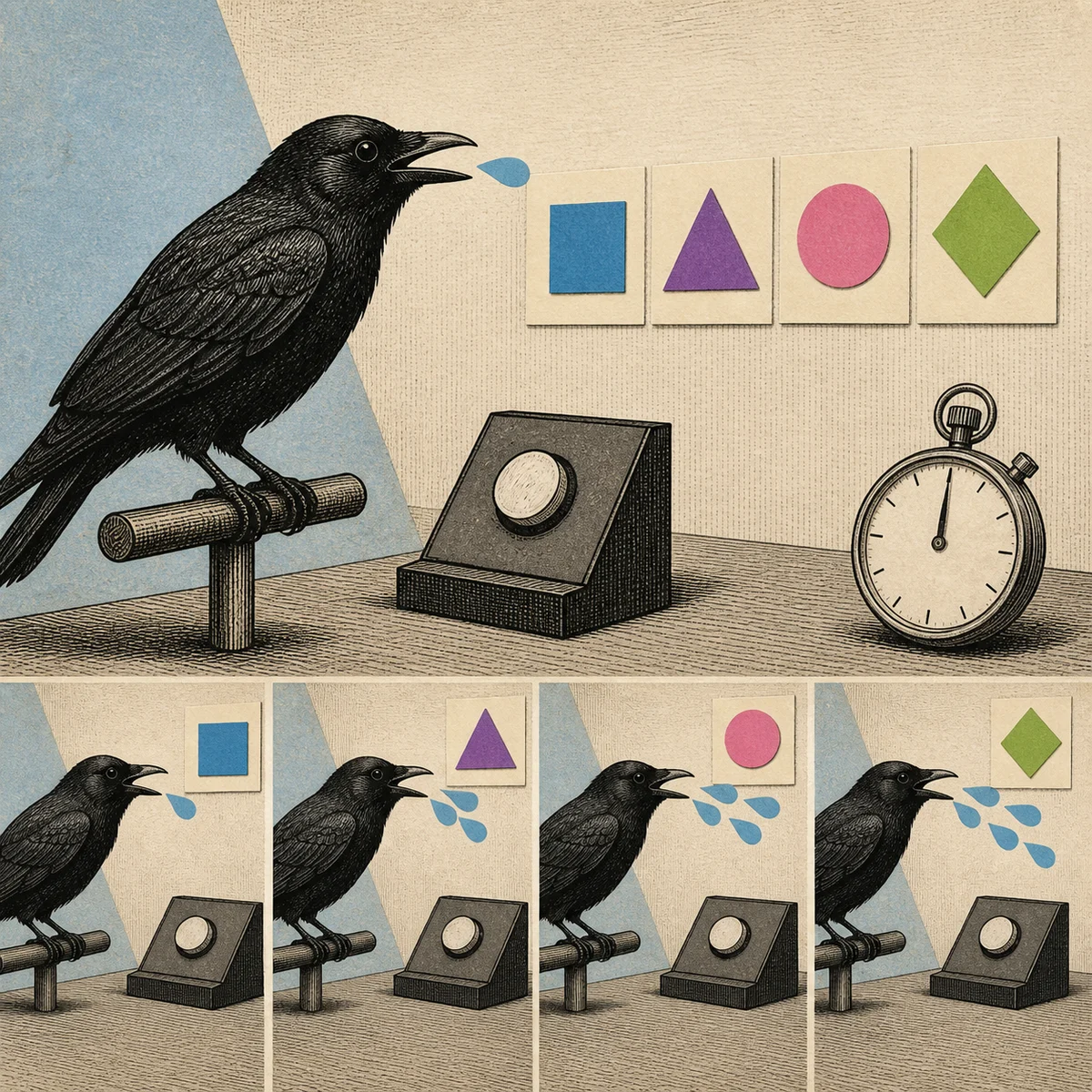
Three carrion crows learned an unusual numerical task. A colored Arabic numeral or a distinct sound instructed each bird to make one, two, three, or four calls. After producing the requested total, the crow pecked an enter key to finish. The birds were not merely reacting to a repeated cue: one signal had to guide an entire vocal sequence.
Their timing exposed preparation. The more calls a trial required, the longer the delay before the first call tended to be. Acoustic details in that first call also helped predict the number the bird would eventually produce. When a crow made a mistake, it usually landed near the target, and features of individual calls helped explain whether the sequence would stop too early or continue too long.
Researchers interpret the pattern as evidence that the crows planned an approximate number of vocalizations before beginning, then monitored the sequence as it unfolded. “Counting out loud” is a useful description of the controlled production task, but it is not human arithmetic or spoken number language. The achievement is more focused: a cue became a planned quantity, and the plan could be heard from the very first caw.