Share
Share







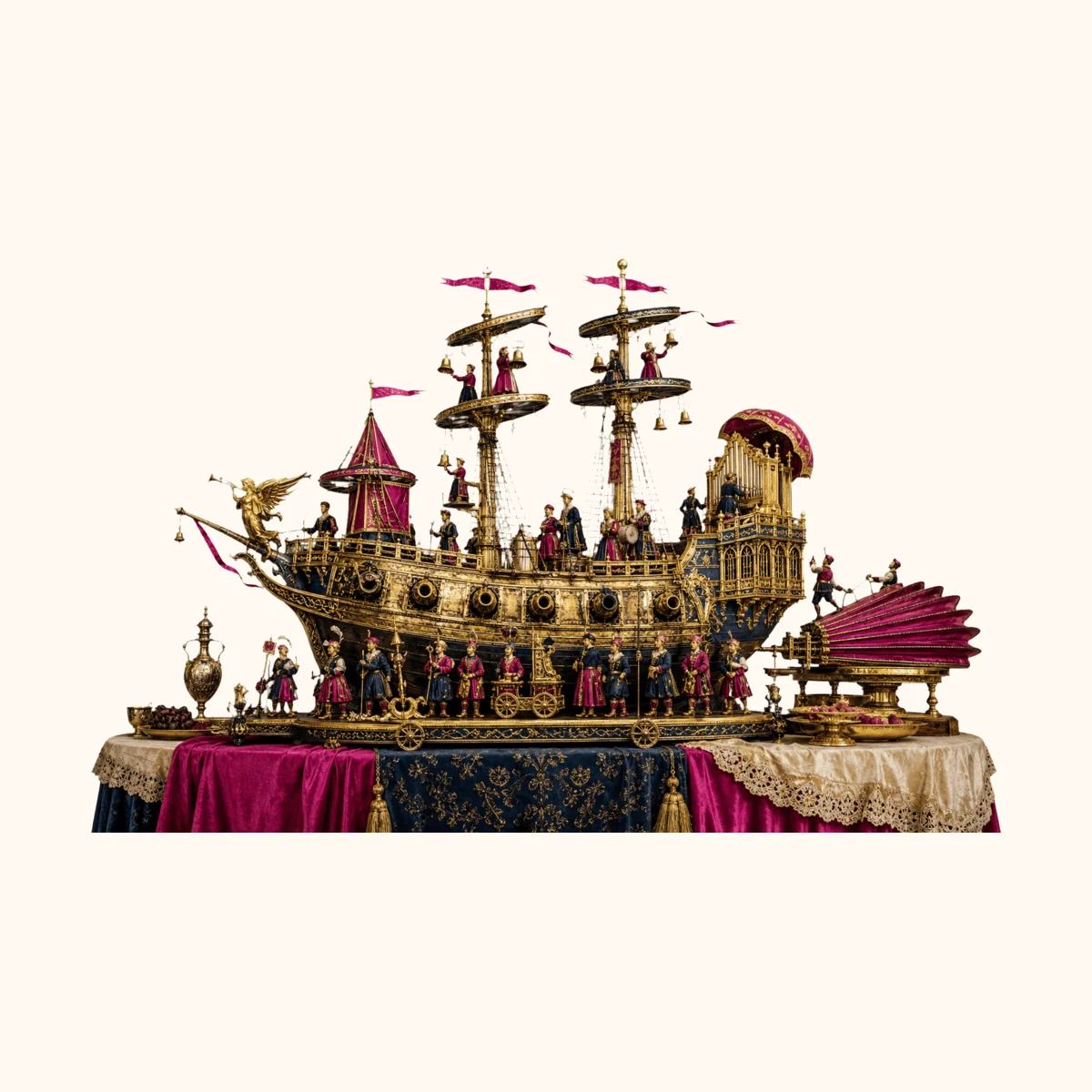
Hans Schlottheim’s mechanical galleon was built in Augsburg around 1580–1590 as a ship-shaped table ornament with far too much happening aboard. Spring-driven clockwork moved the gilded brass vessel across a surface. Sailors in the crow’s nests struck bells for the hours and quarter hours, while heralds and electors processed before a seated emperor.
Inside the hull, more machinery pumped bellows for a small regal organ. The ship played music as it moved; the tops of two masts rotated. Around the hull sat ten miniature cannons, while another wheel-lock cannon in the bowsprit was designed to fire automatically.
The galleon compressed a royal procession, clock, musical performance, moving vehicle, and artillery display into an object roughly a meter high. Its wheels have since been replaced with ball feet, so the British Museum object should not be imagined still rolling and firing on command. The surviving mechanism nevertheless preserves the original ambition: a banquet-table ship that could arrive under its own spring power while making nearly every kind of entrance at once.
Sources