




 Share








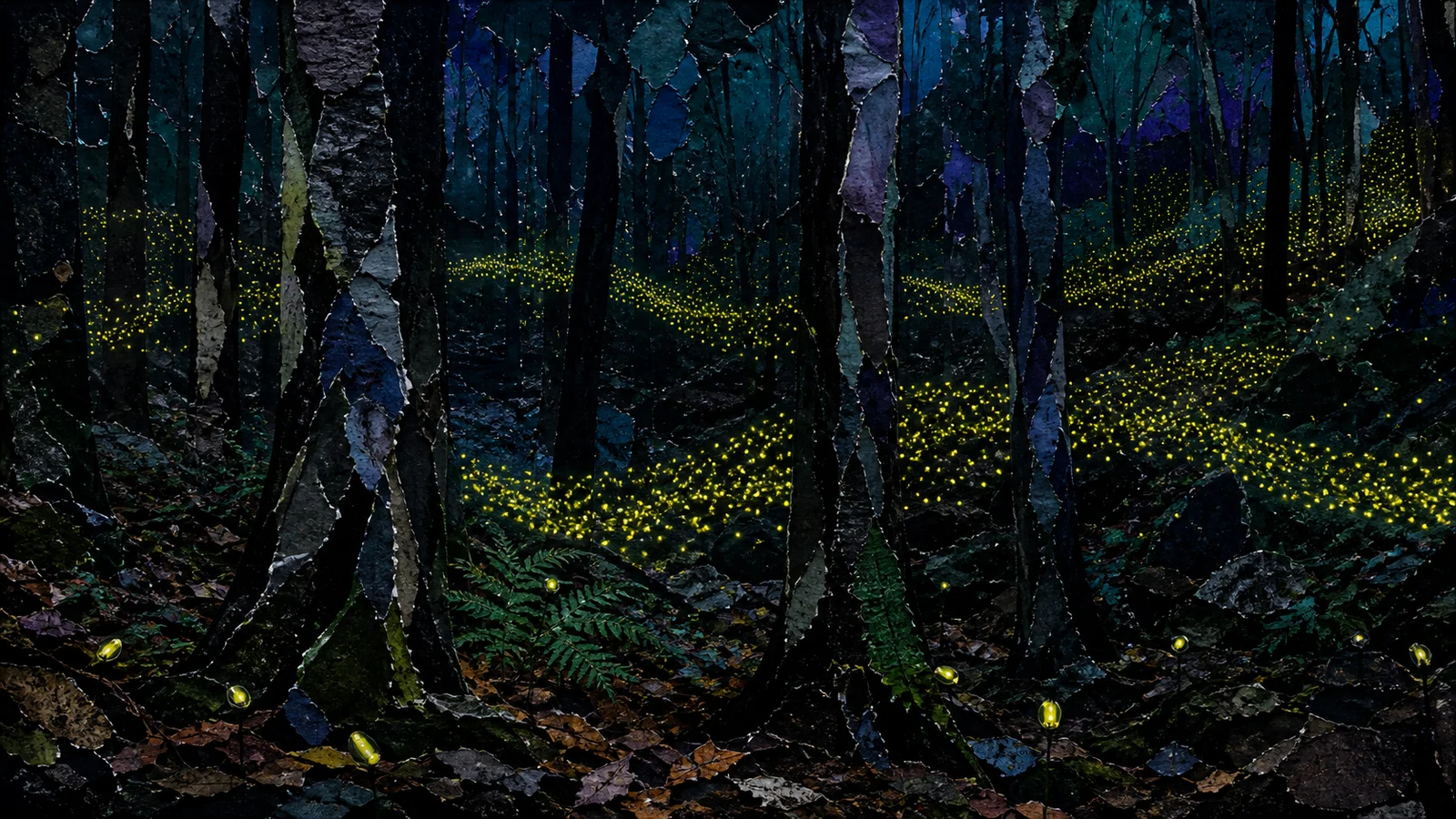
A dark forest does not begin in synchrony. At first, individual points of yellow light appear scattered among trunks and over the leaf litter. One male flashes, another answers the evening with his own sequence, and more enter. The pattern tightens. Soon whole patches of Great Smoky Mountains National Park seem to pulse together, then fall into a long shared darkness.
The insect responsible is Photinus carolinus, one of the firefly species in the park and one of relatively few known for synchronized flashing. Fireflies are beetles, not flies. Most of their lives pass as larvae in the forest-floor litter, where they feed on small animals. Their celebrated adult phase is brief and largely organized around finding a mate.
Light is the identification system. Firefly species use distinctive flash timing and color so males and females can find an appropriate partner among other glowing insects. In many species, males flash while flying and females respond from lower vegetation or the ground. A forest with multiple species is therefore not producing one generic sparkle. It contains overlapping codes built from intervals, colors, motion, and darkness.
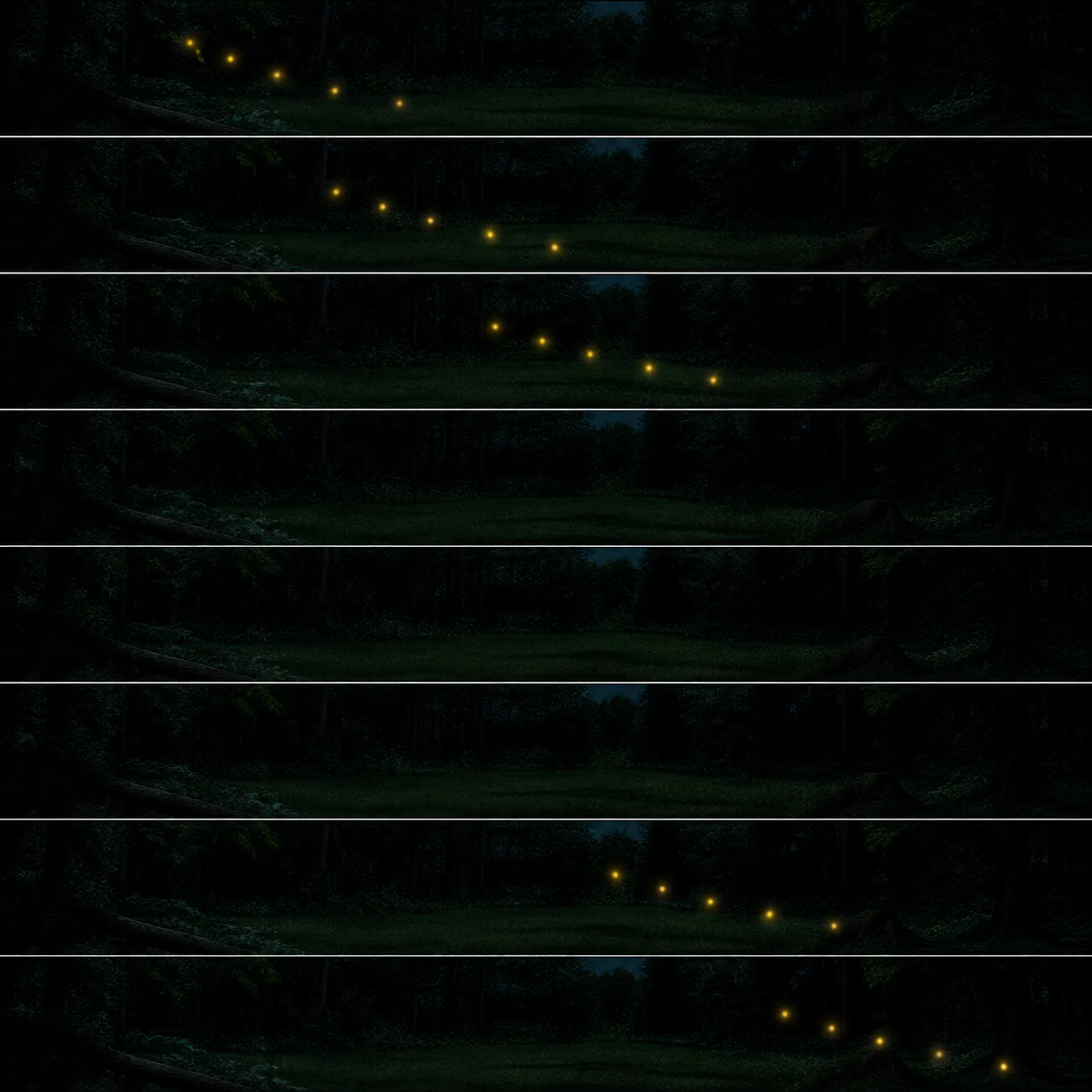
Photinus carolinus males repeat a particularly conspicuous phrase: five to eight flashes of yellow light followed by roughly eight seconds without flashing. Then the sequence begins again. The synchronized stopping and starting matters as much as the bright burst. From a distance, the darkness can feel like the entire forest inhaling before the next visible wave.
The rhythm is not imposed by a conductor. Early flashes may look random. As more males participate, individuals respond to the timing around them and local patterns align. Synchrony emerges through repeated adjustment among many small light sources. Different parts of the woods may not peak at exactly the same instant, and the alignment can strengthen, drift, or break apart through the night.
Why converge at all? The National Park Service notes that the behavior is still not fully understood. One proposed explanation focuses on the females. Females of this species are dimmer and usually remain on the forest floor. Experiments indicate that they respond when an adequate amount of male flashing is presented, then signal during the pause. A coordinated male burst could create a strong visual call, while shared darkness opens a clearer window for the quieter response below.
That theory makes the display a call-and-response rather than a male-only spectacle. The brilliant airborne layer gets human attention, but the dim reply on the ground may be central to the system. It also explains why walking off trail can be destructive: the audience's feet enter the part of the habitat where females sit and signal.
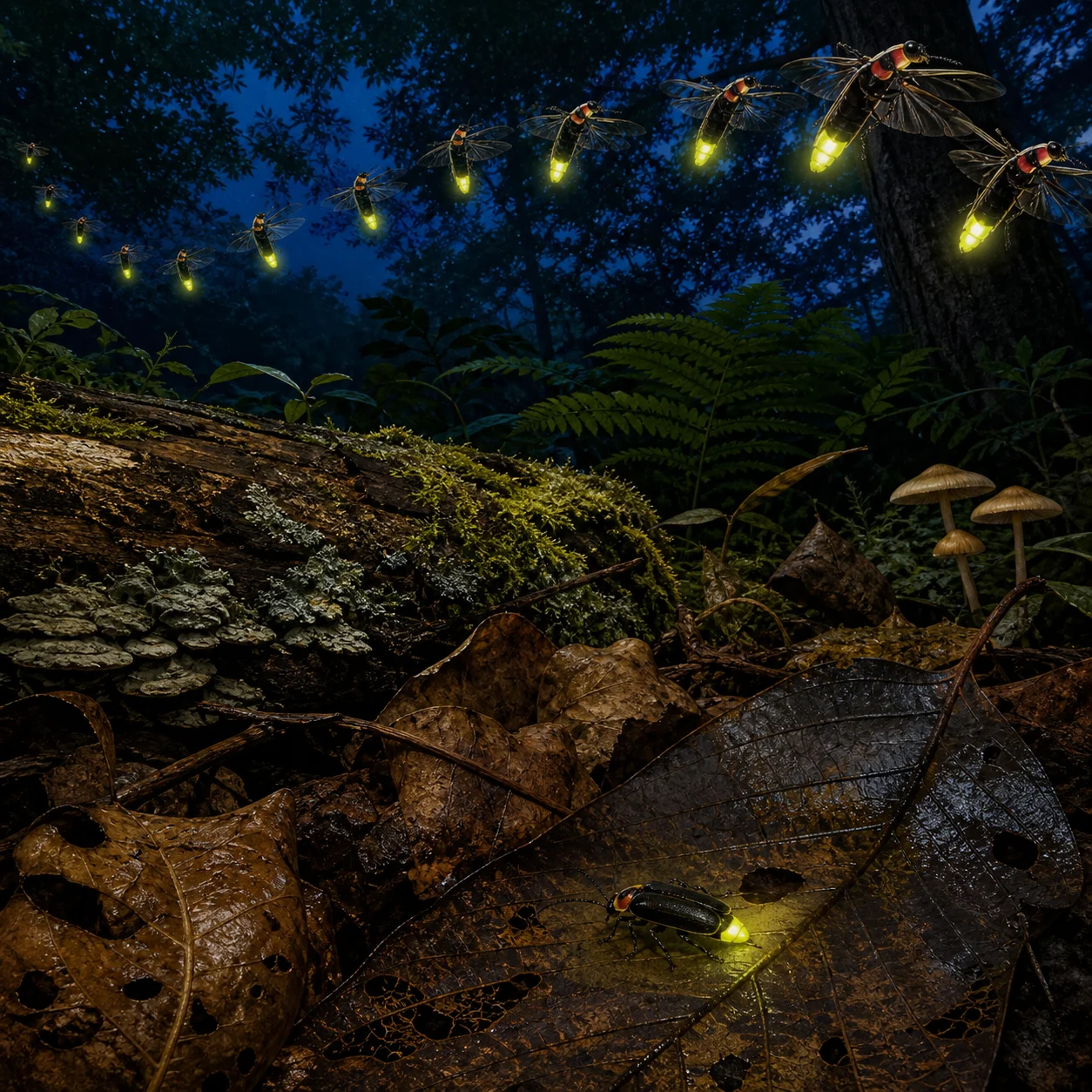
The park contains many other firefly patterns. Some species produce single flashes at long intervals. Others use paired flashes, sustained J-shaped signals, a pale continuous glow, or deceptive replies that lure fireflies as prey. Some park species are active by day and do not flash at all. Photinus carolinus is extraordinary, but its performance belongs inside a much broader community of beetle signaling strategies.
Environmental conditions continuously edit the show. The adult mating period lasts only a few weeks, and its timing shifts with temperature and soil moisture. The park monitors soil temperatures to anticipate activity. Heavy rain often stops flashing. Mist may not. Cool air can reduce the number of active insects. Elevation and local habitat create further differences across the mountains.
Those variables prevent an exact nightly promise. A visitor cannot demand peak brightness on a chosen schedule, and a photograph cannot represent every moment of the display. Even at its strongest, synchrony means patterned collective alignment, not every abdomen firing at the same millisecond across an entire landscape. The pulses travel through space and evolve over time.
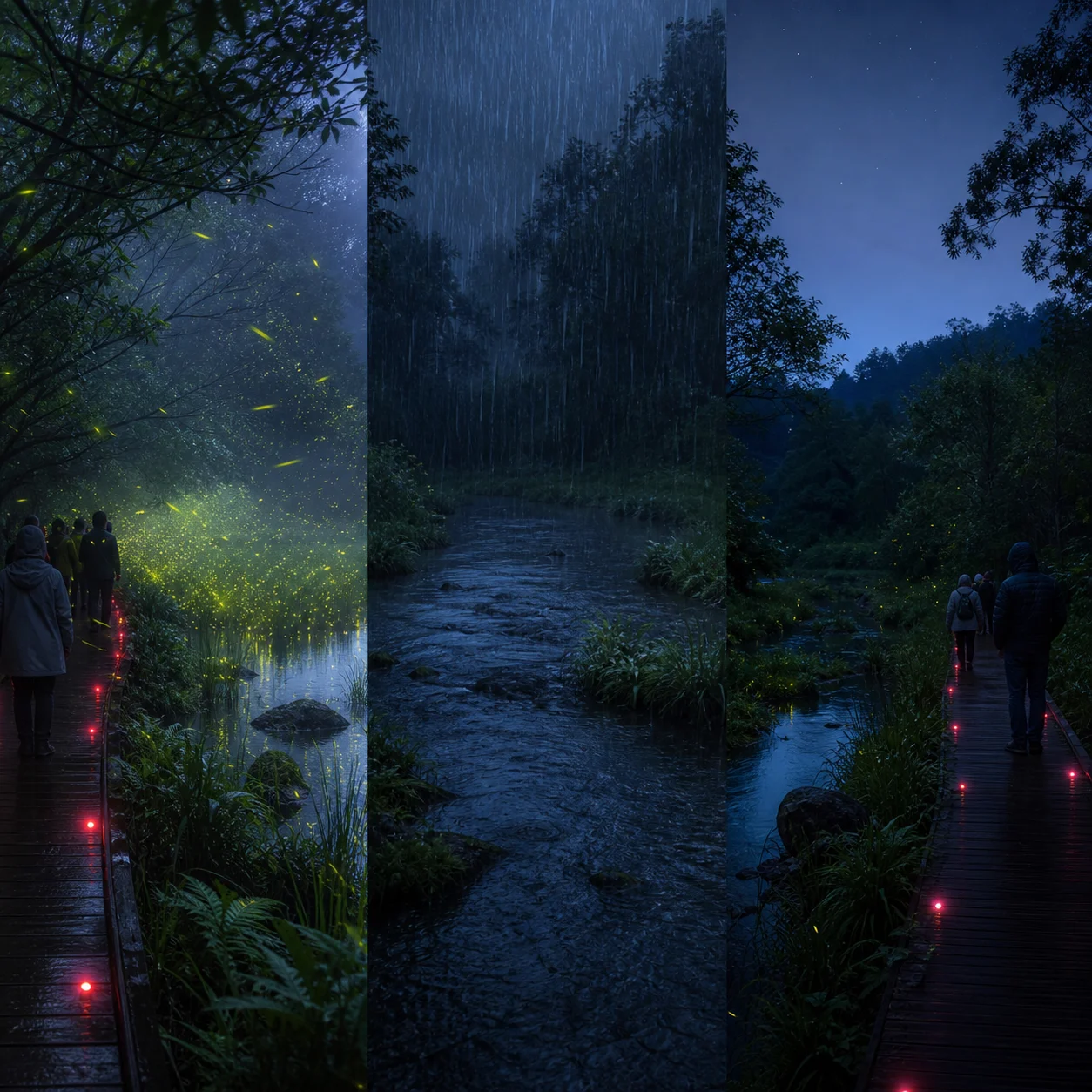
Human light can interfere with the courtship signals. The park advises observers to use dim red light only for moving safely, point it toward the ground, and turn it off at the viewing place. Bright white beams can disrupt firefly communication and spoil other people's night vision. Restraint becomes part of seeing: the less light visitors add, the more biological light remains legible.
High demand also creates physical pressure on the habitat, so access to the best-known viewing area is managed. The goal is not to package a natural event like a scheduled performance. It is to limit trampling, traffic, and disturbance while the insects complete a short and important adult phase. The display survives only if its dark stage survives with it.
Bioluminescence supplies the light through a highly efficient chemical reaction in the insects' abdominal lanterns. Luciferin, oxygen, and the enzyme luciferase take part in producing a cool glow with very little heat. Chemistry makes each flash possible; behavior arranges flashes into a species-specific phrase; interaction among neighbors stretches that phrase across the woods.
The result feels larger than any beetle because it is larger than one. Thousands of individuals retain their own positions and moment-to-moment timing, yet each also becomes part of the light field influencing the next adjustment. Order appears without erasing variation. That is why the fireflies seem to rewrite their rhythm together: every cycle inherits the last burst, the surrounding signals, and the changing night, then builds another temporary agreement out of darkness.