





 Share








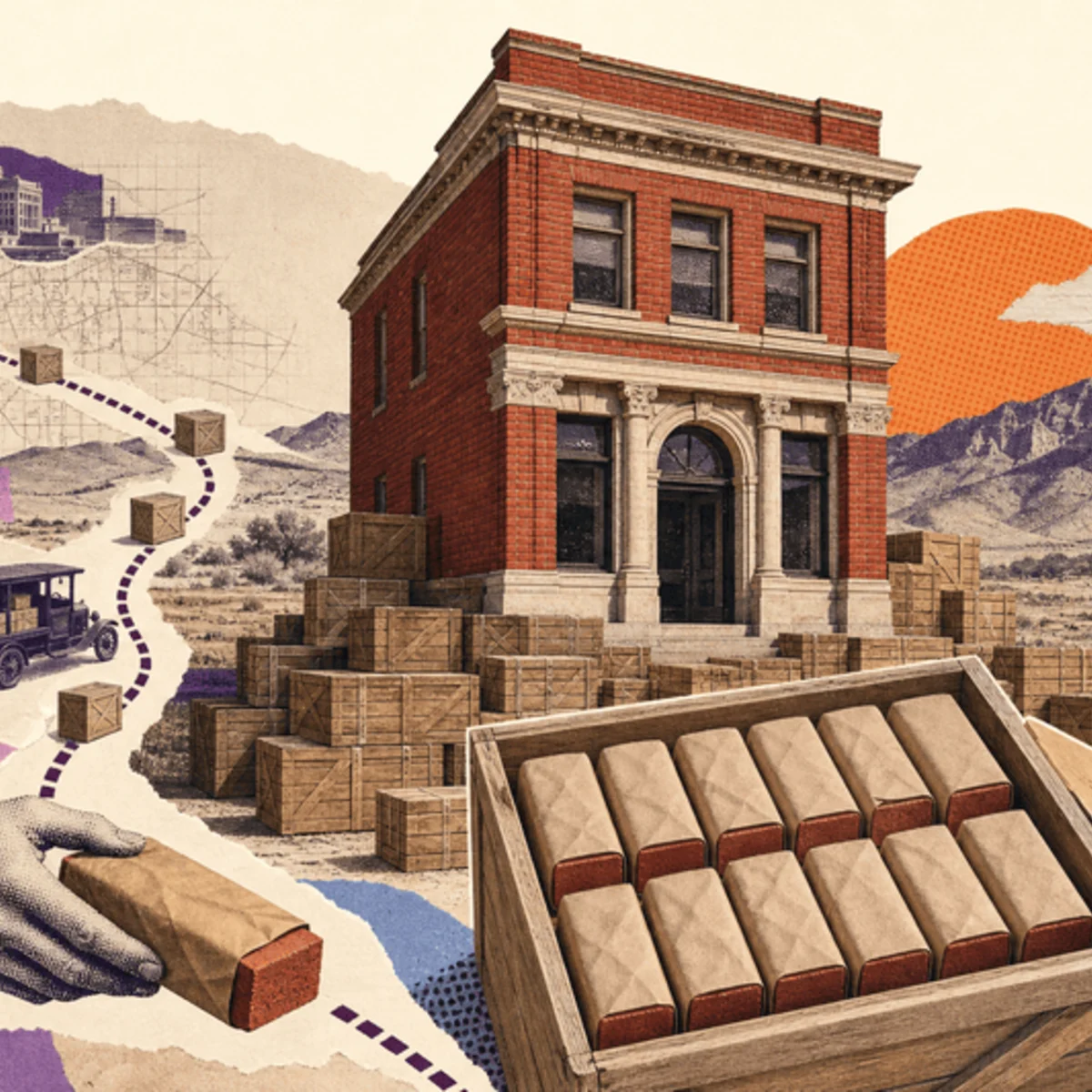
In 1916, the post office in Vernal, Utah, was already accustomed to mail that behaved like freight. Bags of cement, rolls of fencing, canned food, tires, batteries, pipe, and building supplies arrived through Parcel Post because the town sat far from a railroad. Then the Bank of Vernal asked the mail system to deliver a facade.
Parcel Post was still new. Before 1913, the Post Office Department generally could not carry packages weighing more than four pounds, leaving larger shipments to private express companies whose networks followed the railroads. The new federal service began on New Year's Day 1913 with an 11-pound limit. That limit rose to 20 pounds later the same year and to 50 pounds in 1914. For communities beyond private carriers' practical reach, a mailbox suddenly connected to a national freight network one parcel at a time.
Vernal revealed how strange the pricing could become. The town is about 125 miles from Salt Lake City as the crow flies, which placed it in the second Parcel Post delivery zone. The actual land route was nearly 400 miles because mountains, cliffs, and rough roads stood in the way. Parcels traveled on two railroads through Mack, Colorado, reached Watson, Utah, and finished with a 54-mile truck journey operated by the Uintah Railway Company.
A 50-pound parcel cost only 54 cents to mail from Salt Lake City to Vernal. The Post Office paid the railway company one and a half cents per pound for the overland portion alone, losing 21 cents on each 50-pound package even before rail costs were counted. Customers noticed the bargain. By 1916 the Vernal Post Office was receiving an average of two tons of Parcel Post every day, and its postmaster and assistant sometimes worked 15-hour shifts to keep up.
That summer, Bank of Vernal director William Horace Coltharp was planning a two-story building for the bank and other businesses. Local brick could handle most of the structure, but Coltharp wanted pressed brick for the public facade. The nearest supplier was the Salt Lake Pressed Brick Company. Moving a conventional heavy shipment over Vernal's route was expensive. Mailing it was not.
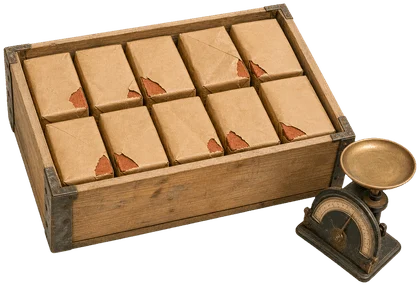
The brick company turned architecture into allowable packages. It wrapped each pressed brick in paper, placed ten bricks in a wooden crate, and kept each crate at the 50-pound limit. According to company official John B. Cahoon, the shipment eventually totaled 15,000 bricks in 1,500 crates—about 37 and a half tons moving through the postal network as a long series of ordinary parcels. Contemporary Vernal newspaper reports broadly support the figure, noting 13,700 bricks received by late August with several thousand more expected.
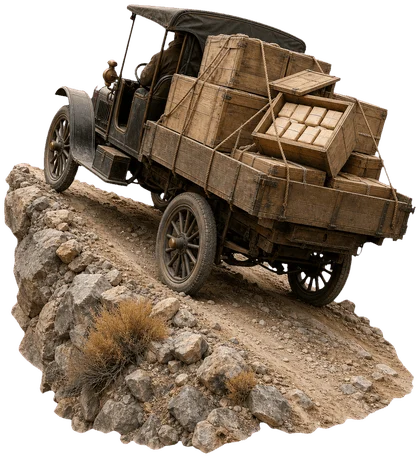
The route was not gentle. The Postal Service's history records that one Uintah Railway truck carrying several thousand bricks broke a drive chain while climbing, lost its brakes, rolled backward, overturned, and caught fire. The driver was not injured, but most of that load was lost. Even with that loss, masons completed the pressed-brick work by November 1916. The bank moved into its new home the following February.
The bricks did not single-handedly create a new postal rule, and the distinction matters. Since 1914, postmasters had already been told to seek instructions before accepting a very large or unusual number of similar merchandise parcels. The order never defined what large or unusual meant, so local acceptance varied. Salt Lake City postmaster Noble Warrum had been asking the Department for a clear definition since 1915.
The Vernal flood supplied a memorable reason to answer. On November 7, 1916, Second Assistant Postmaster General Otto Praeger issued a notice defining more than 200 pounds of nonperishable merchandise, offered by one sender to one addressee on the same day, as a large or unusual shipment. A postmaster had to notify the Department and wait for instructions before accepting it. The Postal Service says the 37-and-a-half-ton brick mailing inspired the rule in part. It was an advance-approval requirement, not a claim that nobody could ever mail another brick.
Even the new definition did not end Vernal's appetite for mail. By 1921, the post office was receiving more than three tons per day. A local newspaper listed fire brick, oven doors, cement, wire fencing, garden hose, nails, roofing, beehive lumber, car batteries, tires, power-plant supplies, castings, and even the paper on which the newspaper itself was printed. Parcel Post had become the town's workaround for geography.
The Bank of Vernal survives in postal memory because it pushed that workaround to architectural scale. Its pressed face crossed the region not as one building shipment but as 1,500 boxes that each obeyed the rules. The result was both ingenious and expensive: a handsome facade for the bank, punishing economics for the Post Office, one destroyed truck, and a much clearer definition of how much mail was too much mail for one day.
Sources