Share
Share







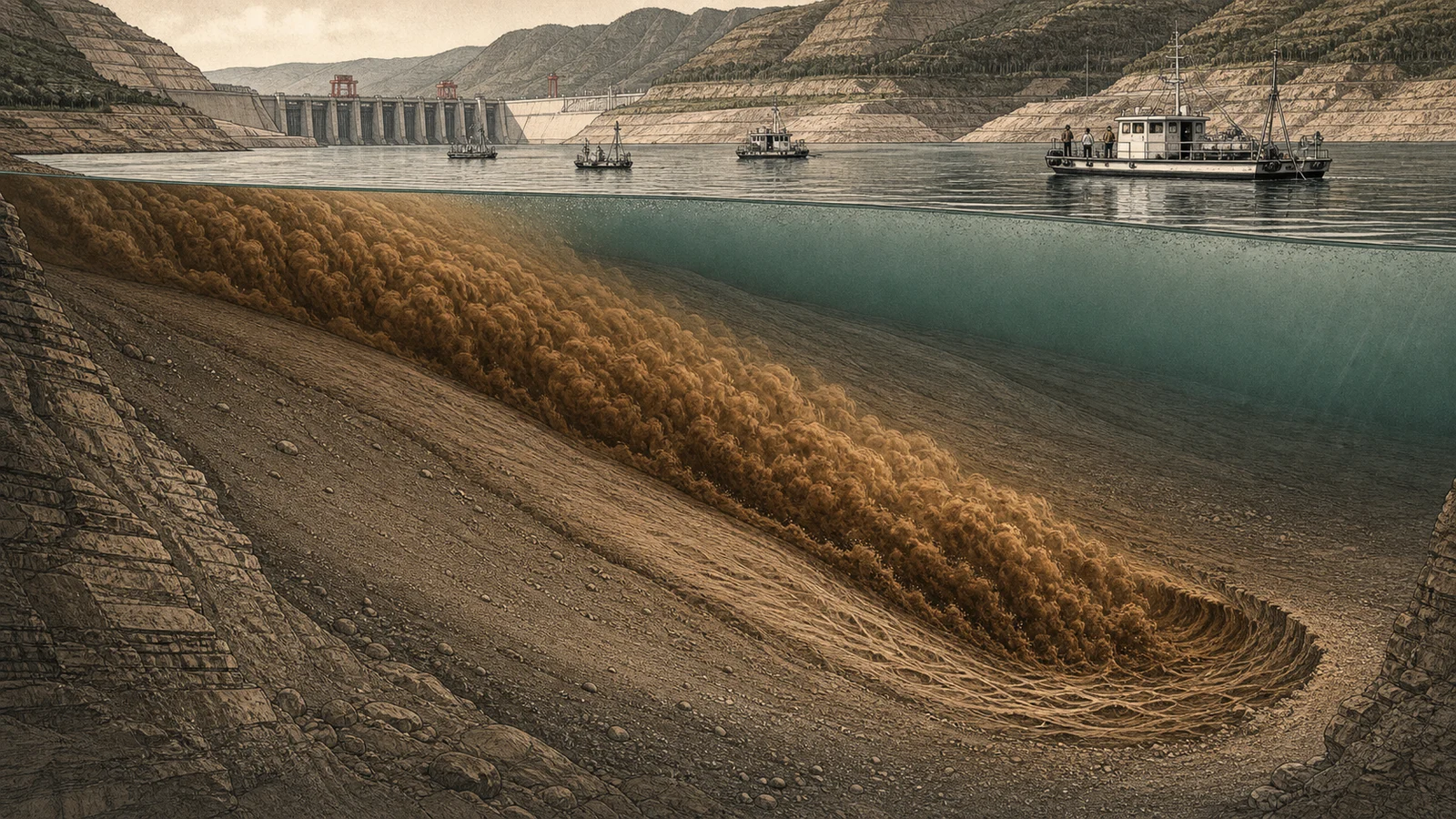
An avalanche can happen without air, snow, or a visible slope. Underwater, a cloud of sediment can make water dense enough to rush downhill along the bottom. The flow is called a turbidity current. From above it may be hidden beneath an ordinary surface; below, it can erode a channel, transport vast loads of mud and sand, and redraw the floor it crosses.
The basic engine is gravity acting on density. Clear water and sediment-laden water do not weigh the same by volume. When sand, silt, or clay becomes suspended, the mixture can sink and spread beneath less dense water. Earthquakes, slope failures, floods, and other disturbances can start such currents in lakes, reservoirs, and the ocean. Once moving, they resemble an avalanche not because the material is snow, but because a dense mass accelerates downslope and entrains more material along the way.
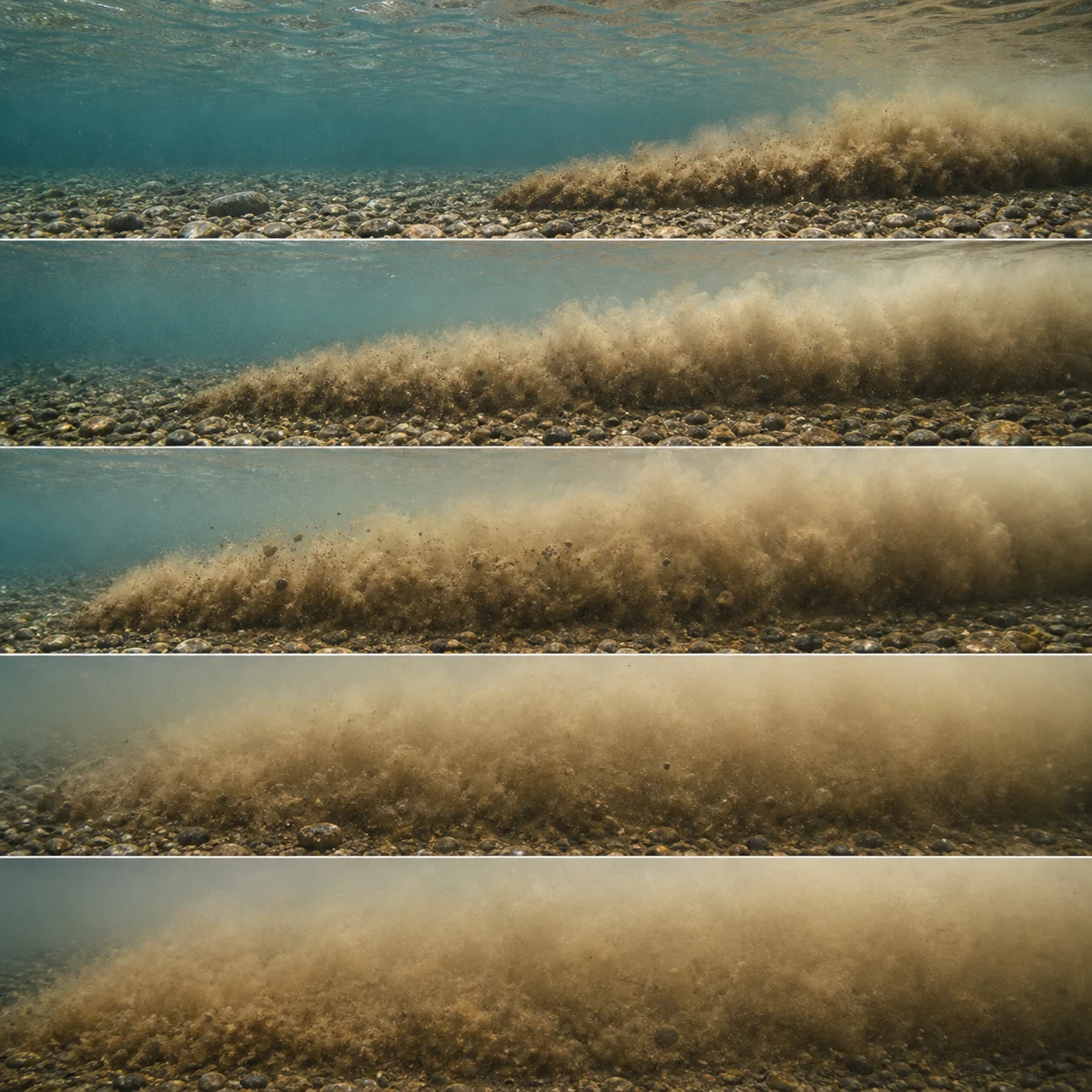
That last step creates a possible feedback loop. A current scraping sediment from the bed becomes more heavily loaded. Greater sediment concentration can increase the density difference driving the flow. More driving force can increase speed and bed stress; higher stress can erode still more sediment. If erosion adds energy faster than drag and settling remove it, the current crosses into self-acceleration. Researchers sometimes describe that transition as ignition.
The physics had been explored in theory and laboratories for decades, but catching a large current as it crossed the threshold in the field was extraordinarily hard. Powerful underwater flows are brief, opaque, and hazardous to equipment. A sensor in the most interesting location can be buried, swept away, or left measuring only one point in a moving system. Deep-ocean sites add distance and weather to the problem.
China's Xiaolangdi Reservoir offered a rare natural laboratory. The reservoir lies along the sediment-rich Yellow River and changes rapidly enough for researchers to watch the bottom evolve. An Illinois-led team spent eight years building observations through multiple intensive field campaigns. Research vessels mapped bathymetry—the shape and depth of the bed—and collected water and sediment at multiple levels. Daily-scale monitoring connected the moving current with the physical changes it left behind.
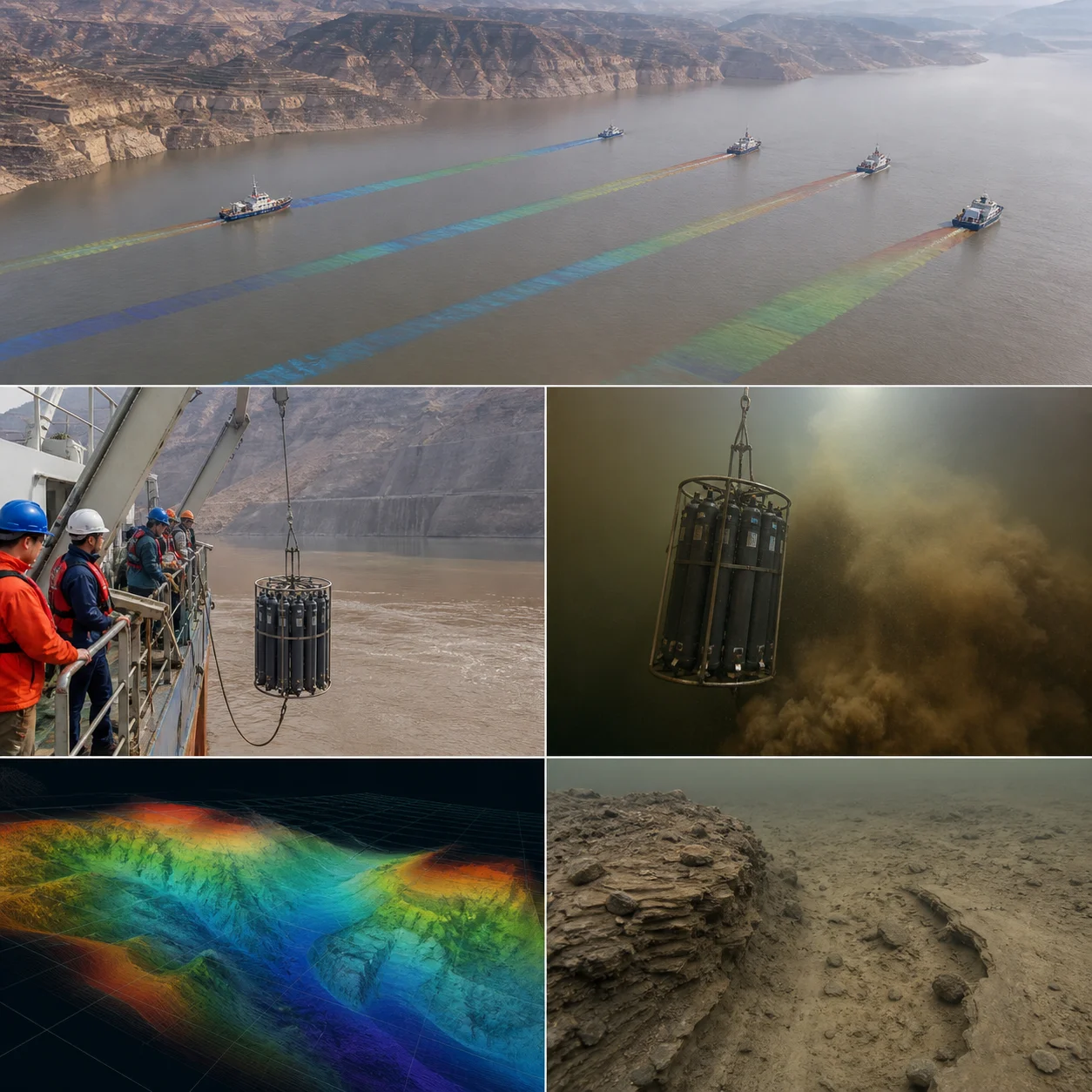
The team reported the first field-scale evidence of a turbidity current crossing into self-acceleration. Measurements captured the structure of the flow and its increasing ability to carry and erode sediment. By combining observations with theory, the researchers identified a threshold that separates a current likely to weaken from one able to intensify through feedback. A theoretical point of no return had finally appeared in a real body of water.
One surprising result concerned slope. It is easy to imagine self-acceleration requiring a steep underwater canyon, where gravity already supplies an obvious descent. The observed current accelerated over a relatively gentle reservoir floor. The feedback between flow and sediment meant that steepness alone did not determine the outcome. A modest slope could support intensification once the current's speed, density, and erosion crossed the relevant balance.
The moving cloud sorts as well as carries. Larger grains tend to settle sooner, while fine particles can stay suspended longer and travel farther. Where a current loses energy, it can leave graded layers and fan-shaped deposits, with coarse material below finer sediment. Those remains turn one rapid event into a durable archive. Geologists can read ancient deposits for evidence of currents no instrument witnessed, while engineers must account for where a modern flow will remove material and where it will put the load down again.
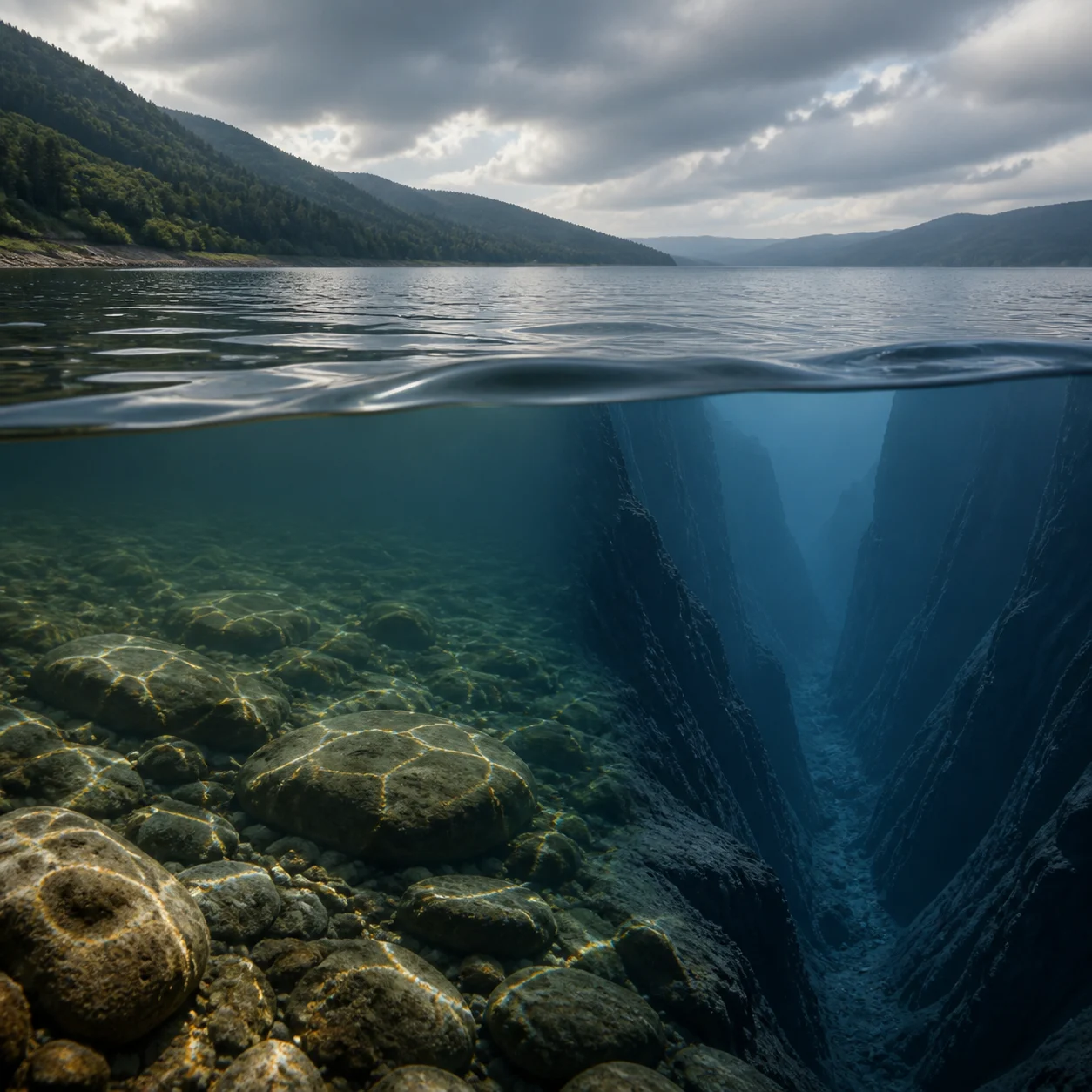
That finding matters inside reservoirs, where sediment accumulates behind dams and reduces storage. Understanding when a turbidity current will strengthen could help engineers predict sediment movement or design controlled flushing strategies. It also matters to basic geomorphology: such currents erode channels, transport material from land toward deeper basins, and build deposits whose layers remain in the geological record.
The mechanism is also relevant to submarine canyons and seafloor infrastructure. Turbidity currents can damage or sever telecommunications cables and move more sediment than ordinary observers ever see. The location remains essential to the result: repeated surveys and samples captured this field-scale event in China's Xiaolangdi Reservoir, not an open-ocean canyon. Applying the same physical threshold to submarine settings is a scientifically relevant comparison, not a claim that this team directly watched an open-ocean canyon ignite.
That boundary does not shrink the result. Reservoir measurements bridged a gap that the ocean had kept difficult for sixty years. The surface could remain ordinary while synchronized maps and samples reconstructed the accelerating body underneath, turning an opaque event into a measured sequence rather than one isolated trace. Researchers watched muddy water stop behaving like a load simply sliding downhill and begin behaving like a system that amplified itself. It eroded the bed, took the sediment into its own body, and used the added density to keep going. An underwater avalanche became its own supply line.