Share
Share







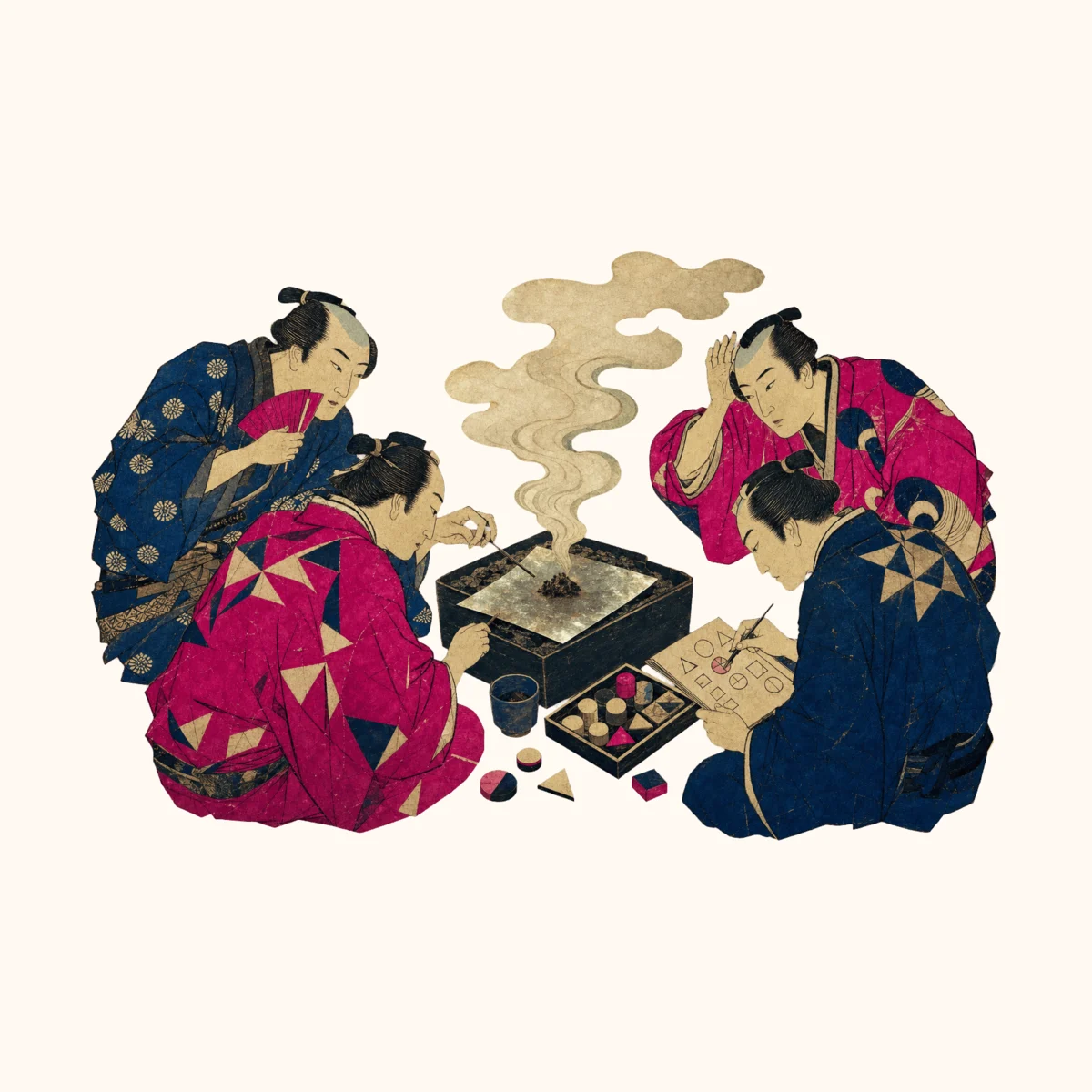
In the Edo-period incense game kōdō, players placed small pieces of fragrant material on thin mica plates and warmed them over hot ash. The goal was to identify the aroma and give it the correct name. Traditional language described this attention as “listening” to incense, making smell behave like a sound that required careful interpretation.
Players cast their guesses with playing pieces while a game master kept score with a writing set. Boxes or cabinets containing the necessary tools could form part of a woman’s wedding trousseau. Imported aromatic materials included agarwood, clove, sandalwood, musk, amber, aloe, frankincense, pine, lily, cinnamon, and patchouli.
A related form, Genji-kō, connected combinations of incense to chapters of The Tale of Genji through geometric symbols. The British Museum’s eighteenth-century lacquered game box therefore held more than burners and scent. It organized fragrance into a system of memory, comparison, notation, and play—an experience in which the nose supplied evidence and the players recorded what they thought they had heard.
Sources