Share
Share







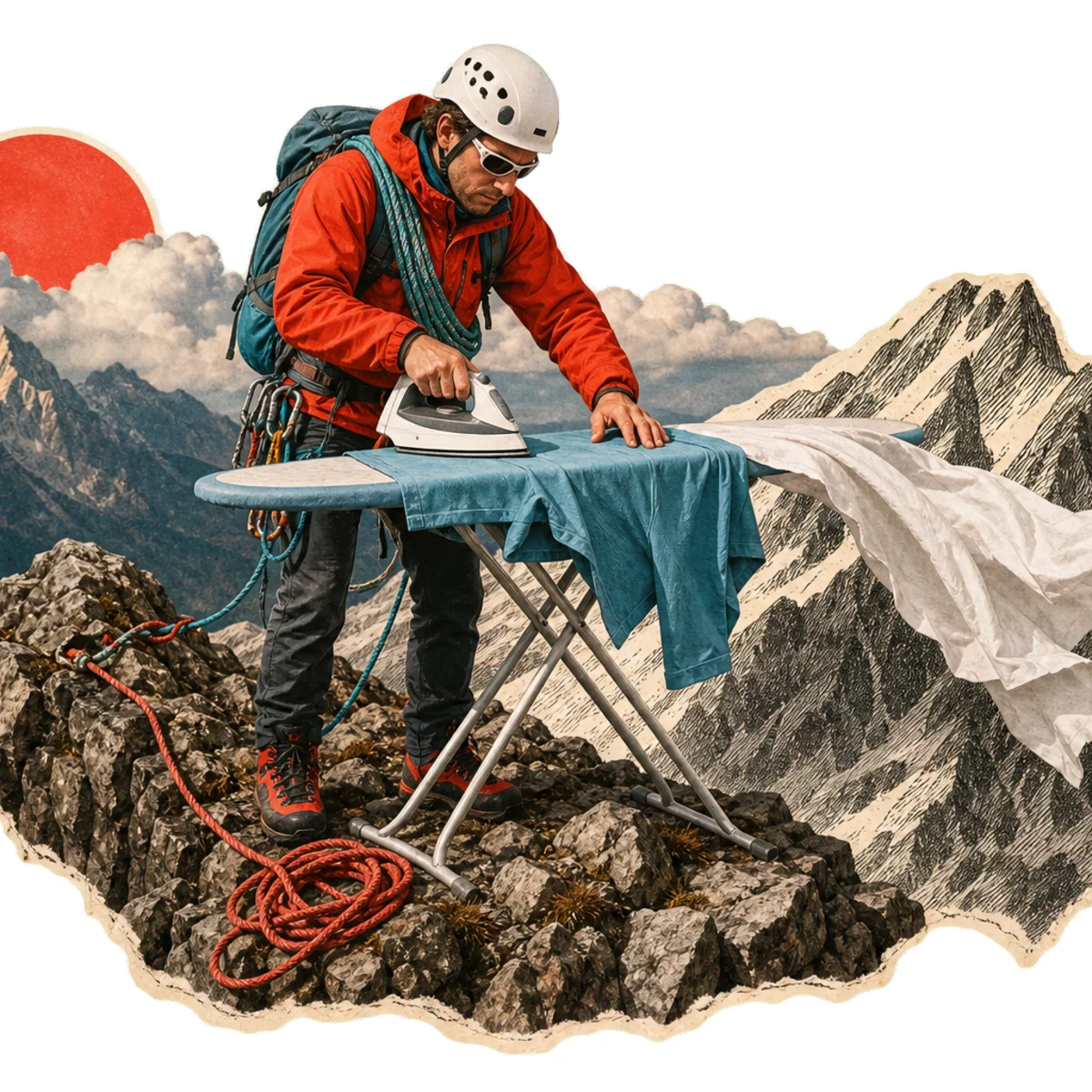
An ironing board is designed for a room that behaves itself. The floor is level. The air is still. The shirt can be spread without blowing away, and the person holding the iron is not also negotiating rock, water, height, weather, or an audience wondering why laundry has arrived before lunch. Extreme ironing begins by removing that agreement between object and place.
Phil Shaw’s account starts in Leicester in the late 1990s. He came home to a pile of clothes waiting to be ironed while wanting to go climbing instead. His solution was not to finish one activity and begin the other. He combined them, taking the board and iron outside and treating the unfinished chore as equipment for an outing. The ordinary task acquired difficulty without acquiring a practical reason for that difficulty.
That distinction is the entire mechanism. Extreme ironing is not simply pressing a shirt outdoors. It places the familiar motions of ironing in deliberately unsuitable adventure settings. The board must travel. It must be positioned where a board does not naturally belong. The participant then attempts to preserve the calm visual grammar of domestic work—flat cloth, deliberate strokes, a tidy result—while the surroundings supply inconvenience, risk, spectacle, or absurd scale.
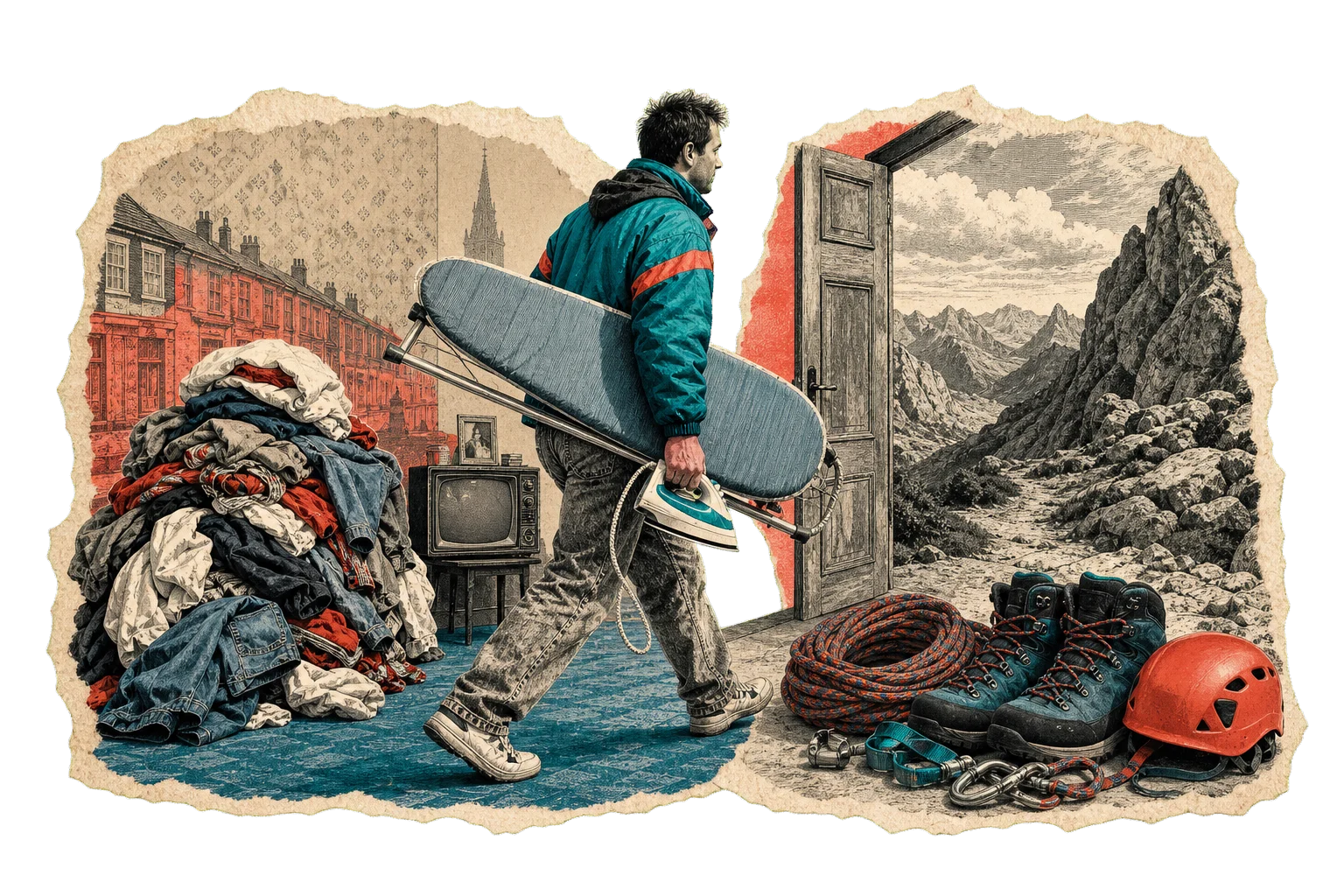
The iron becomes a prop with two identities. Indoors, it is judged by heat, steam, weight, and the smoothness left behind. In an extreme-ironing image, its most important feature is recognizability. Even unplugged, it announces the chore. The board does the same. A climber alone on rock reads as adventure; add a board, shirt, and iron, and the scene becomes an argument between two incompatible instructions.
One instruction says to seek a stable surface. The other says to leave stable surfaces behind. One says to protect fabric from dirt and creases. The other carries that fabric into places where keeping it clean becomes its own expedition. Ironing asks for repetition and control. Adventure settings introduce interruption. The joke continues as long as the participant behaves as if the domestic instruction still takes priority.
This is why the activity works better as comic participation than as a tightly governed global sport. It does not need a universal rulebook to be understood. A viewer can assess the central contrast immediately: the more convincingly inappropriate the setting, and the more seriously the participant attends to the shirt, the clearer the premise becomes. The humor sits in the distance between the effort spent and the usefulness gained.
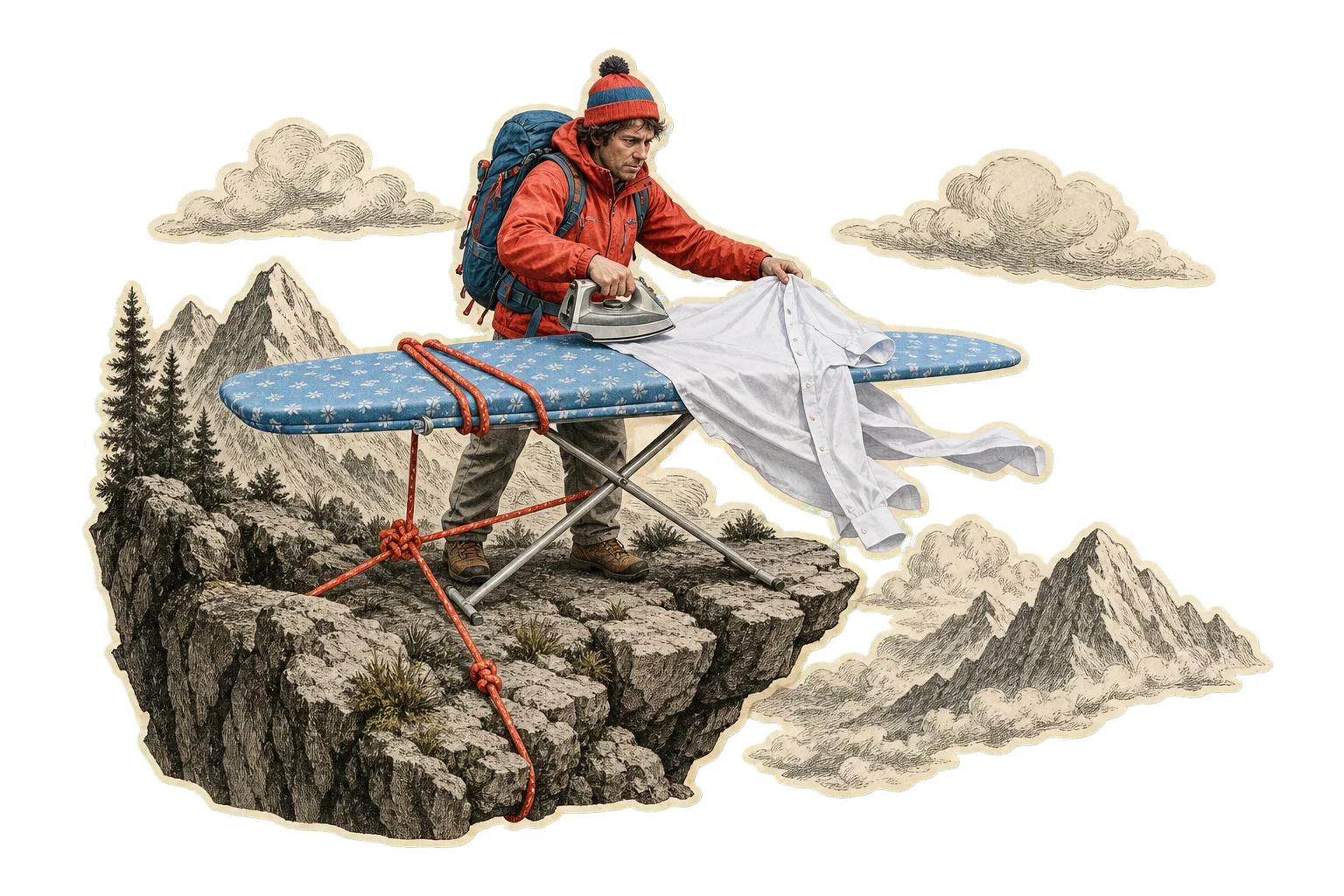
A world championship was held near Munich in 2002, a fact recorded by Guinness World Records. The event gave the pastime the temporary architecture of organized competition, but the title should not be allowed to make the activity more official than the evidence supports. Extreme ironing’s durable form is portable and informal. Anyone who can transport the visual kit can reproduce the basic contradiction without joining a league or consulting a governing bureau.
The board is especially important because it refuses to disguise itself as outdoor gear. It is long, awkward, and built to stand at waist height in a house. Strapped to a person or carried toward an unsuitable site, it makes the journey visible. A compact travel iron alone might be mistaken for practical luggage. A full ironing board turns the approach into part of the performance.
The shirt completes the triangle. Without fabric, the board and iron might be sculpture or discarded appliances. With a garment laid flat, the participant enters the posture of a person doing chores. The surroundings can be immense, but the action remains small: align a sleeve, hold an edge, move the iron, check the surface. The scene gains its scale by contrasting a tiny domestic correction with a landscape that does not care about wrinkles.
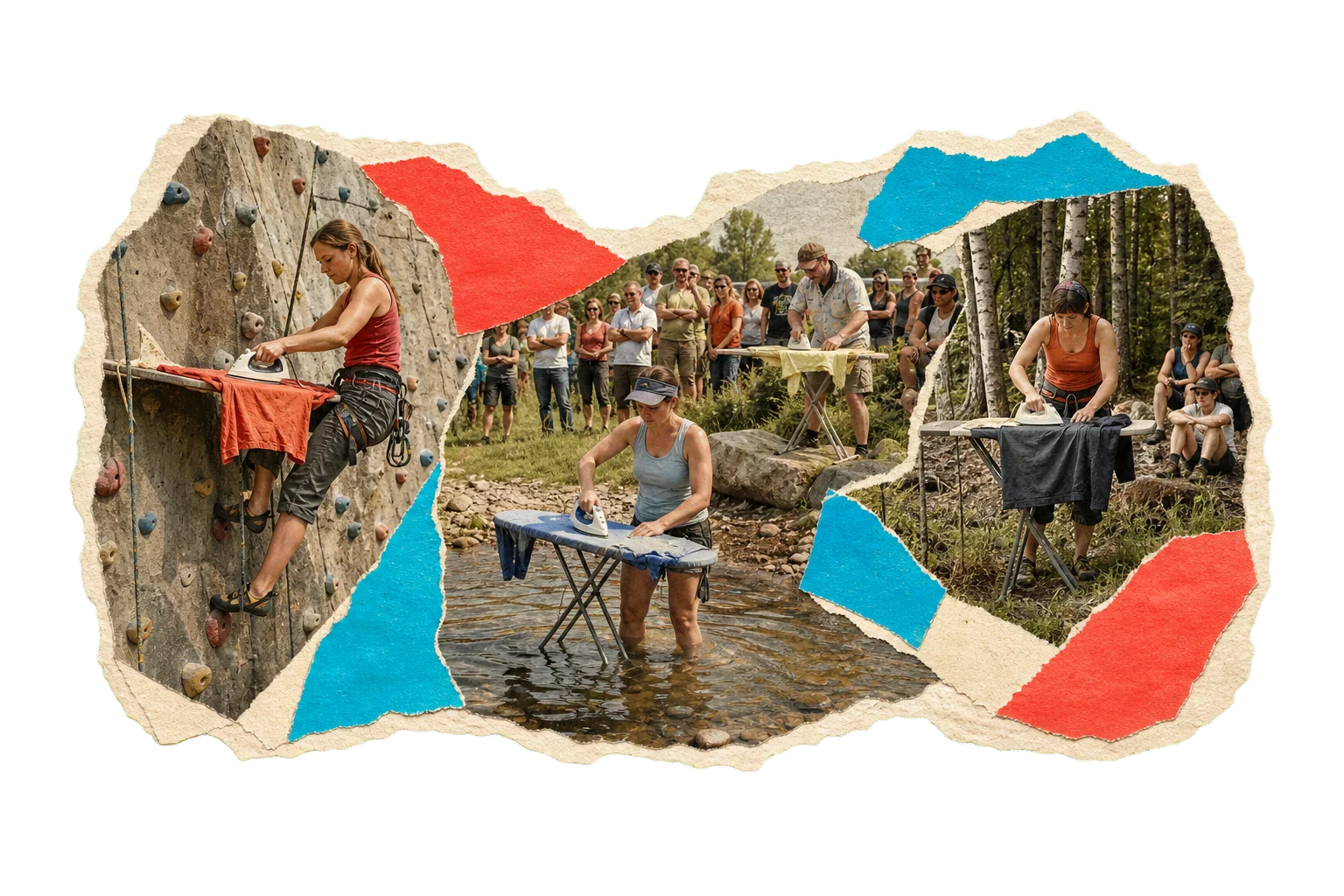
Extreme ironing also reverses the normal promise of convenience. Appliances are usually sold as ways to reduce labor and save time. Here, the appliance is deliberately made harder to use. Transporting it, stabilizing it, and keeping the cloth in place add work that no household result requires. The inefficiency is not a failure of the activity; it is the activity’s creative material.
Shaw later described his return to extreme ironing as something people responded to because it was fun. That modest claim fits better than grand declarations about sport or conquest. The point is not that pressing clothing becomes genuinely more important when performed somewhere difficult. The point is that an ordinary object can reorganize how a setting is read. A board on rock converts scenery into a laundry room that has made several serious planning errors.
Most chores disappear when they are done well. The shirt is smooth, the board is folded, and the iron cools out of sight. Extreme ironing makes the apparatus impossible to ignore. It sends the chore outside, preserves its straight face, and lets every inconvenience become evidence that the joke has reached the correct location. The fabric may or may not become flatter. The image has already succeeded: domestic order has traveled somewhere it was never invited.
Sources