Share
Share







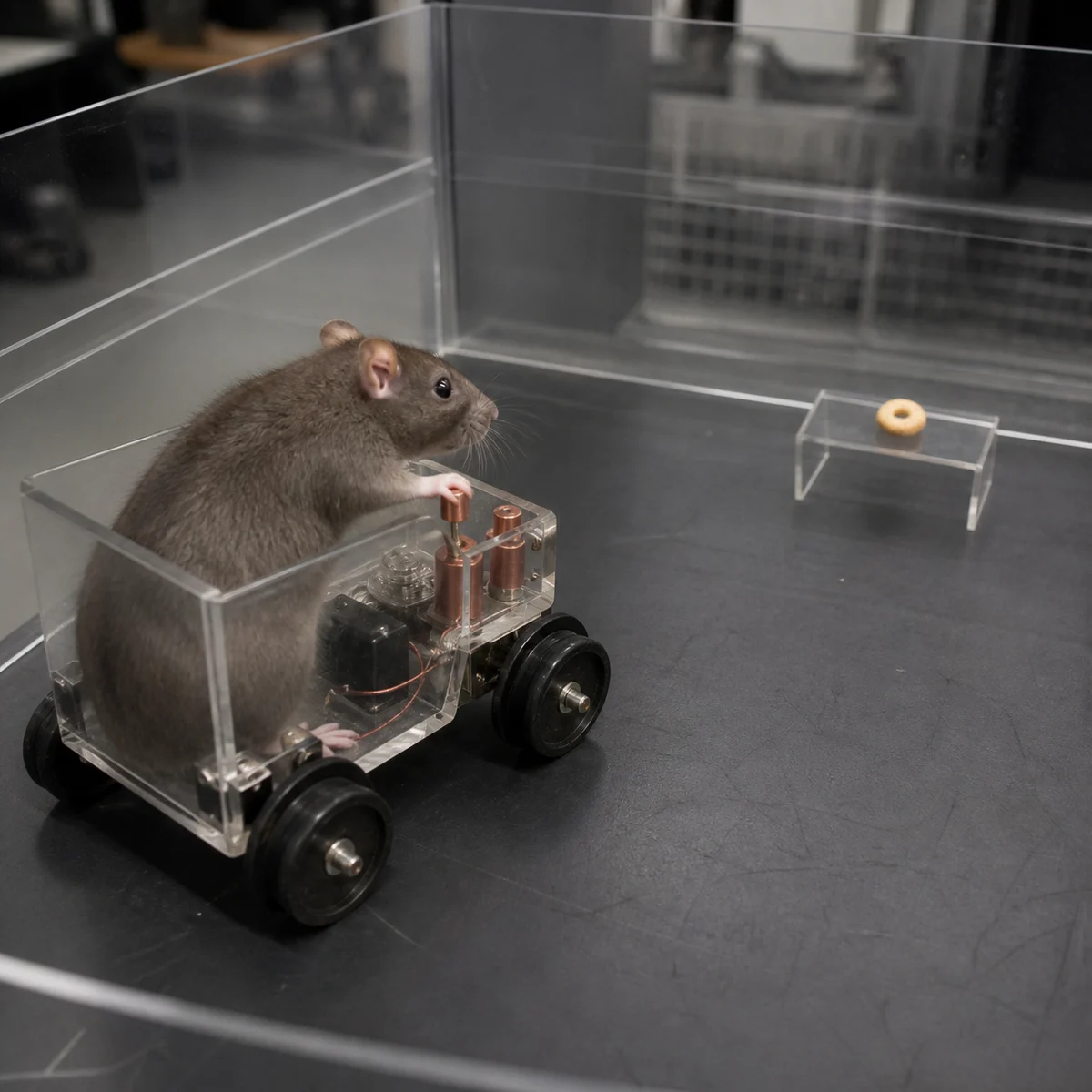
University of Richmond researchers trained seventeen rats to drive small clear vehicles. A rat entered the compartment and touched copper bars that completed circuits, moving the car in different directions. With practice, the animals steered across an arena toward cereal rewards rather than merely riding a preset route.
The study compared rats raised in enriched environments with those in standard housing and measured behavior and stress-related physiology. Enriched rats generally learned the task more successfully, supporting the broader idea that complex environments can affect problem-solving and emotional responses. Driving added a novel task with distance, direction, and reward under the animal's control.
The cars were research apparatus, not proof that rats understand traffic, and the results do not establish a human mental-health treatment. Possible future relevance is a reason to study behavior, not a clinical conclusion. The evidence is charming enough without that leap: a rat could enter a little vehicle, operate its controls, and make the cereal get closer.
Sources