




 Share







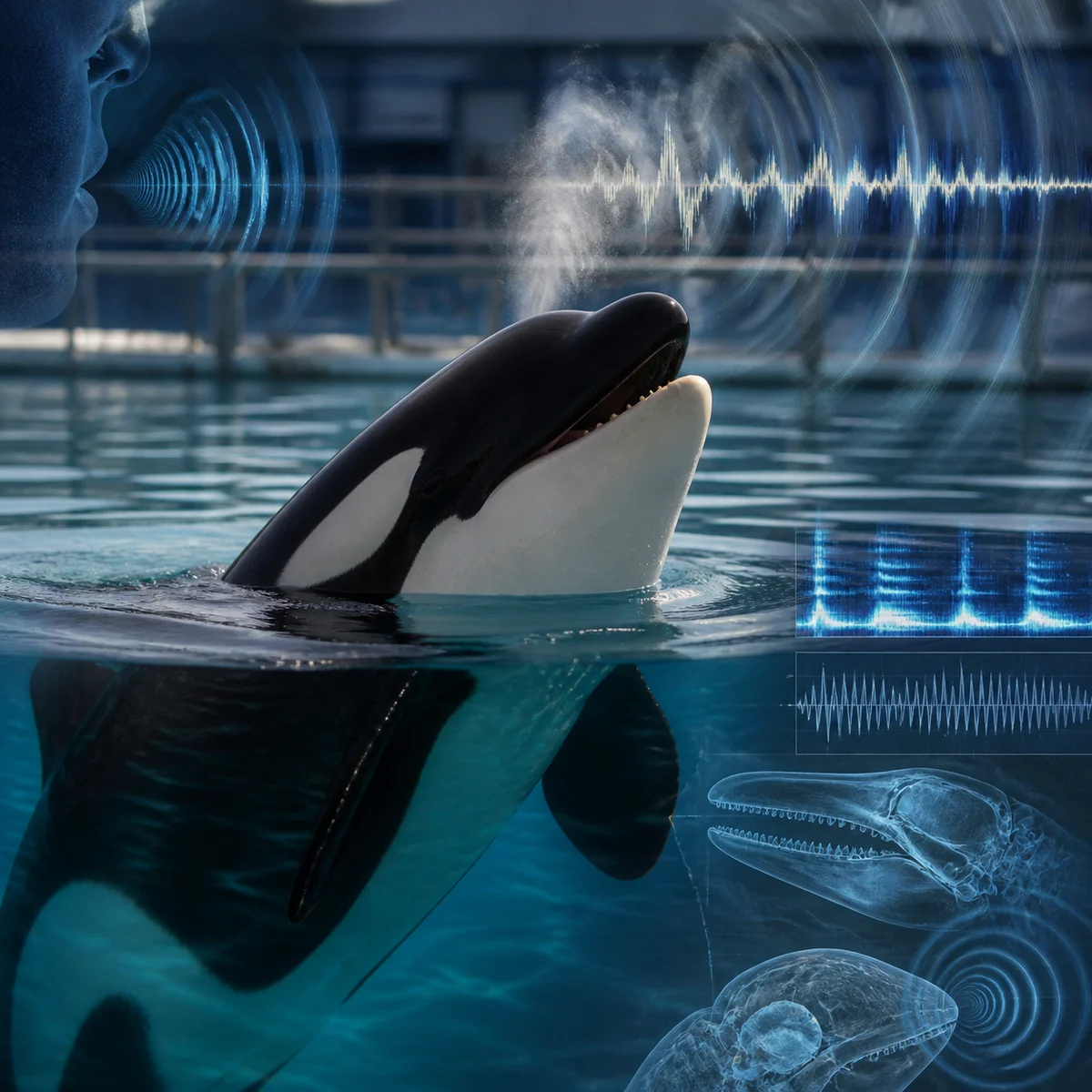
A female orca named Wikie heard an unfamiliar sound and tried to reproduce it. Researchers presented calls from other killer whales as well as human-made noises and word-like patterns. Among the results were rough but recognizable approximations of “hello” and “bye bye,” sometimes achieved within the first several attempts.
The task tested flexible vocal imitation. Killer whales live in social groups with distinctive call repertoires, and learning from other individuals may help maintain those traditions. By asking Wikie to copy sounds outside her practiced set, the researchers could examine whether she was limited to fixed calls or could build a new acoustic pattern from what she heard.
Her anatomy ensured that imitation would not sound like a human speaker. An orca cannot place lips and tongue as we do, so the output was an orca-shaped approximation judged for similarity to the model. That makes the success more informative about learning: she mapped a heard pattern onto a very different sound-producing system.
Nothing in the test shows that Wikie understood English vocabulary or used a greeting communicatively. She copied word-like sounds in a controlled context. The genuine finding is already strong. A killer whale could hear novel acoustic structure, attempt it rapidly, and produce forms recognizable to human listeners—one possible foundation for the vocal cultures heard among wild groups.
Sources