





 Share








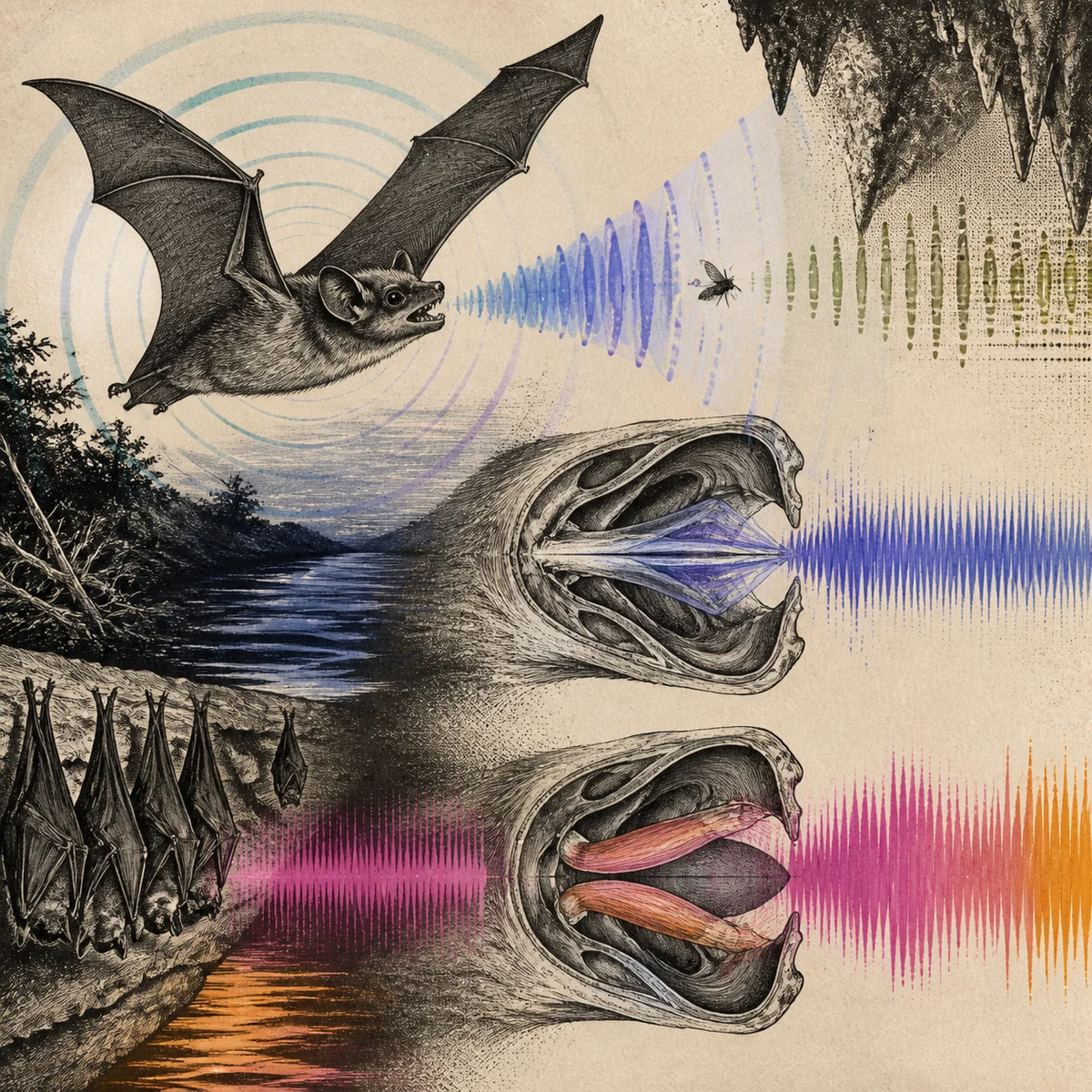
Daubenton’s bats squeeze an enormous vocal range from a tiny larynx. To see how, researchers mounted five excised bat larynges, passed air through them, and filmed moving tissue at rates up to 250,000 frames per second. Two different structures handled opposite ends of the register.
For echolocation, thin vocal membranes vibrated at ultrasonic frequencies. Superfast muscles let a hunting bat produce as many as 200 calls per second, then listen for echoes from flying insects. Low social growls came from heavier “false” vocal folds, tissue that sits above the ordinary vocal folds and is not used in normal human speech.
Human throat singers and death-metal growlers also recruit their false folds to make unusually low sounds, so the anatomical comparison is real. It does not mean bats are performing music. The team measured growls around one to five kilohertz, often heard around crowded roosts, but could not assign one universal message: some sounded aggressive or annoyed, while others may serve different functions. The bat’s seven-octave range is a piece of biomechanics, not a playlist.
Sources