Share
Share







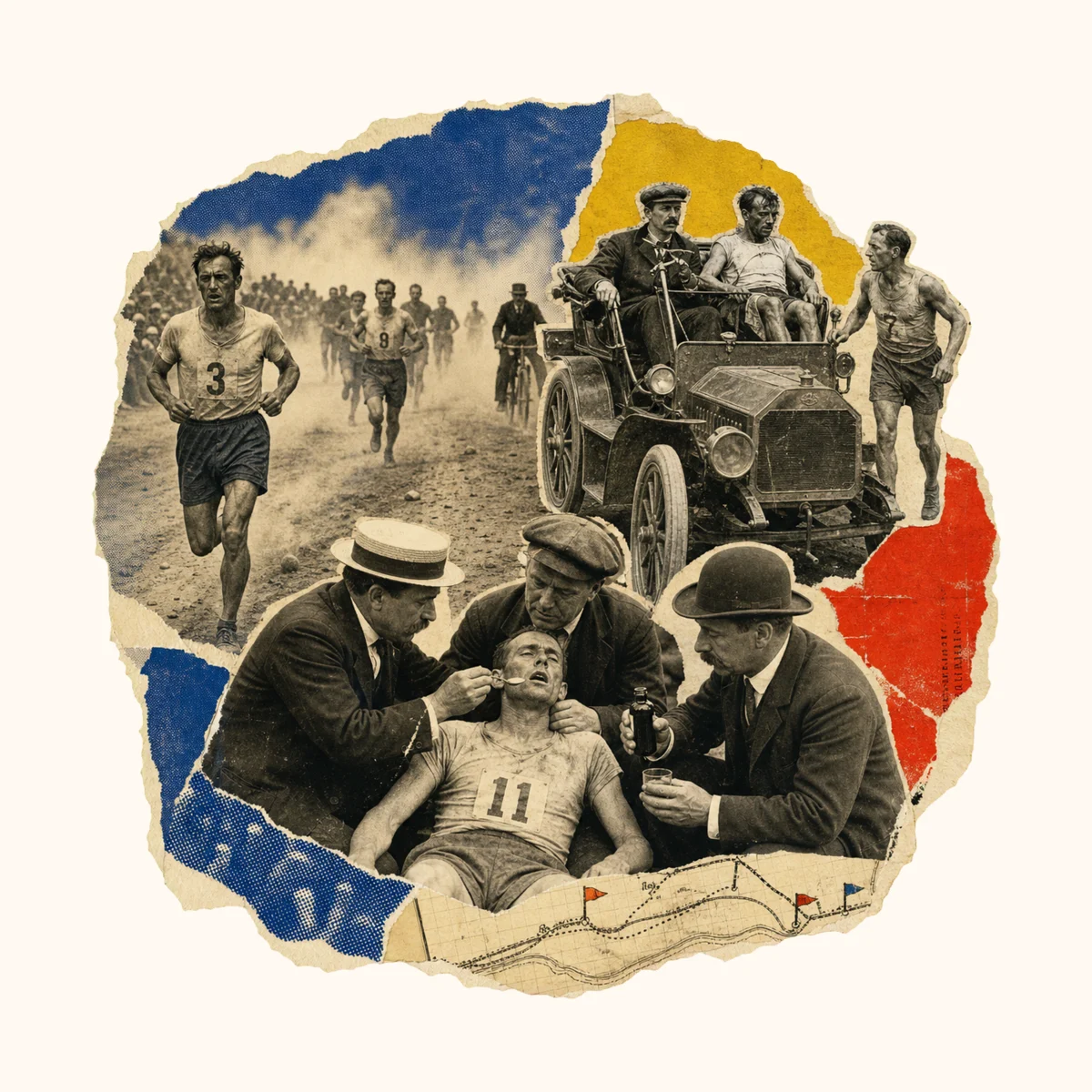
August 30, 1904, was a day like no other in Olympic history. The marathon at the St. Louis Games transformed from a test of endurance into a surreal endurance spectacle. With a temperature soaring to 90°F and only two water stations along the 24.85-mile course, runners were forced to navigate not just the hilly terrain but a whirlwind of bizarre events.
Amidst the chaos, Thomas Hicks emerged as the official winner. His secret weapon? A curious cocktail of strychnine, egg whites, and brandy, administered by his handlers. This concoction, intended to stimulate, now stands as the first recorded instance of performance-enhancing drugs in the Olympics, though its ingredients sound more like a recipe for disaster than victory.
Meanwhile, Fred Lorz, another contender, found himself incapacitated by cramps. Seizing an opportunity to cheat, he hopped into a car, waving at baffled spectators as he sped by. When the car broke down, Lorz resumed running and astonishingly crossed the finish line first. His triumph was short-lived, however, as race officials caught wind of his antics and disqualified him.
In the end, the 1904 marathon was a fever dream of dust, deception, and dubious doping. It was a race that redefined the limits of absurdity in sports—a true testament to the wonderfully weird. The finish line wasn't just the end of the race; it was a portal back to reality.