Share
Share







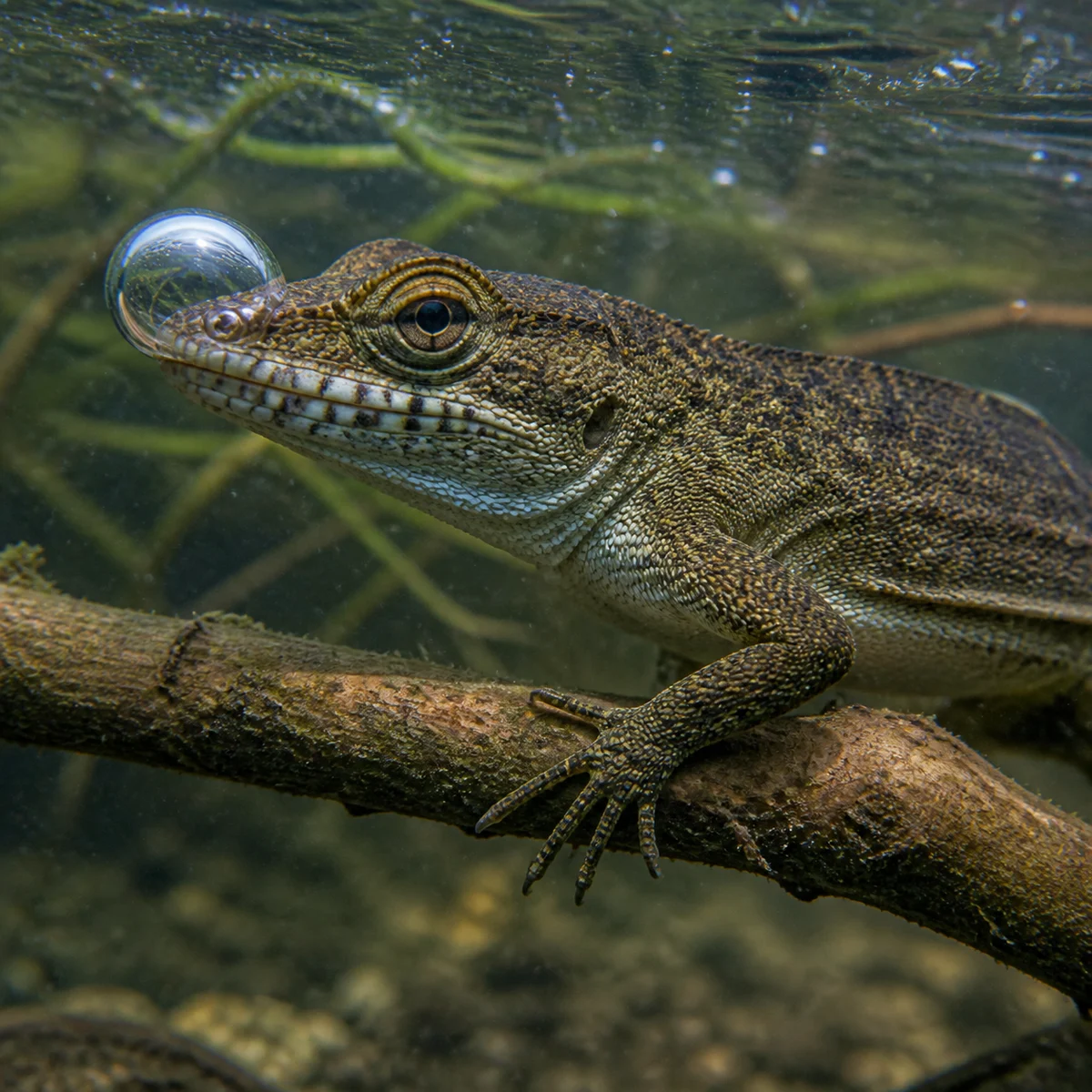
When threatened, a water anole can leap into a stream and remain submerged while a bright bubble clings to its snout. The lizard exhales into the pocket and draws air back from it, making the bubble pulse over the nostrils like a tiny external lung. Its water-repellent skin helps the air remain attached.
Researchers tested whether the bubble was merely a visual side effect or an important part of the dive. They applied a treatment that prevented a stable bubble from forming, then compared submersion times. Lizards without the durable pocket surfaced about thirty-two percent sooner. That result shows that rebreathing the bubble extends the escape, giving an animal more time to hide below predators on the bank. The repeated surface-to-bubble cycle is visible as the silvery pocket changes size against the lizard's head.
The bubble's chemistry changes as oxygen is used and carbon dioxide accumulates, and gas exchange with the surrounding water could contribute. But calling it a fully functioning physical gill goes beyond what the experiments establish. The demonstrated trick is already enough: the anole carries a temporary air reservoir on its face and breathes from it more than once. It does not bring a tank underwater. It brings the boundary between skin, air, and water.
Sources