Share
Share







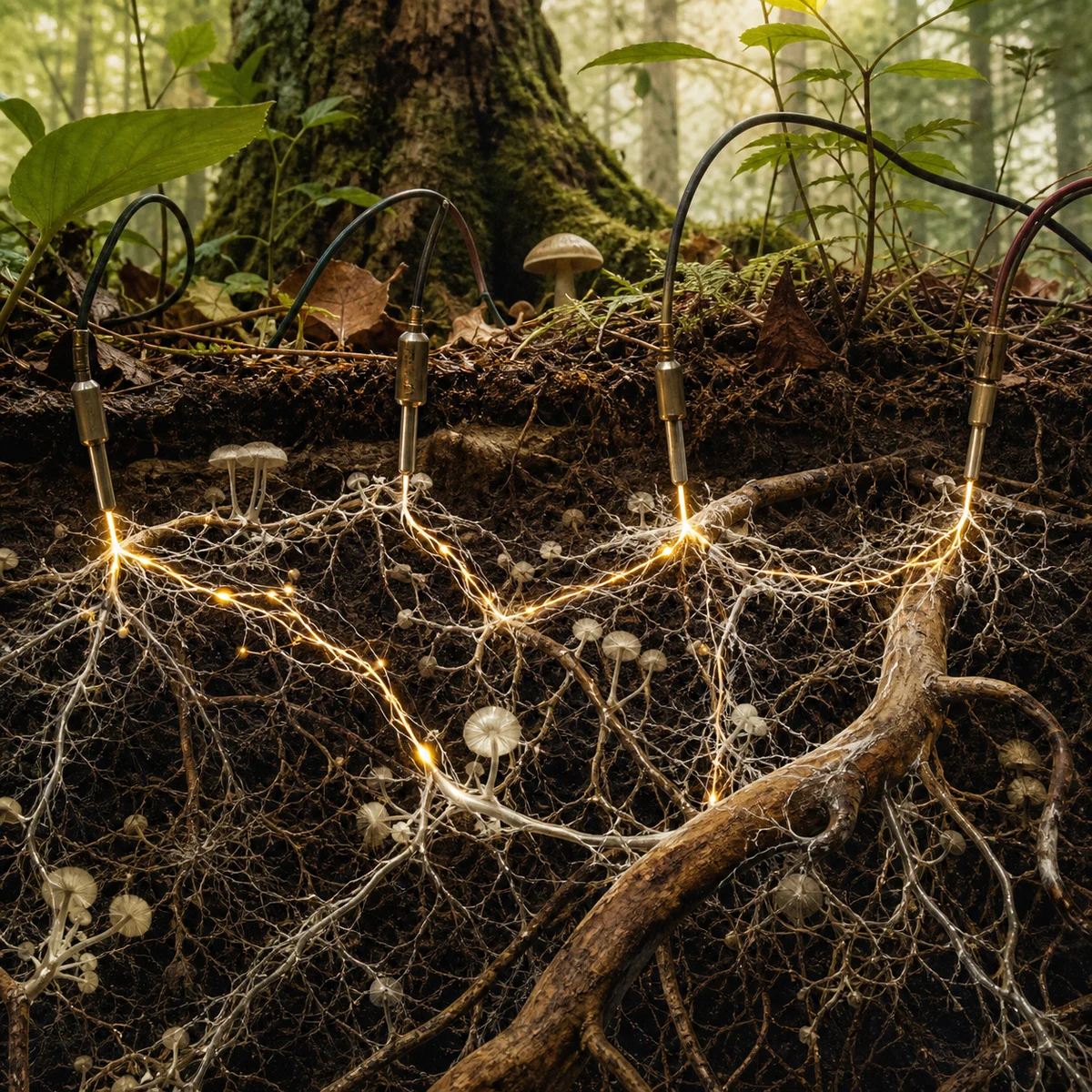
Beneath a forest floor, mycorrhizal fungi build webs of microscopic filaments that associate with plant roots. Researchers know these partnerships affect nutrients, water, and plant health. They also know fungi generate electrical activity. What remains difficult is recording that activity well enough to connect a particular signal with a particular biological event.
A Stanford team is developing bioelectronic tools for the job. Electrodes must meet fungal tissue that is thin, branching, moist, and buried in a busy mixture of roots, minerals, microbes, and changing water. A useful system must be sensitive without becoming the strongest disturbance in the experiment.
Measurements can then be paired with controlled changes in the environment. Researchers might alter moisture or another condition and watch whether electrical patterns shift. Repeated observations can reveal correlations, timing, and possible functions. That is a slower path than declaring that every spike contains a message, but it produces claims the data can support.
Popular accounts often turn fungal networks into literal conversations among trees. The current project does not decode words, motives, or a forest-wide social medium. It records electrical signals and asks what ecological information, if any, they carry. The distinction protects the real wonder: scientists are building instruments capable of following activity through living filaments that have usually remained hidden in opaque soil.
Sources