Share
Share







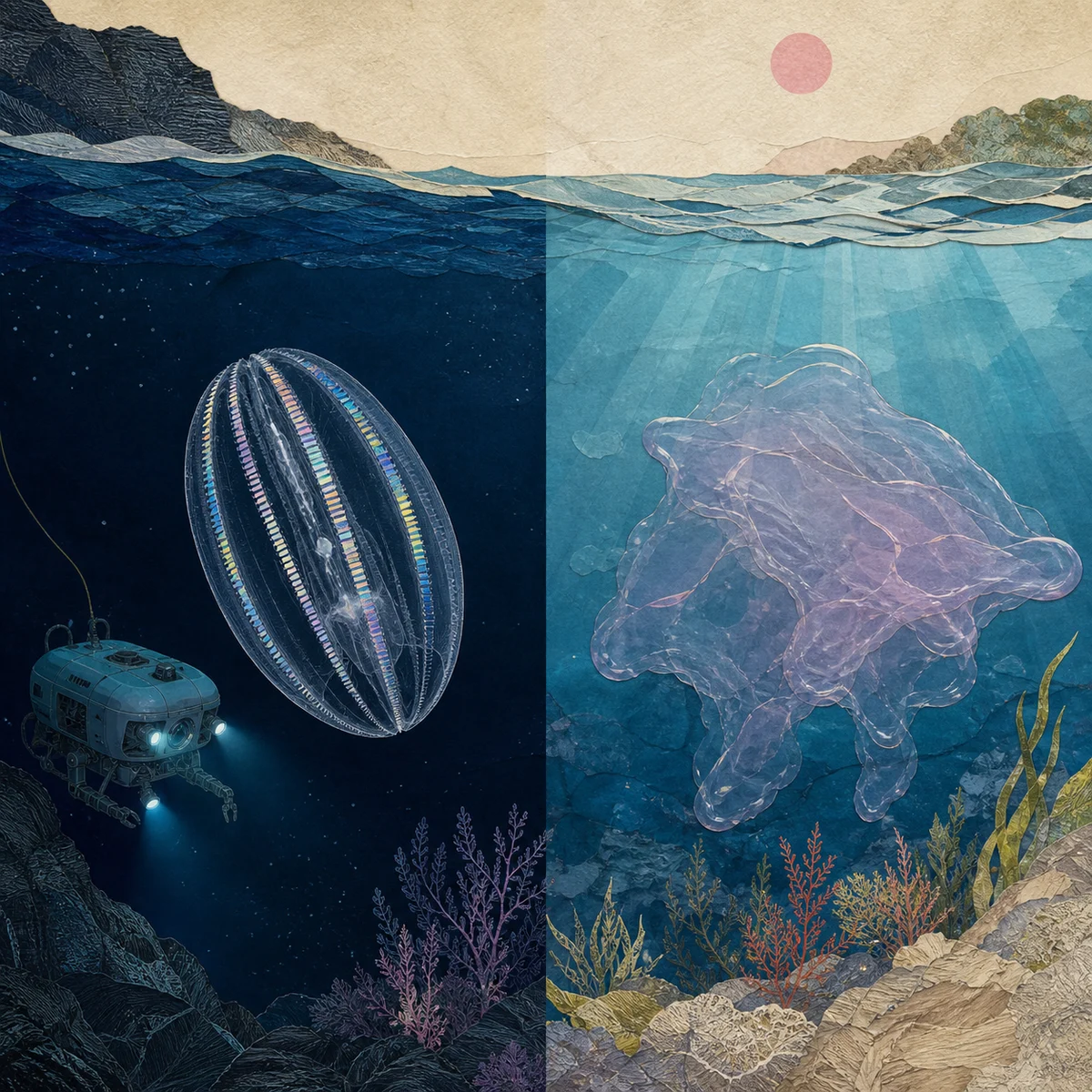
A deep-sea comb jelly may arrive at the surface as a poor representation of itself. Some pressure-adapted species lose their structure so dramatically that researchers describe them as “melting.” Temperature is not doing the melting. The missing ingredient is the immense external pressure of the animal's normal habitat.
Researchers traced the effect to cell membranes. Deep and shallow comb jellies use differently shaped lipid molecules, allowing each membrane to sit at a workable point between rigidity and fluidity. At depth, pressure compresses membranes; the deep-sea molecular design compensates. Remove that pressure and the membrane can become unstable enough for the animal's form to collapse.
Move in the opposite direction and shallow-water membranes face their own failure. Under deep-sea pressure, they may become insufficiently dynamic for critical cellular work. Adaptation is therefore not a universal upgrade. It is a fit between molecular structure and a particular physical world.
The claim applies only to some deep-sea comb jellies, not the whole group. The result nonetheless changes how specimens must be interpreted. A damaged animal brought upward may reveal more about collection stress than about its healthy anatomy. Tools that observe and sample animals at depth can protect both the creature and the accuracy of the science.
Sources