Share
Share







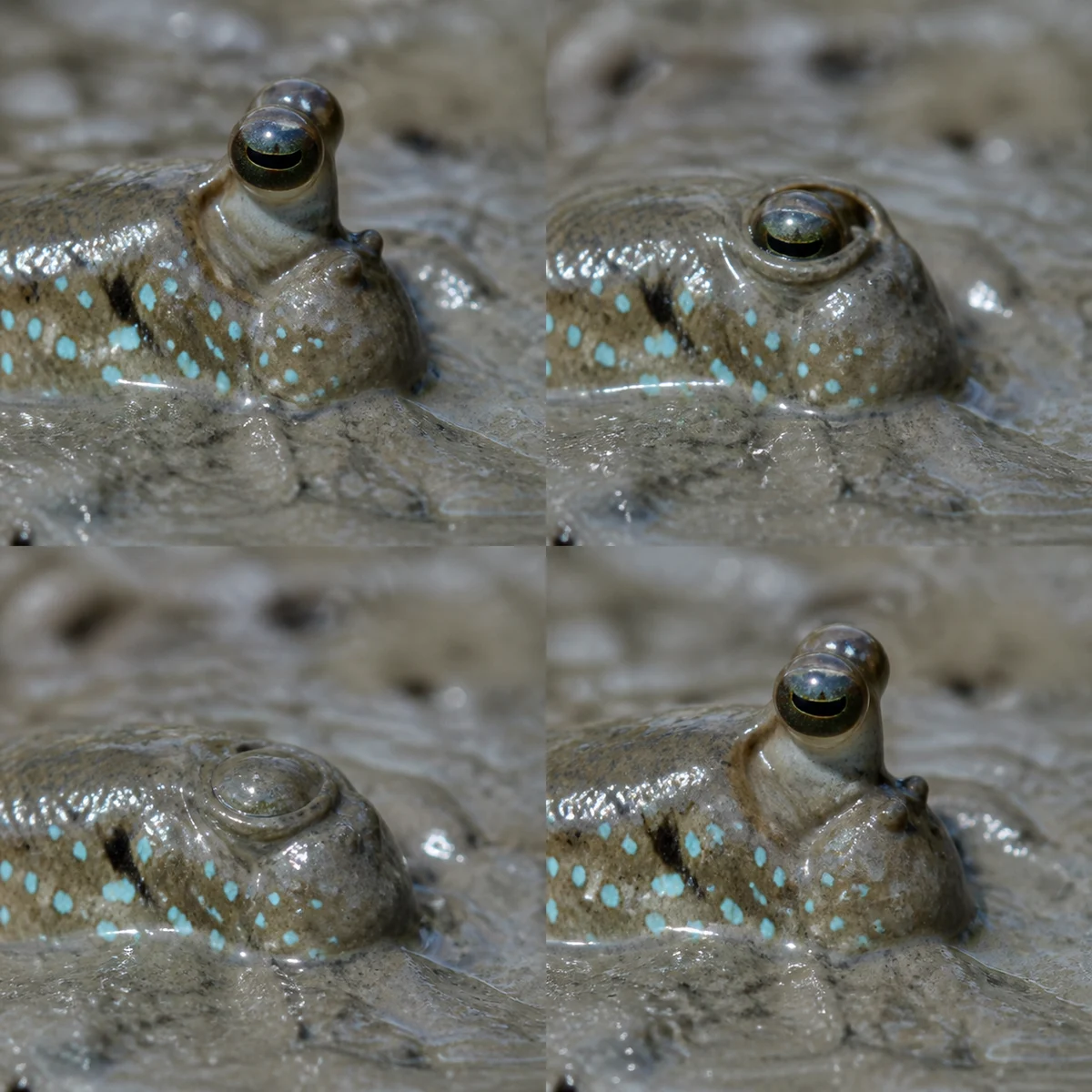
On land, a mudskipper blinks by retracting its protruding eye into the socket. Soft tissue rises around the descending surface, briefly enclosing it in a cup. That motion wets the eye, clears debris, and protects it from contact without a conventional movable eyelid sweeping across the front.
Researchers tested the function by observing blinking under different conditions. Mudskippers blinked more when the eye surface needed moisture and in response to potential irritation or threat. Tear-like fluid held in the tissue cup could spread across the retracted eye before it emerged again. Muscles and existing eye structures therefore produce several jobs familiar from a terrestrial blink through a different mechanical route.
Because early vertebrates also moved from water onto land, mudskippers offer a useful convergent model for how blinking functions can arise. They are not living replicas of those ancestors, and their behavior cannot prove exactly how ancient eyes blinked. The animal supplies an example, not a time machine: if an eyelid is absent, move the eye instead.
Sources