Share
Share







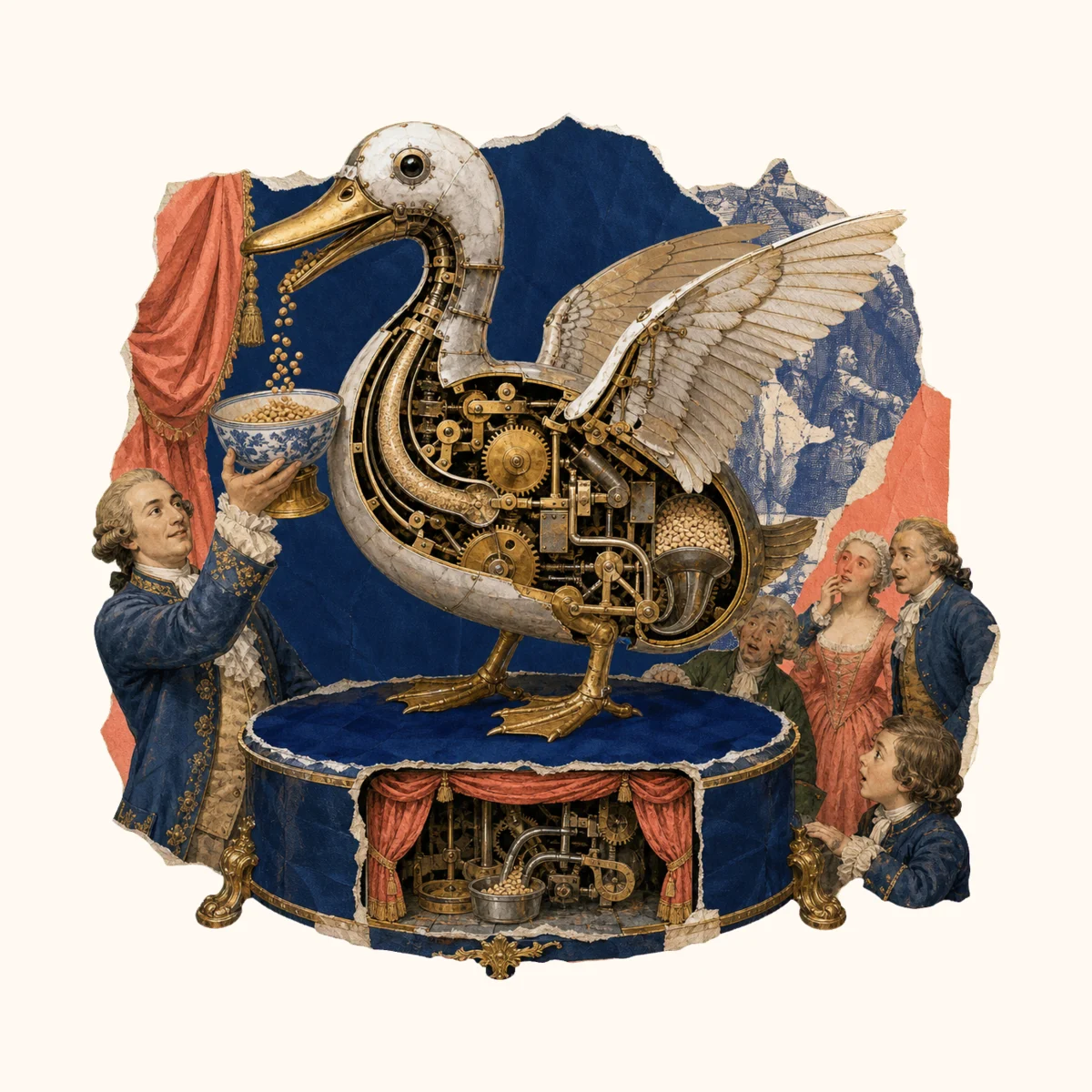
In 1738, Jacques de Vaucanson unveiled a mechanical marvel—a duck that could eat, drink, and even appear to digest its meals. This golden, copper-plated creation flapped its wings, quacked, and performed an illusion so convincing that audiences were left in awe. But here's the twist: the duck's digestive prowess was a cleverly engineered ruse.
Inside the duck's belly lay a miniature "chemical laboratory," a complex system of tubes and bellows that mimicked the digestive process. When the duck "ate" grain, it was actually stored in one compartment, while pre-stored pellets of dyed breadcrumbs were expelled from another. This sleight of hand was a testament to Vaucanson's ingenuity.
The duck was part of a trio of automata, including a Flute Player and a Tambourine Player, each showcasing Vaucanson's mechanical mastery. Though the original duck has since disappeared, its legacy as a symbol of Enlightenment innovation endures.
Vaucanson's duck may have been an illusion, but it remains a testament to the power of imagination and the allure of the mechanical wonders of the past. The world is indeed stranger than fiction, and this duck is proof.