Share
Share







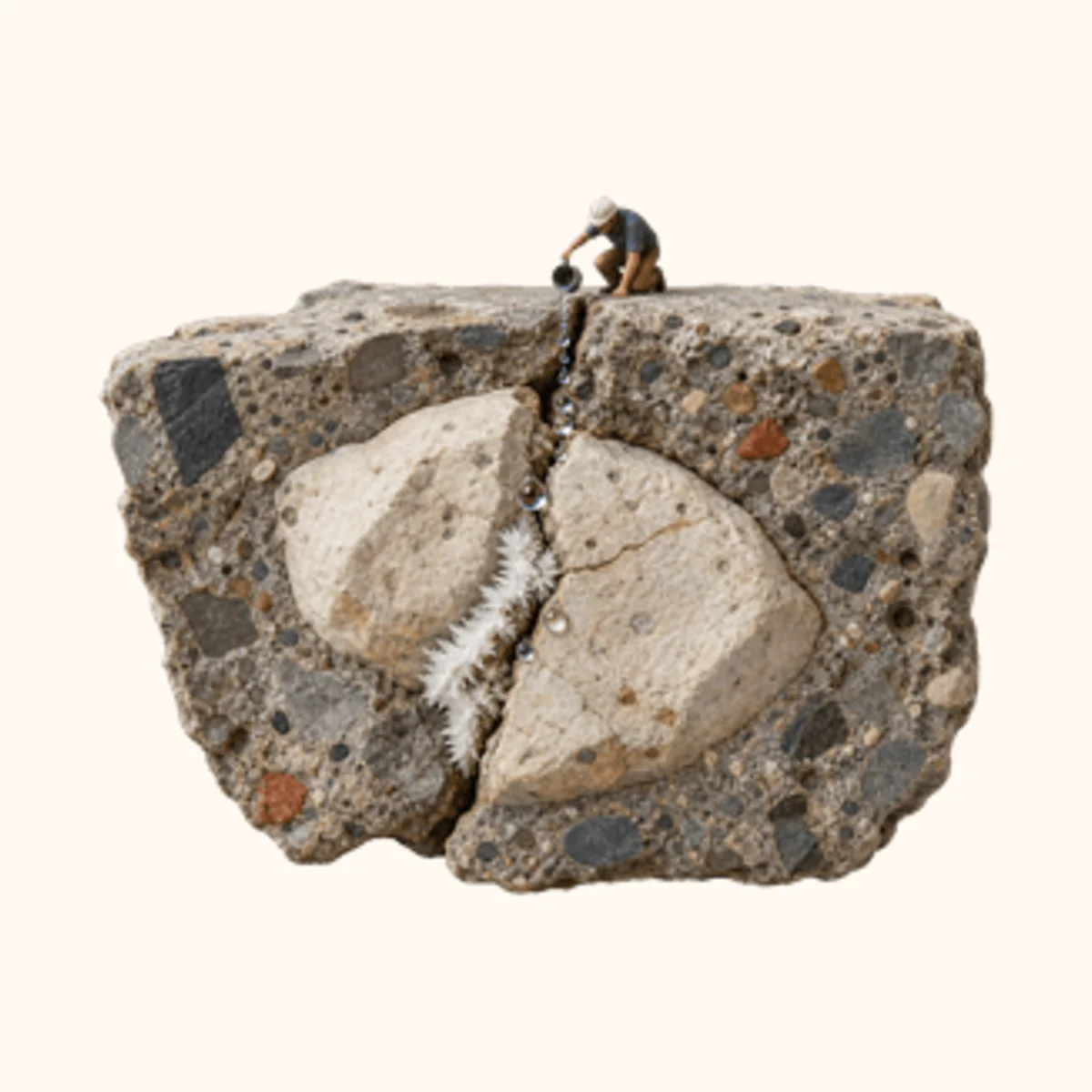
Researchers found that reactive lime clasts left by hot mixing may explain part of ancient Roman concrete's durability. Water entering a crack can react with the lime, create a calcium-rich solution, and grow new minerals into the gap. In replica tests, hot-mixed samples sealed deliberate cracks within two weeks while comparison concrete did not. It is one mechanism, not a single explanation for every Roman structure—but it makes a chunk once dismissed as sloppy mixing look more like a repair kit.
Sources