Share
Share







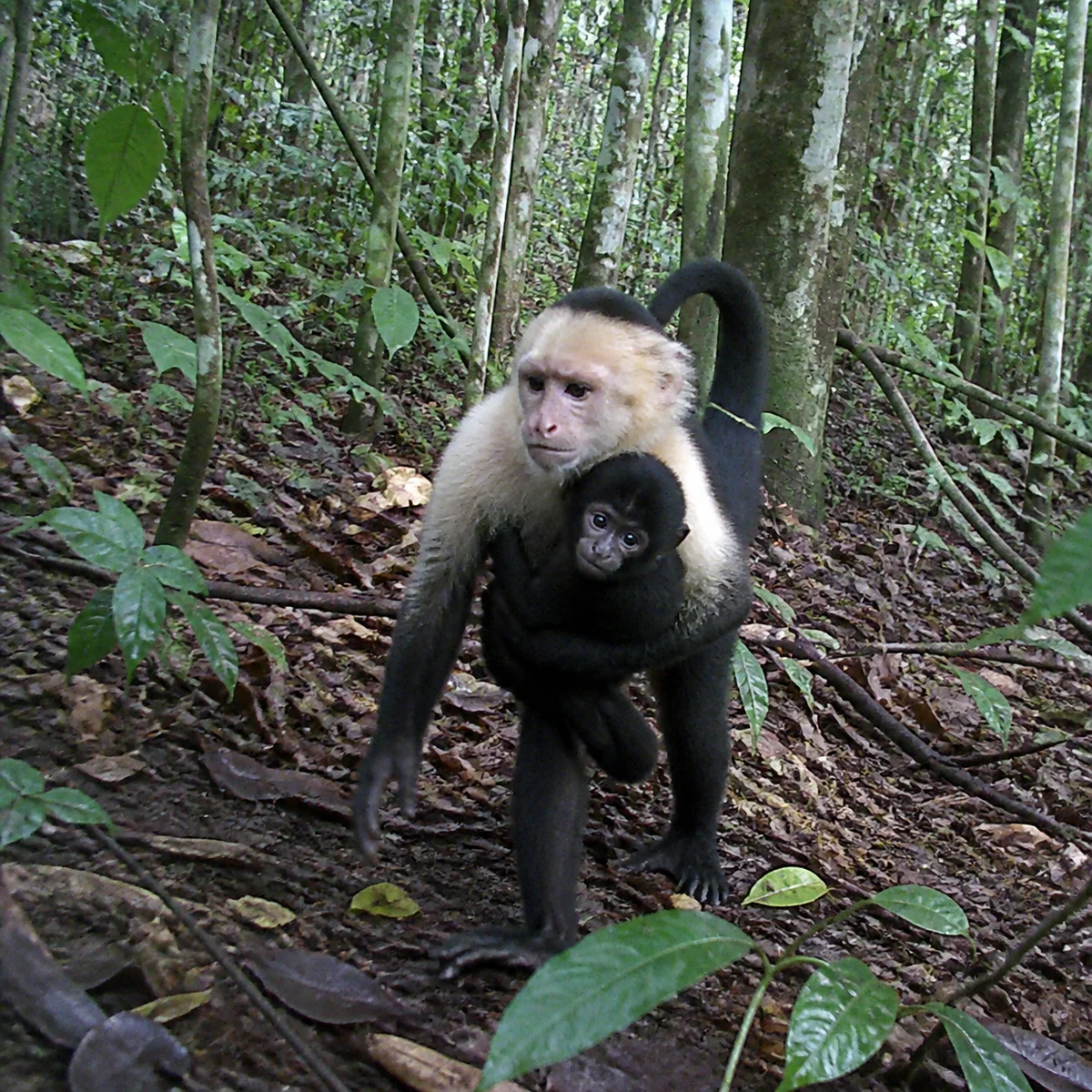
Camera traps on a Panamanian island recorded a disturbing new behavior: young male capuchins carrying infant howler monkeys. Across fifteen months, researchers documented eleven abducted infants. Some were carried for days as the capuchins traveled, rested, and fed.
The pattern began with one male and later appeared in others, suggesting that a behavior could spread through the group. It did not resemble ordinary adoption that benefited the infant. The howler mothers were absent, and the young animals depended on care the capuchins could not provide. The observation therefore adds a difficult case to the study of social learning: innovation can spread even when it is harmful to another species.
Researchers do not know why the first capuchin began. Boredom and other ideas have been proposed, but none is established as the cause. Camera traps reveal who carried whom, how often, and for how long. They do not reveal the private motive. Eleven infants are the finding; an easy explanation is not.
Sources