




 Share








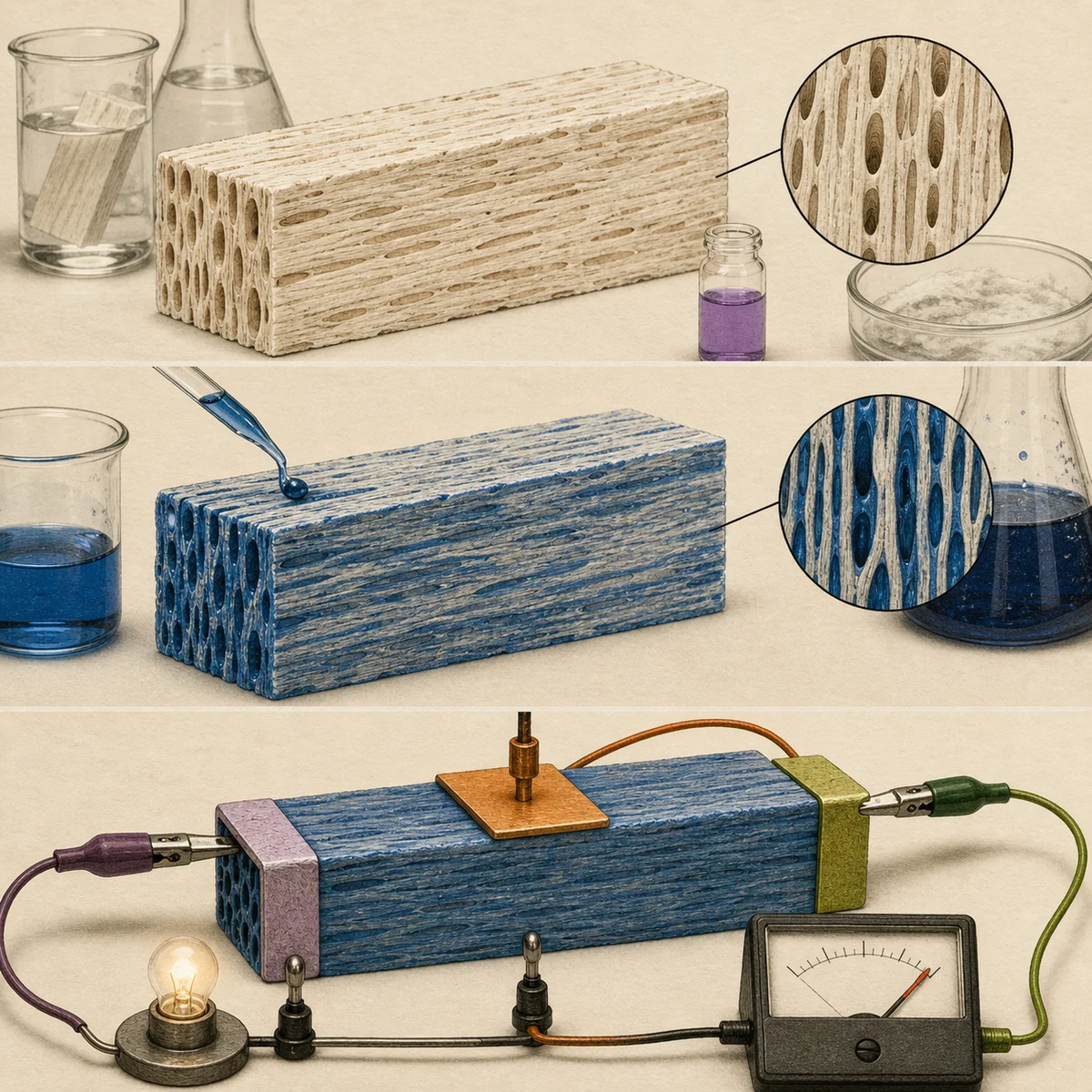
Researchers at Linköping University and KTH began with balsa, chosen for its even structure and lack of pronounced grain. They removed lignin, leaving a pale network of cellulose channels, then filled that framework with the conductive polymer PEDOT:PSS. The polymer coated the internal surfaces throughout the wood instead of sitting only on top.
Electrodes attached to the modified block turned it into an electrochemical transistor. Applying a voltage changed how much current moved through the conductive channels, allowing the device to switch and regulate electrical flow. Earlier wood-based attempts had mainly transported ions and stopped when the ions ran out. This one could operate continuously and showed a genuine transistor function.
It will not replace a silicon chip. The wooden device was centimeters across and switched slowly because ions had to move through a large, porous structure. Its promise lies in a different direction: biodegradable or plant-integrated electronics where large volume, water transport, and compatibility with living materials could matter more than speed. The demonstration made wood do electronic logic while leaving its cellular architecture visibly intact.
Sources