




 Share








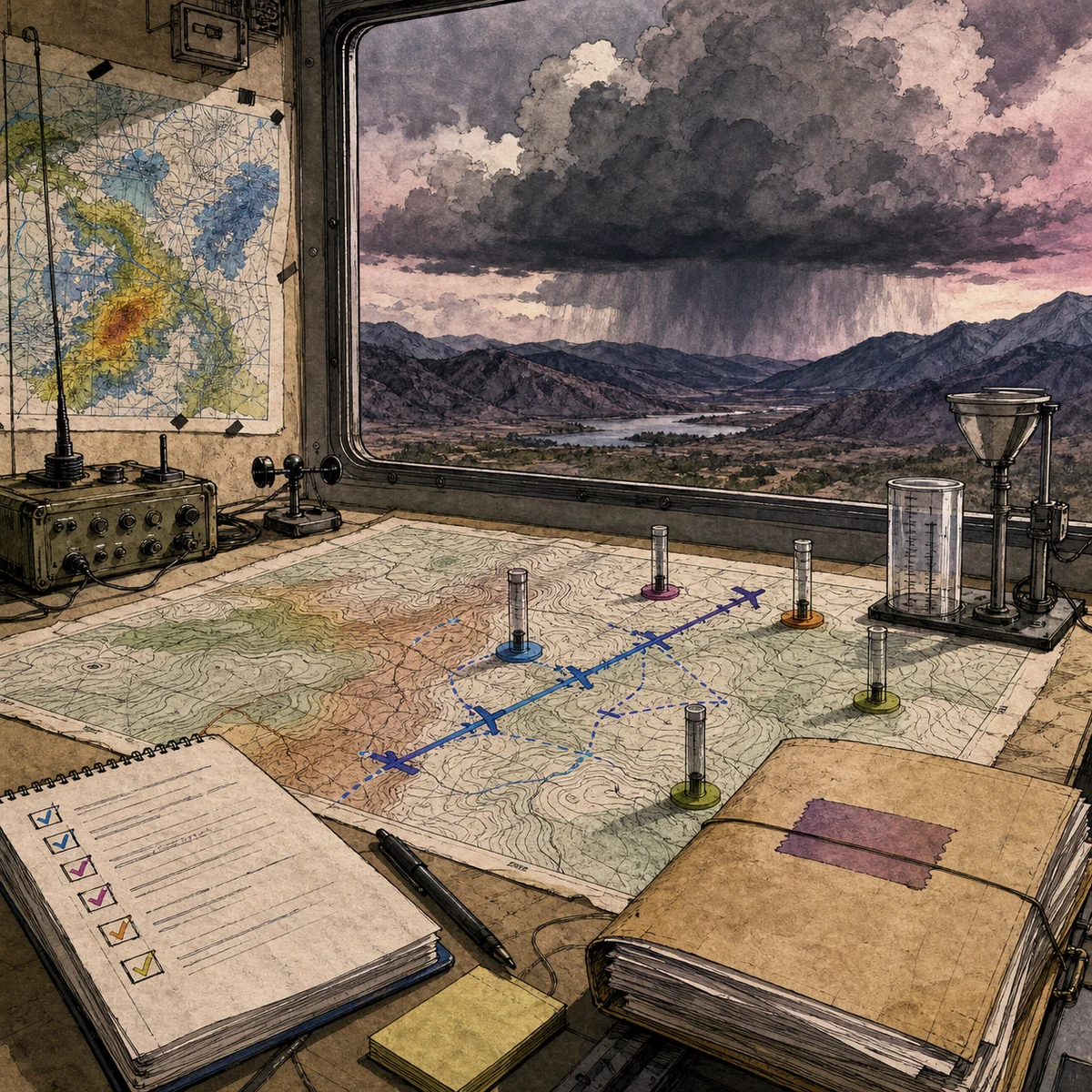
Federal rules do not begin by asking whether a weather-modification plan sounds plausible. They begin by asking who will operate it, when it will run, where it will target, and what will be released. Under 15 CFR 908.4, a person intending to conduct a covered weather-modification project in the United States generally must provide an initial report that reaches the federal administrator at least 10 days before the activity starts.
The required description is unusually concrete. It includes the project name and dates; sponsor and operator; purpose; a map of target and control areas; locations of ground equipment, measuring devices, and the airport used for airborne work; the apparatus, agents, and techniques; and the person responsible for the records. The form also asks about environmental review, access to weather warnings, safety procedures, monitoring, and conditions that would halt operations.
That filing is a reporting system, not a blanket federal license or a verdict that a project will work. Other provisions define which activities are covered, and states may impose separate permits or rules. The timing also has narrow escape valves: a late contract, authorization, or circumstance outside the operator’s control can permit a later report, but it must be sent promptly with an explanation. Before anyone seeds a cloud or tries to disperse fog, the government wants a paper trail detailed enough to reconstruct the attempt.
Sources