Share
Share







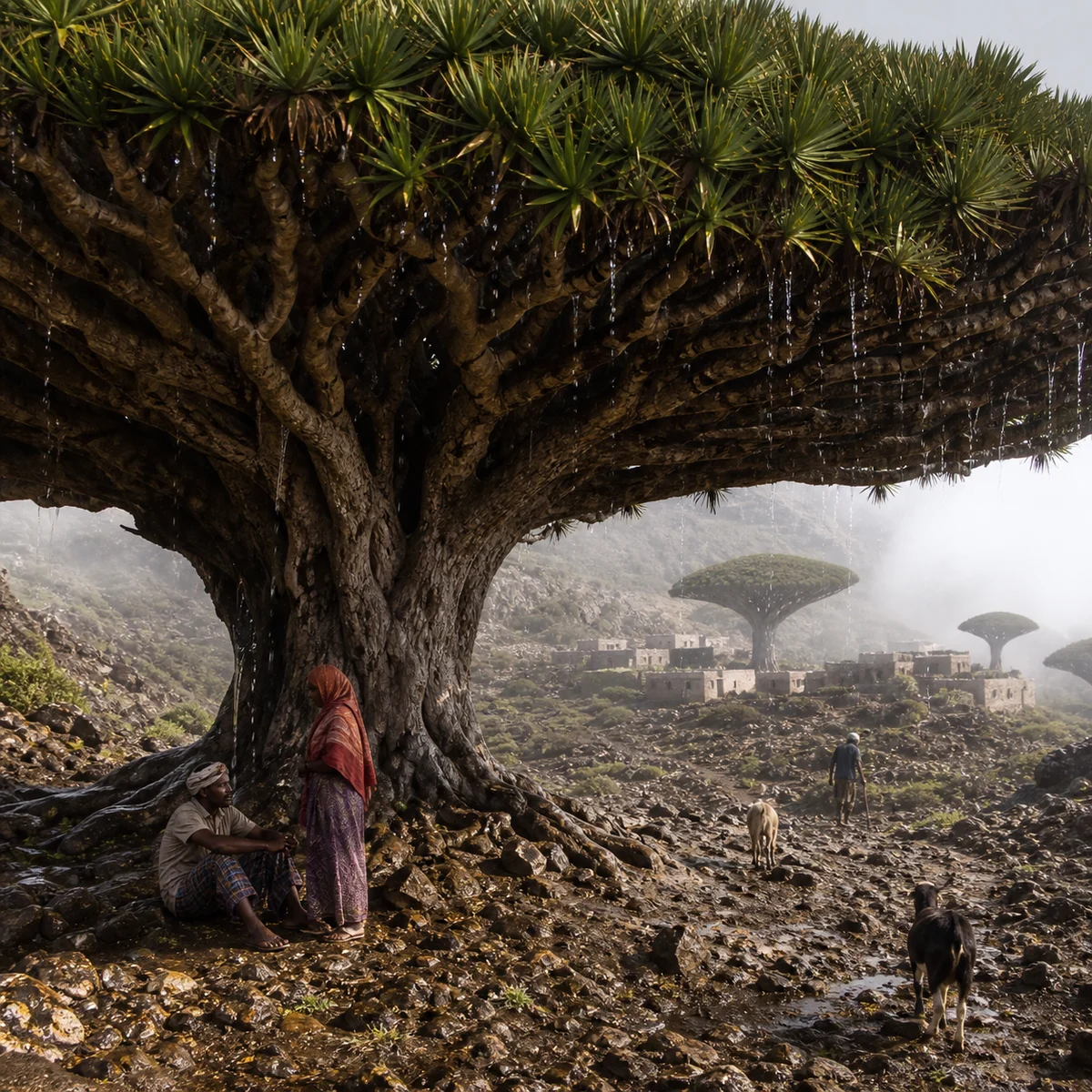
A mature dragon's blood tree on Socotra holds its branches in a dense upturned crown, like an umbrella raised against the sky. The form does more than create a silhouette. Research on the trees documents horizontal precipitation: mist and fog meet the broad crown, condense, and contribute water beneath it. The canopy also shades the ground and trunk area, reducing incoming solar radiation and slowing evaporation around the roots.
That paired function suits a dry, exposed island landscape. A tight crown intercepts moisture arriving sideways through air while sheltering the soil from heat. The red resin gives the tree its name, but the architecture supplies its everyday environmental work. Long geographic isolation helped Socotra develop extraordinary endemism, so the tree belongs to an ecological community filled with species found nowhere else.
“Alien island” photographs often remove the people and pressure from the frame. Socotra is inhabited, and its residents are part of the archipelago's history and present. Its biodiversity faces development, invasive species, and climate stress; the trees are not props in an untouched fantasy. The accurate wonder is more grounded: on a lived-in island under real pressure, a distinctive native crown catches fog, casts shade, and helps conserve the scarce water reaching its own roots.