Share
Share







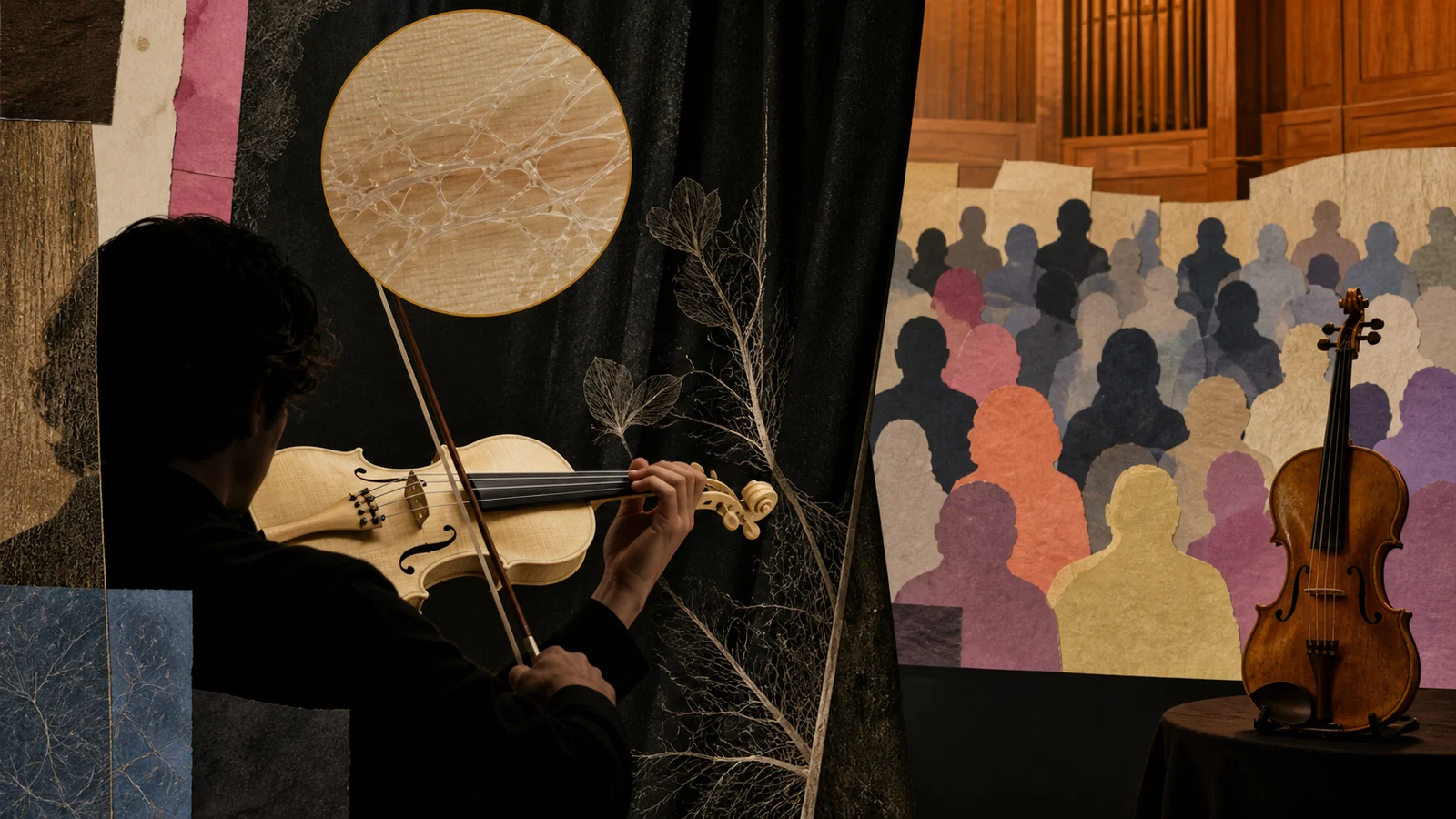
The most important participant in a memorable violin comparison never stepped onstage. It had already done its work inside the wood. Selected fungi spent months altering pieces of tonewood before a maker turned them into finished instruments. The result sounded convincing enough that a conference audience placed one of those violins ahead of a 1711 Stradivarius.
Violins make a useful test case for biological materials engineering because their wood must satisfy several demands at once. It has to be light enough to respond, stiff enough to carry vibration, stable enough to survive shaping and tension, and consistent enough that a maker can predict how a plate will behave. Density matters, but so does the way density varies through the annual growth rings and across the piece.
Empa wood researcher Francis Schwarze approached fungi as precision tools rather than agents of rot. Wood-decaying fungi are usually associated with lost strength and crumbling structure. The research problem was to find organisms and treatment conditions that would remove selected material slowly enough to preserve useful mechanical properties while reducing density and making the wood more homogeneous. Control mattered at every step: species, moisture, temperature, and treatment time could separate modification from destruction.
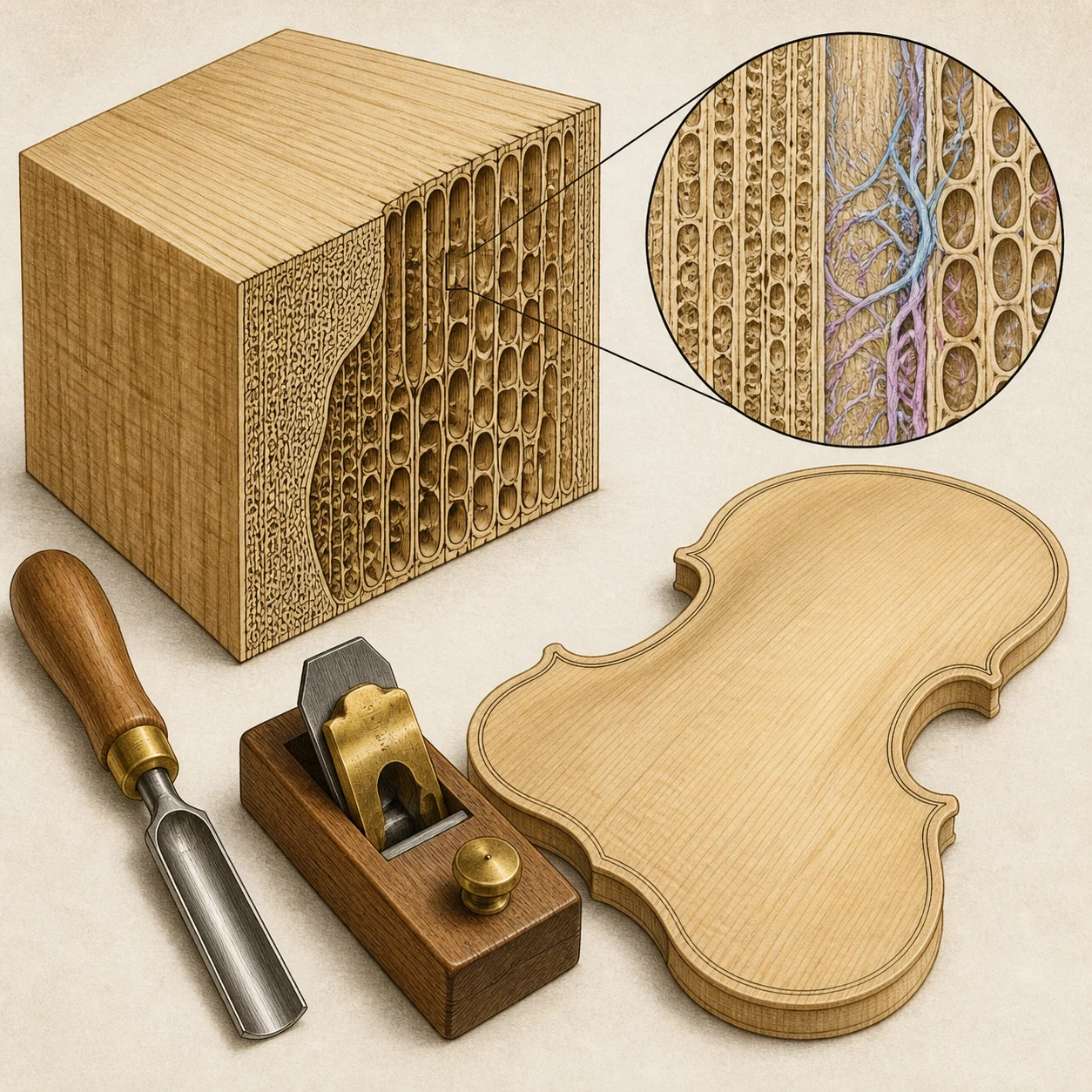
The concept borrows from a natural process but directs it toward a maker's needs. Fungal enzymes gain access to components of the cell walls. With carefully chosen treatment, the microscopic change can lighten and even out the material rather than leaving random visible damage. The treated billets still require all the judgment of violin making. A fungus does not carve an arch, set a neck, graduate a plate, or voice an instrument. It changes the starting material.
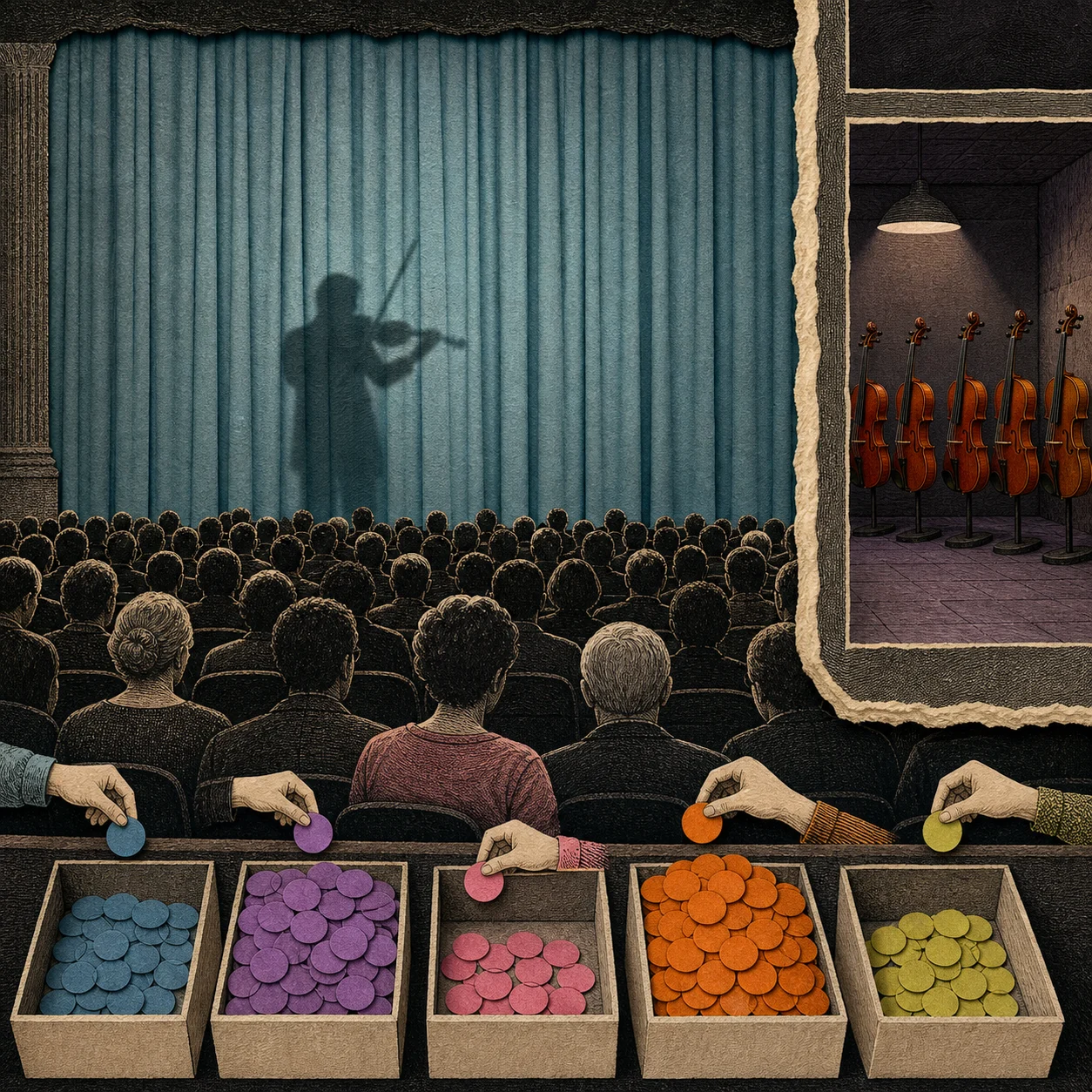
For the public comparison, a violinist performed on five instruments behind a curtain. The screen removed visual clues: listeners could not favor varnish, age, reputation, or the sight of a famous antique. More than 180 people heard the set. Ninety selected the instrument made from the longest-treated wood as having the best tone, while 39 chose the 1711 Stradivarius.
The mistaken-identity result was even more theatrical. Asked which instrument was the Stradivarius, 113 listeners chose the fungus-treated violin. An object made from biologically modified modern wood had produced the sound many people expected to belong to the old master instrument. In that room, for that player and program, prestige could not be seen, and the audience attached it to a different voice.
The longest-treated violin was known as Opus 58, and its wood had spent nine months with the selected fungi before construction. Treatment time is not merely a dramatic detail. It represents a balance: enough biological activity to produce measurable material change, not so much that the wood loses the structure a violin requires. The project made fungal exposure part of a manufacturing sequence rather than an accident to be repaired.
What did the audience actually measure? Not density directly. They heard the combined result of wood, design, workmanship, setup, strings, bow, performer, music, room acoustics, and their own expectations. A listening preference is an event involving all of those variables. The curtain controlled one powerful source of bias, appearance, but it did not transform a public demonstration into a universal acoustic law.
That boundary makes the experiment more interesting, not less. The listeners did not need to prove that one violin type always wins. Their votes showed that a fungus-treated modern instrument could compete persuasively in a comparison framed around a treasured historical benchmark. The biological treatment did not condemn the wood to sounding weak or damaged. It helped create an instrument that many listeners wanted to hear again.
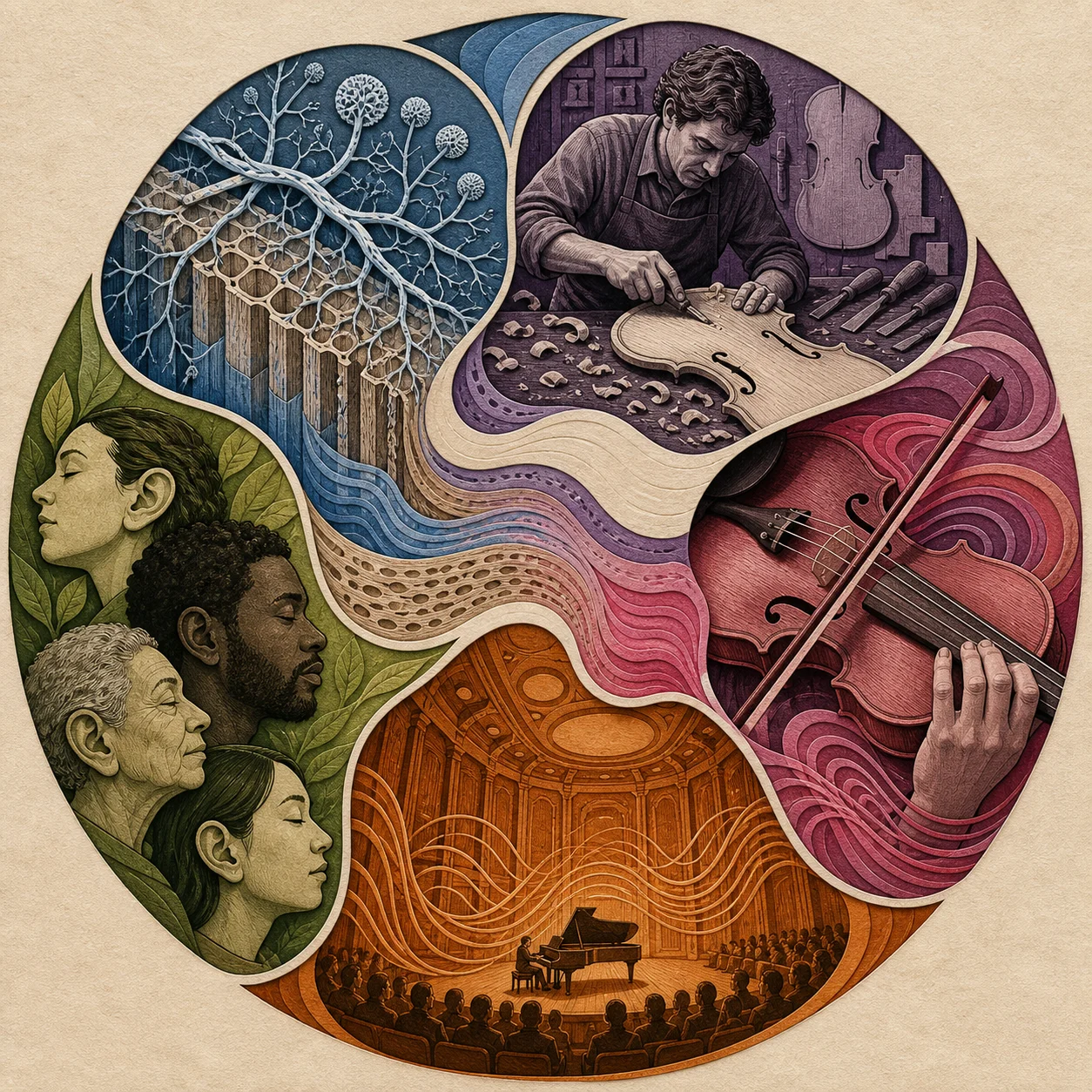
Later research on fungal modification gives the material story firmer footing than the ranking alone. Studies examine changes in density, uniformity, stiffness, damping, and related acoustic behavior. Those quantities can be measured and compared even when words such as warm, brilliant, carrying, or beautiful remain subjective. A researcher can document what happened inside a sample without pretending that a meter decides musical taste.
The Stradivarius also deserves to remain an individual instrument rather than a magical category. Antique violins differ from one another, as do modern ones. Maintenance, repair, setup, and playing history affect what reaches an audience. Comparing a single old violin with several experimental instruments cannot settle every argument about classical Cremonese making. It can test whether unfamiliar wood treatment produces a credible result under one set of conditions.
The experiment therefore joins two kinds of craft. The fungus modifies at a scale too small for a carving gouge. The violin maker works at the scale of curves, thicknesses, joints, and tension. Neither collaborator supplies the finished sound alone. The performance arrives only after biology, materials science, instrument making, and musicianship have passed the wood from one set of constraints to the next.
This is why “a fungus beat a Stradivarius” is both irresistible and incomplete. In the vote, Opus 58 did finish first. In science, the more durable result is not a championship belt. It is evidence that controlled fungal treatment can change tonewood in useful, measurable ways and still leave a maker with material capable of becoming a compelling violin. The fungus did not write the music. It edited the wood before anyone heard a note.
Sources