Share
Share







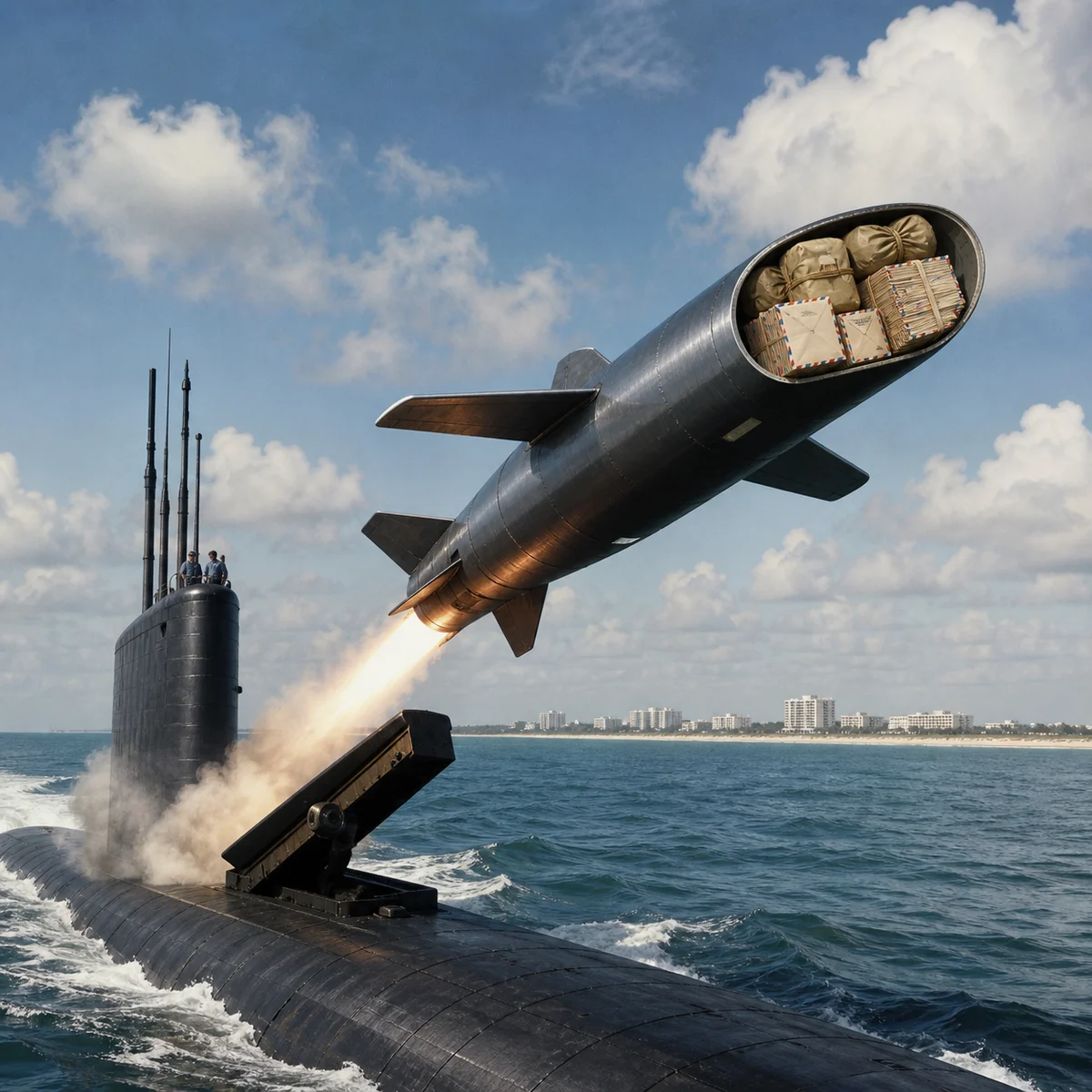
In 1959, the submarine USS Barbero surfaced with an unusual postal vehicle aboard: a Regulus I cruise missile holding 3,000 letters. The weapon was launched toward Florida, traveled about 100 miles, and completed the trip in 22 minutes. Officials then recovered the mail and continued its delivery through ordinary channels.
The letters transformed a military system into a publicity-heavy demonstration of speed and reach. Mail had traveled by foot, horse, rail, ship, aircraft, and many stranger carriers, but a guided missile supplied a particularly dramatic promise of rapid transport. It also sent an unmistakable military signal: a launch platform capable of placing mail at a destination could carry a different payload.
What followed is as important as the launch. There was no regular route, no missile post office, and no second run. The experiment was never repeated. Calling it “missile mail” is accurate for that cargo and flight, but not evidence that the United States briefly operated a cruise-missile delivery service. It was one official demonstration in which 3,000 pieces of correspondence borrowed a weapon's trajectory for the first—and last—leg of an extraordinary journey.
Sources