Share
Share







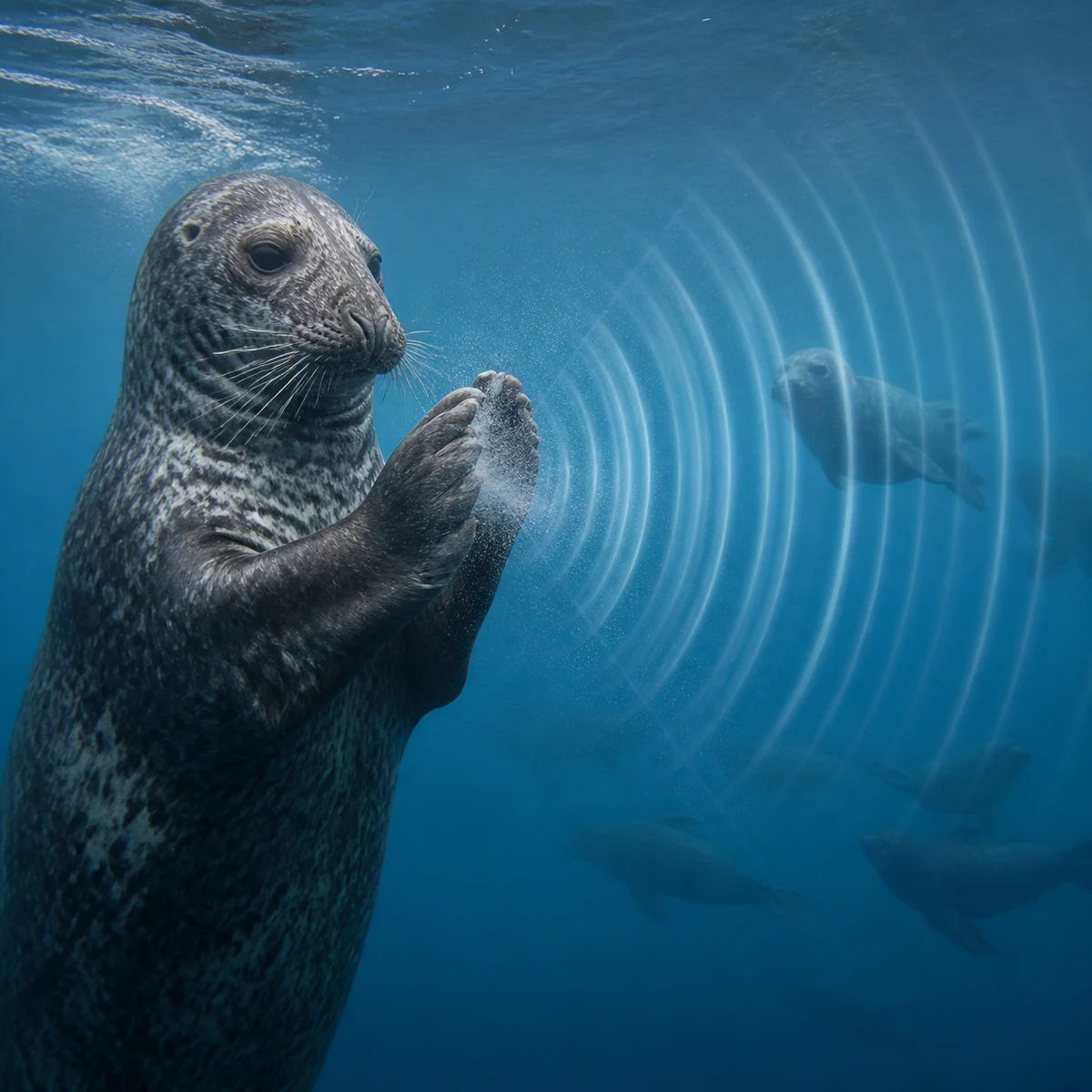
Researchers filming wild grey seals captured a male performing a movement that looked instantly familiar: he brought his front flippers together in front of his body. Underwater, the strike produced a sharp clap loud enough to stand out from the surrounding soundscape.
Many marine mammals communicate vocally, but a percussive signal made with the body can travel without opening the mouth. The filmed clap occurred in a social context, leading researchers to propose that it could advertise strength to rivals or attract potential mates. The large flippers make both the movement and resulting sound conspicuous.
Those functions remain interpretations, not a translated seal sentence. One recorded behavior can establish that wild grey seals clap and that the motion creates a distinct sound; broader observations are needed to pin down when and why different seals use it. The established finding is acoustic, not linguistic. Two flippers meet in dense seawater, and a gesture humans use for applause becomes a signal whose audience is another seal.
Sources