Share
Share







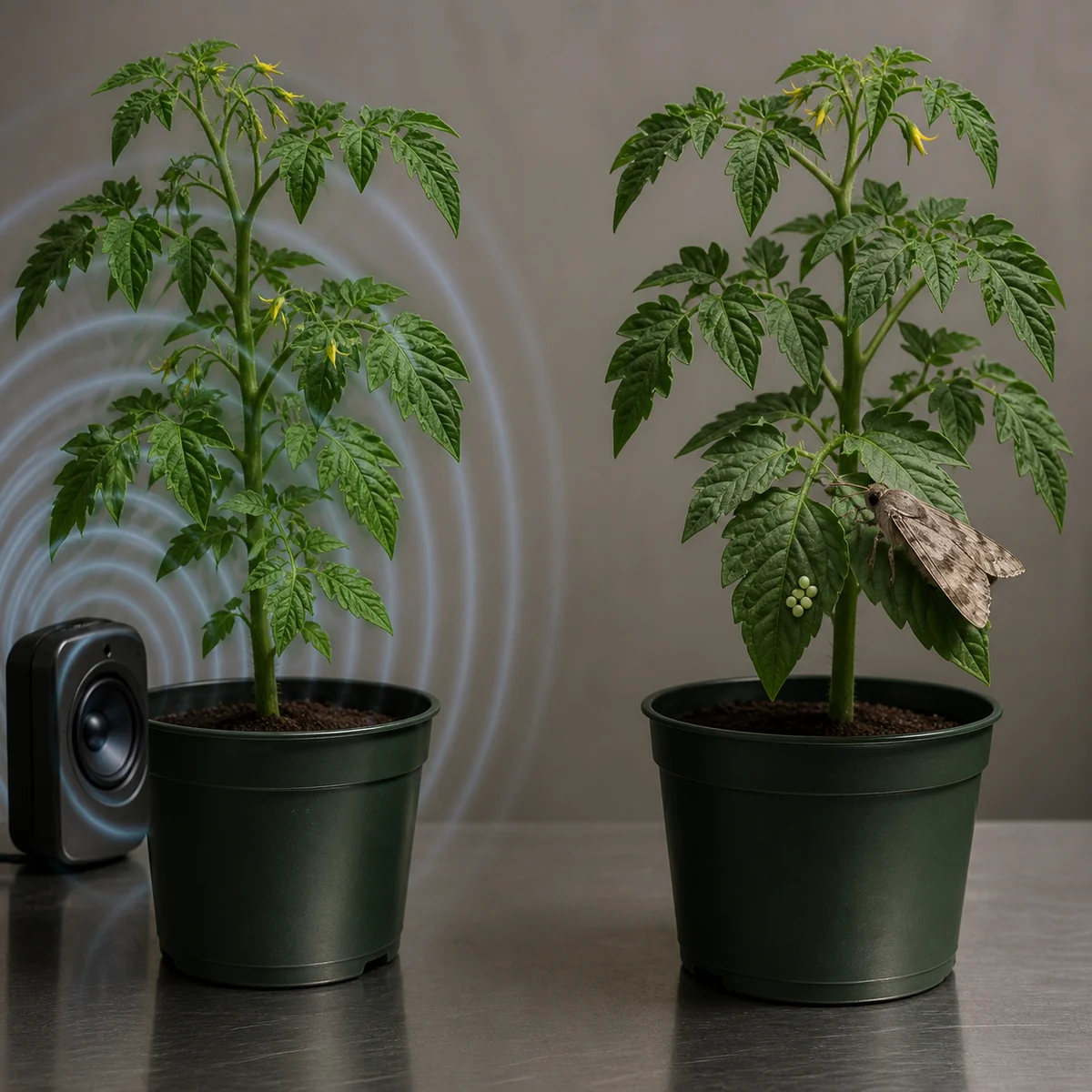
Researchers played ultrasonic recordings linked to dehydrated tomato plants and watched female moths change where they laid eggs. In one experiment, a speaker played the plant sounds inside one box while another box stayed silent. The moths first preferred the sounding box, apparently treating the noise as evidence that a plant was present.
When researchers disabled the moths' hearing organs, that preference disappeared. A second setup offered two healthy tomato plants, but a speaker beside one played distress recordings. This time the moths preferred the silent plant, which could be a better place for larvae to find food. Playback of male-moth ultrasound did not produce the same choice.
The results isolate hearing as an influence in a controlled interaction. They do not show a plant intentionally composing a warning, or prove that every insect listens to every plant. What the experiment shows is specific: sounds associated with a stressed plant can enter one moth species' egg-laying decision. An ultrasonic cue becomes part of how an animal evaluates a nursery it cannot ask questions about.
Sources