Share
Share







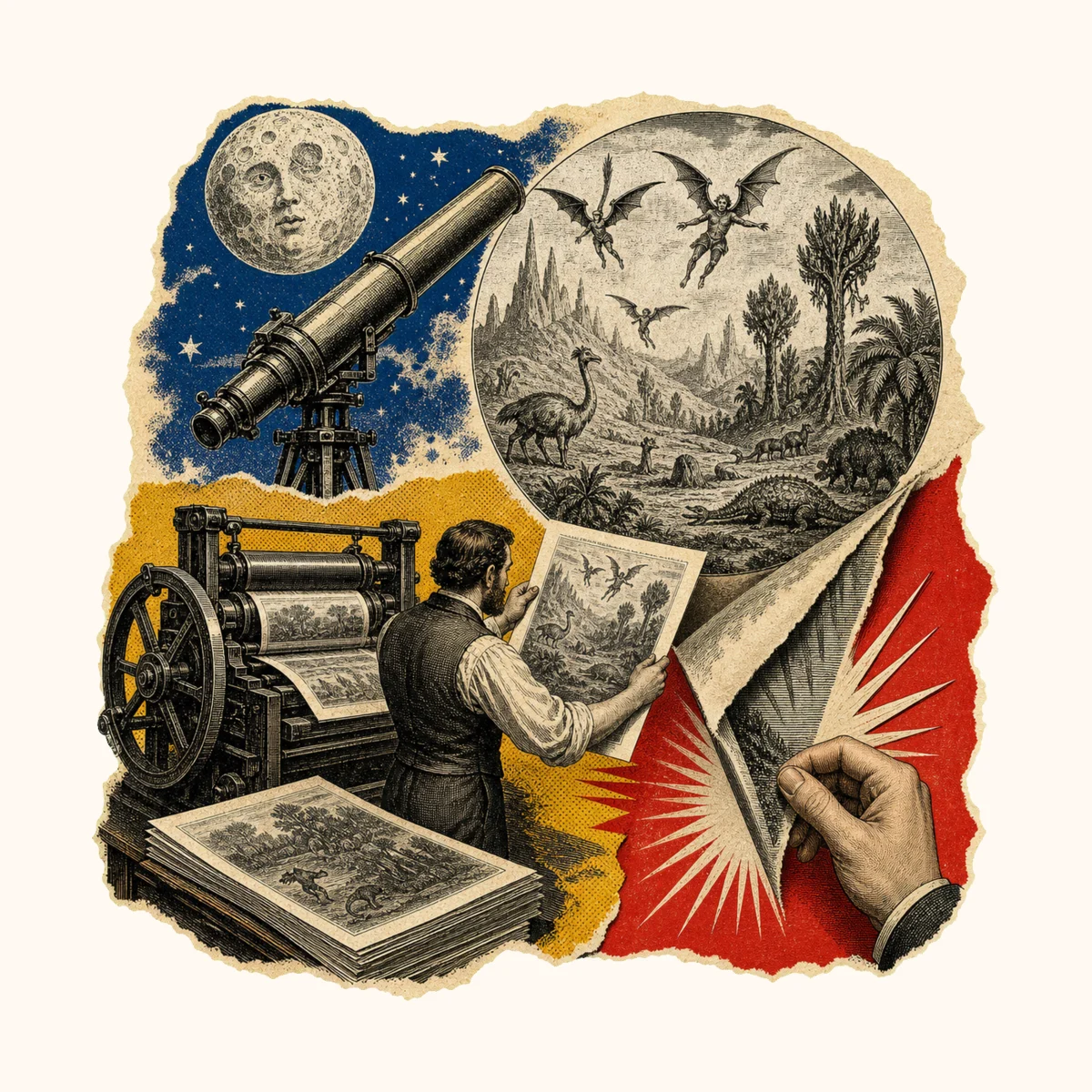
In 1835, the New York Sun captivated the world with tales of lunar forests, unicorns, and bat-winged humanoids. This six-part series, which began on August 25, claimed these marvels were discovered by Sir John Herschel through a powerful telescope. The articles described lush landscapes and bizarre creatures, including bison-like animals and two-legged beavers, residing on the Moon. But the real twist? It was all a hoax.
Penned by Richard Adams Locke under the fictitious name Dr. Andrew Grant, the series was intended as satire, poking fun at the era's gullible fascination with extraterrestrial life. Despite this, the public took the bait, and the Sun's circulation soared, making it the most widely read newspaper of its time.
Locke's vivid descriptions and accompanying lithographs fueled the frenzy, painting a picture of a vibrant lunar world teeming with life. The hoax left a lasting impact, illustrating the power of media to shape perceptions—even with bat people on the Moon.
In the end, the Great Moon Hoax was a testament to the human desire for wonder and the strange, a reminder that sometimes, the most unbelievable stories are the ones we want to believe. The moon may not have bat people, but it certainly had its day in the sun.
Sources