Share
Share







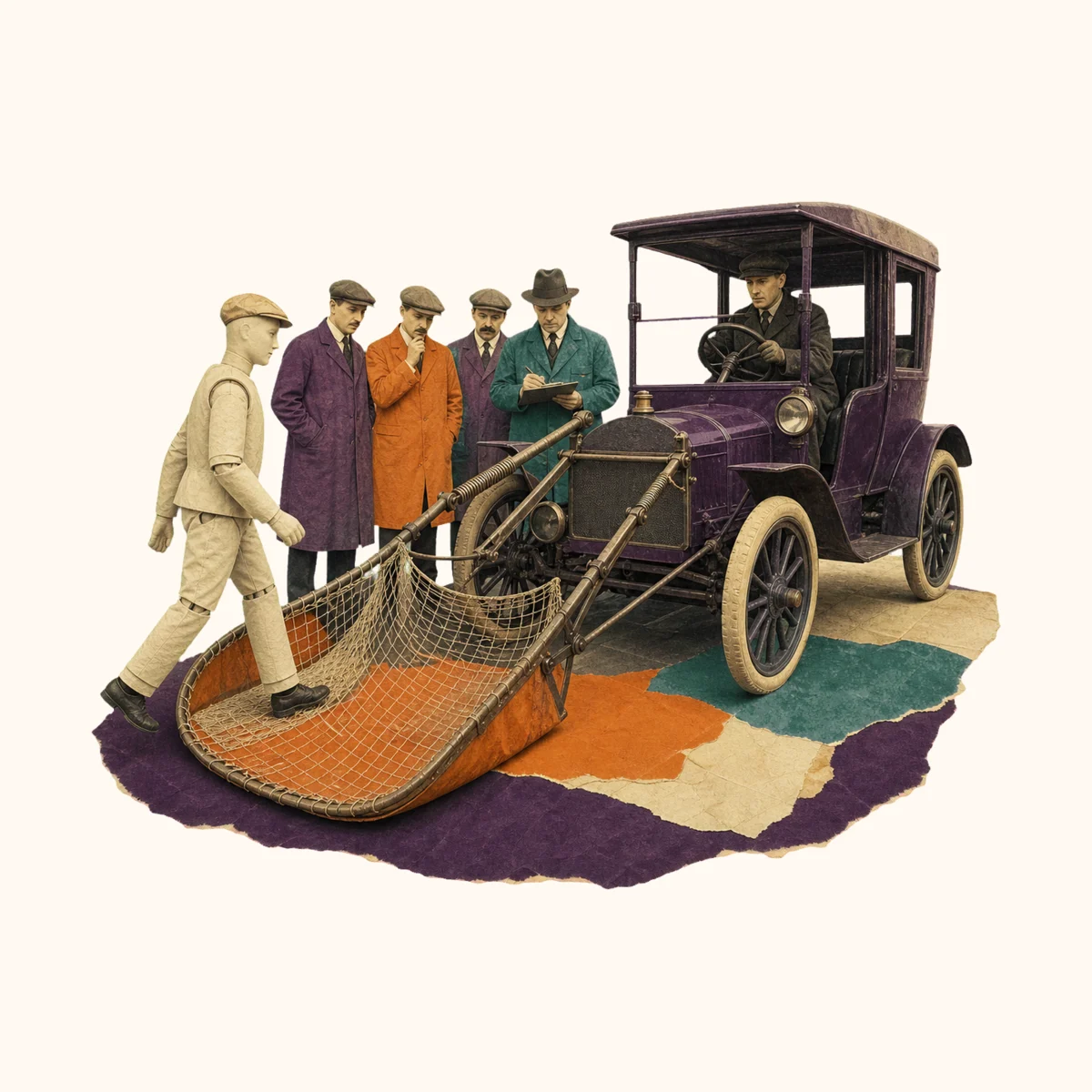
In the roaring 1920s, when automobiles were the new kids on the block, inventors came up with a peculiar contraption: the "pedestrian catcher." This device was designed to scoop up pedestrians before they could tumble under the wheels of a car. Think of it as a cow-catcher for humans, attached to the front of a vehicle, ready to cradle any jaywalker who dared to step into its path.
One notable example was the Moore Combined Trip Bumper and Collision Screen from 1923, which aimed to gently collect pedestrians in a basket-like structure. Meanwhile, Carl H. Trieschmann of Milwaukee patented the "Automatic bumper and body catcher" in 1929, featuring a mechanism that would unfold upon impact to protect both the pedestrian and the car's wheels.
Despite their inventive spirit, these devices never caught on. Their bulky designs obstructed drivers' views and made maneuvering difficult, leading to their eventual disappearance from the automotive landscape. Yet, they remain a fascinating footnote in the history of road safety, a testament to the lengths inventors would go to protect the unwary pedestrian.
In the end, the pedestrian catcher was a quirky, albeit impractical, attempt at safety innovation. It serves as a reminder that sometimes, the road to progress is paved with strange and wonderful ideas.