Share
Share







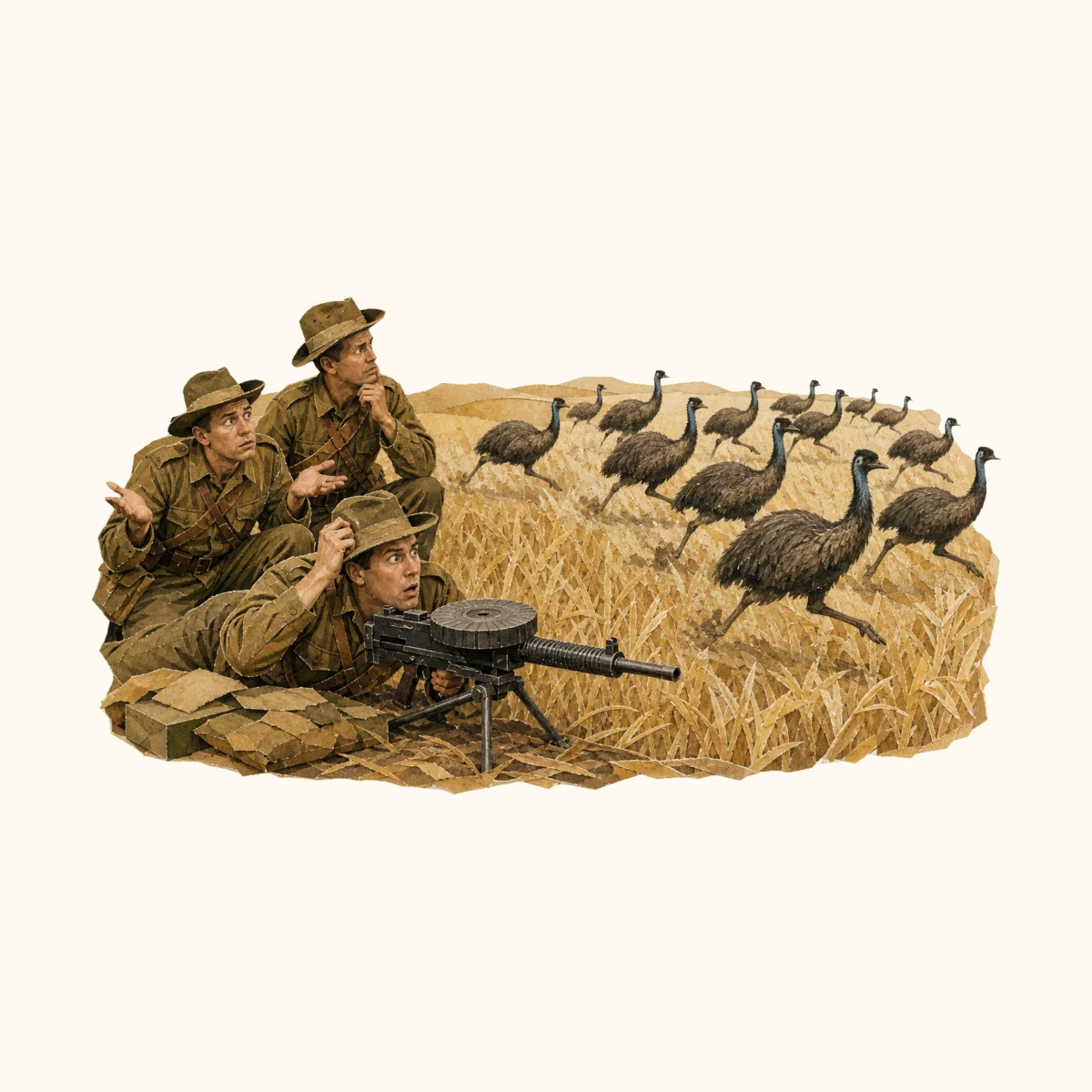
In November 1932, the Australian military embarked on one of its most peculiar missions: the Great Emu War. Armed with Lewis guns and 10,000 rounds of ammunition, soldiers from the Seventh Heavy Battery of the Royal Australian Artillery were deployed to Western Australia. Their mission? To wage war on emus, the large flightless birds that were wreaking havoc on wheat crops in the Campion district.
The operation began with high hopes but quickly descended into chaos. On November 4, a planned ambush at a watering hole aimed to take down 1,000 emus. However, only 12 birds fell before a gun jammed, leaving the soldiers to watch as the emus scattered into the bush. A follow-up attempt two days later was scarcely more successful, with 50 emus killed at the cost of over 2,500 rounds of ammunition.
Despite their best efforts, the soldiers found the emus to be elusive and surprisingly resilient. The operation was called off on November 8, just four days after it began, amid mounting criticism from parliament. The emus, it seemed, had won the day, leaving the military to retreat in defeat.
Though the Emu War ended in failure, it remains a testament to the unpredictability of nature and the lengths humans will go to in their attempts to control it. As the dust settled, the emus continued their march across the farmlands, victorious in their unintentional battle against the might of the Australian military.