Share
Share







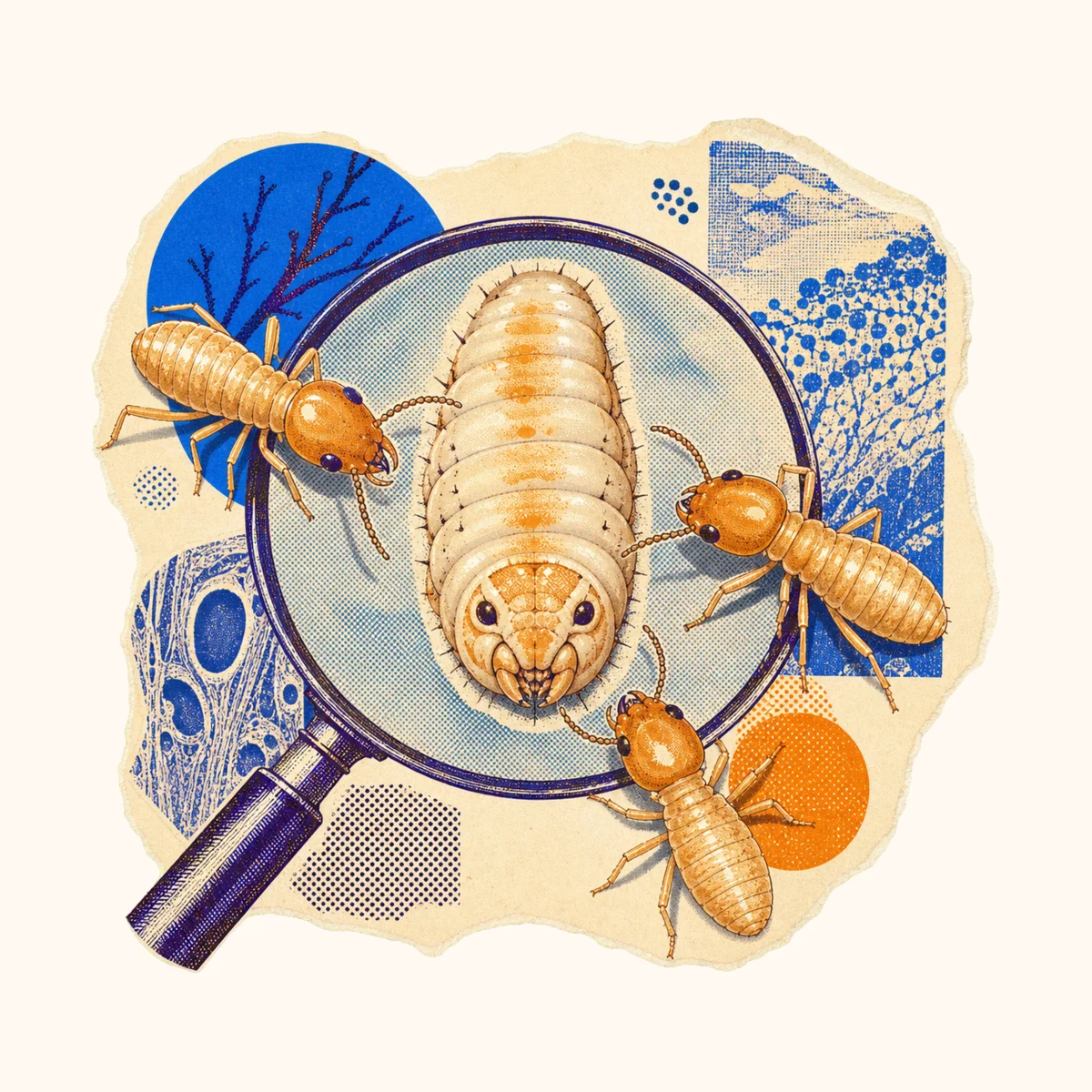
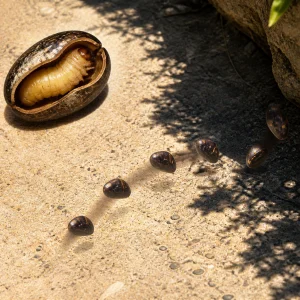
Tucked away in the Anti-Atlas mountains of southern Morocco, a peculiar blowfly larva has mastered the art of deception. This maggot, belonging to the genus *Rhyncomya*, has evolved a remarkable disguise: a fake termite head, complete with false eyes and antennae, right on its rear end. This evolutionary marvel was detailed in a study published in *Current Biology* in 2025.
The larvae's posterior mimics the head of the harvester termite (*Anacanthotermes ochraceus*), using its spiracles as faux eyes and papillae as antennae. This visual trickery is so convincing that soldier termites, known for their hostility towards intruders, groom these impostors rather than attacking them. But the larvae's ruse doesn't stop at appearances. They also chemically cloak themselves with the termites' colony-specific scent, making them indistinguishable from their unsuspecting hosts.
These maggots don’t just blend in visually and chemically; they integrate behaviorally too. Inside the termite nests, the larvae are allowed into food chambers, where termites groom and possibly even feed them. This behavior suggests a complex level of social integration, a phenomenon known as Wasmannian mimicry.
Despite their impressive adaptations, these larvae are exceedingly rare. After multiple expeditions, researchers found only a handful more of these elusive creatures. Their rarity and unique adaptations highlight the incredible diversity of evolutionary strategies in nature.
In the world of nature's tricksters, this maggot is a master of disguise, proving that sometimes the best way to fit in is to stand out—on your rear end.