Share
Share







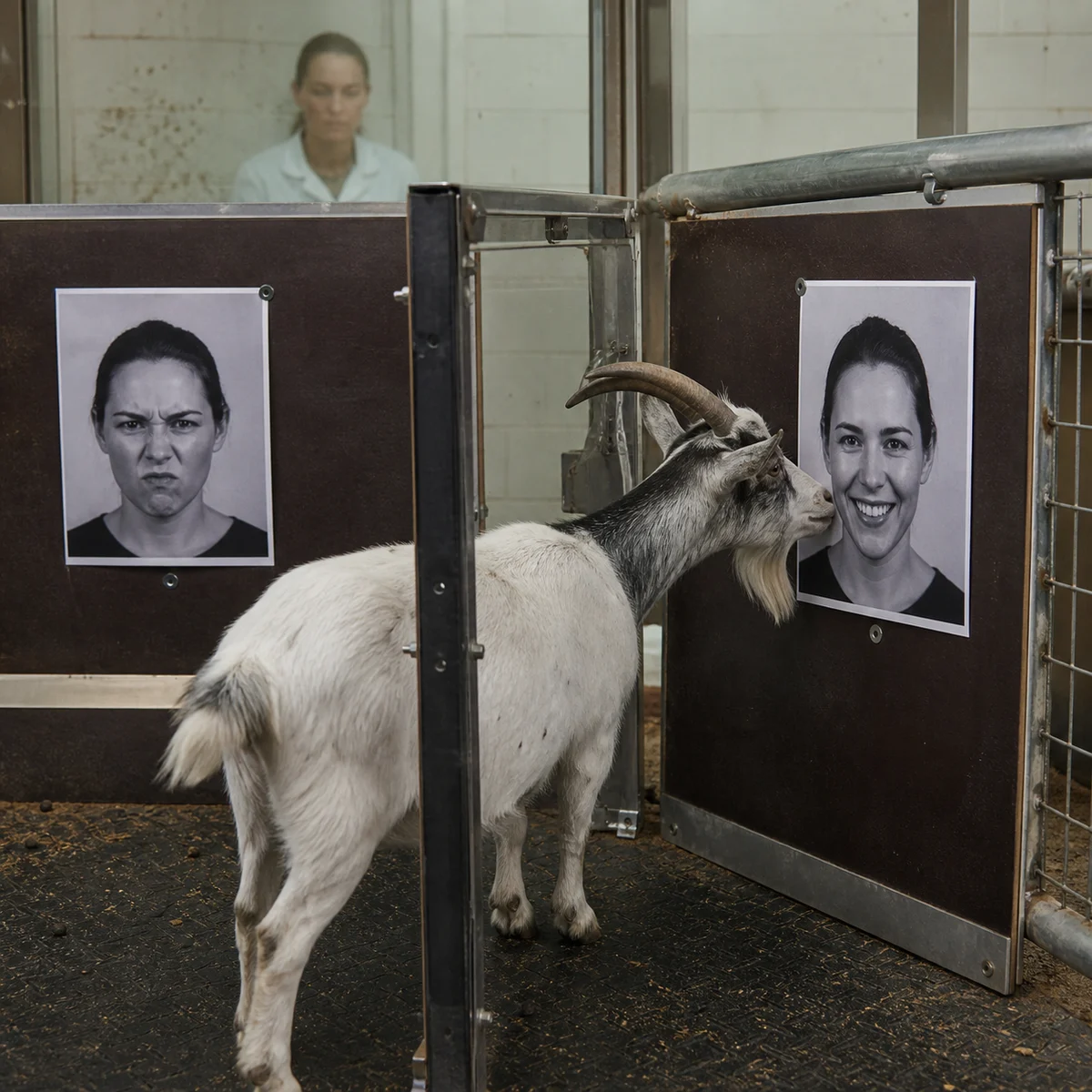
Researchers placed pairs of black-and-white human photographs in front of goats: the same person displaying a positive expression in one image and an angry expression in the other. The goats more often approached the smiling faces and interacted with them for longer. A domestic animal known mainly for reading pasture and herd mates could discriminate emotional information in a static human face.
The setup controlled the comparison by presenting photographs rather than live people whose posture, voice, smell, or movement might differ. It therefore isolated a visual cue, but it also narrowed the conclusion. The goats responded to pictured expressions under experimental conditions; they were not conducting a complete moral assessment of the photographed person.
Side mattered. The preference was especially evident when the positive image appeared on the right side of the test arena, a lateral pattern consistent with the possibility that the two brain hemispheres process emotional information differently. That positional effect belongs in the result rather than being edited away for a cleaner slogan. The study shows that goats can distinguish and preferentially engage with positive human facial expressions in photographs, with the response shaped by where the image appeared—not that every goat always chooses every happy human.
Sources