Share
Share







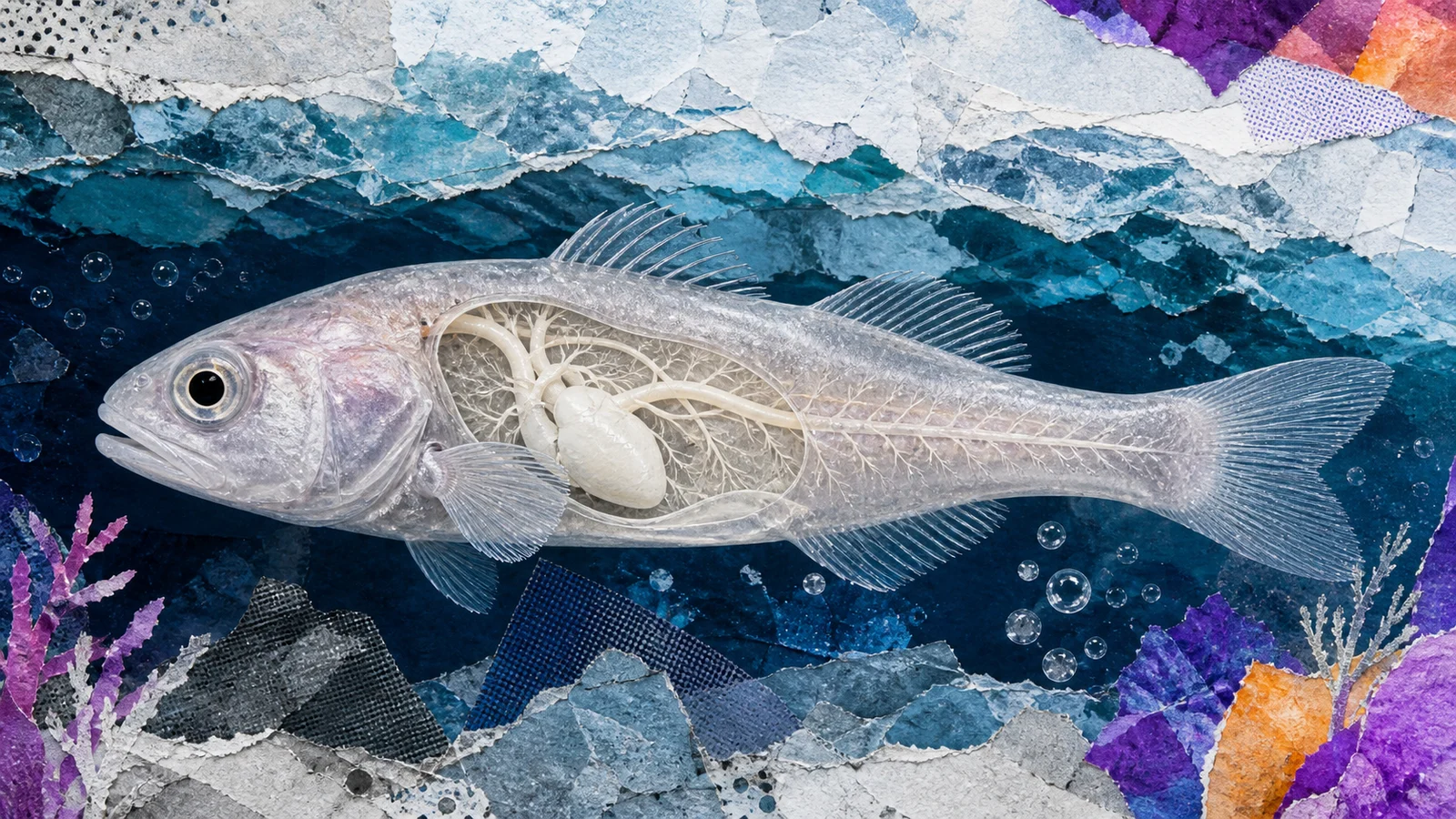
Cut open the usual picture of a vertebrate circulatory system and one color seems inevitable: red. Hemoglobin inside red blood cells binds oxygen at breathing surfaces and carries it through the body. Fish, birds, mammals, reptiles, and amphibians all rely on versions of that arrangement. Then there are the Antarctic icefishes, whose blood can look translucent white because the protein that normally supplies the pigment—and much of the oxygen-carrying capacity—is absent.
The name needs precision. Not every fish beneath Antarctic ice has white blood. The hemoglobin-free animals belong to Channichthyidae, one subgroup within the much larger radiation of Antarctic notothenioid fishes. Other notothenioids remain red-blooded. Icefishes are exceptional even among their cold-specialized relatives: they are the only vertebrates known to live without hemoglobin. That distinction turns a striking image into a much stranger biological fact.
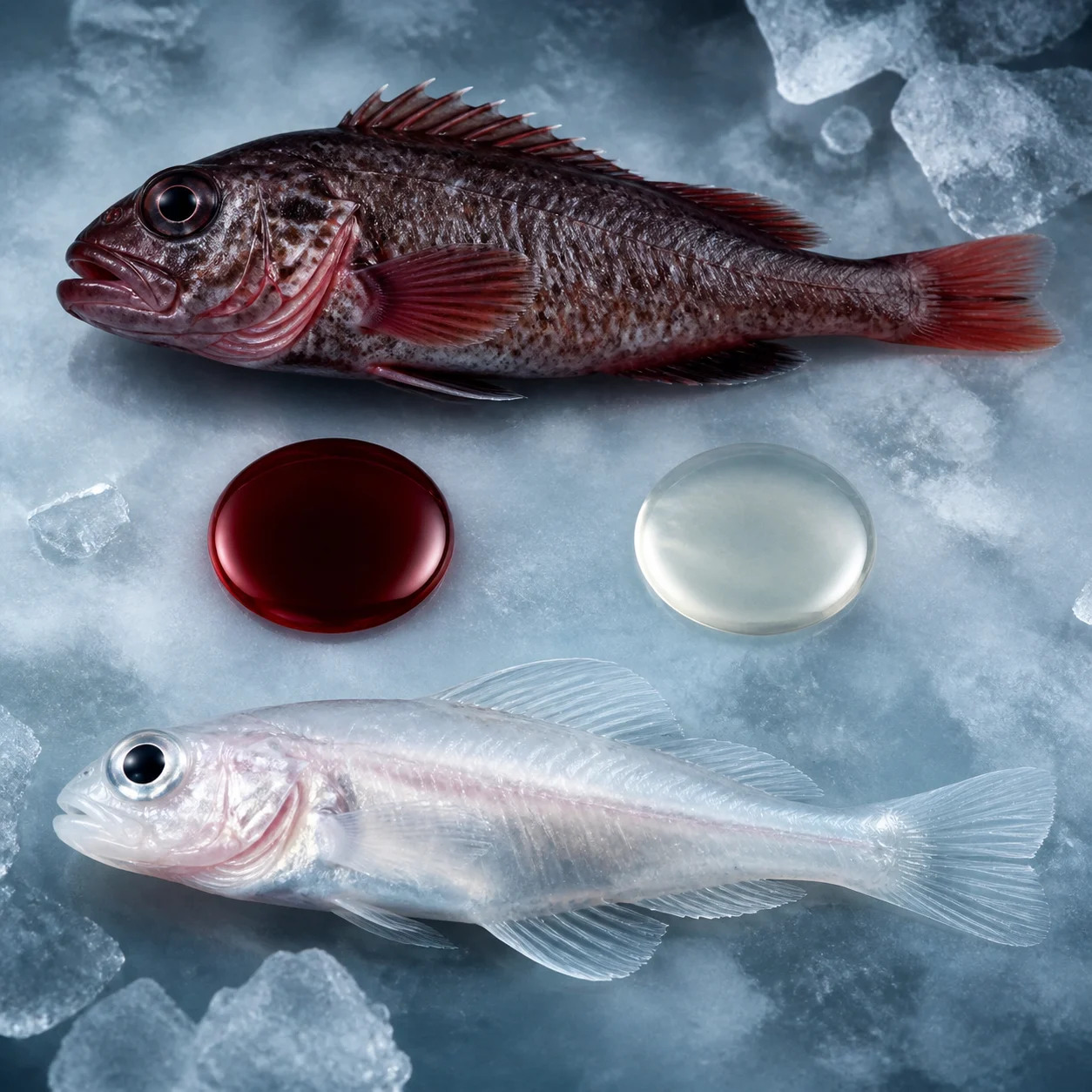
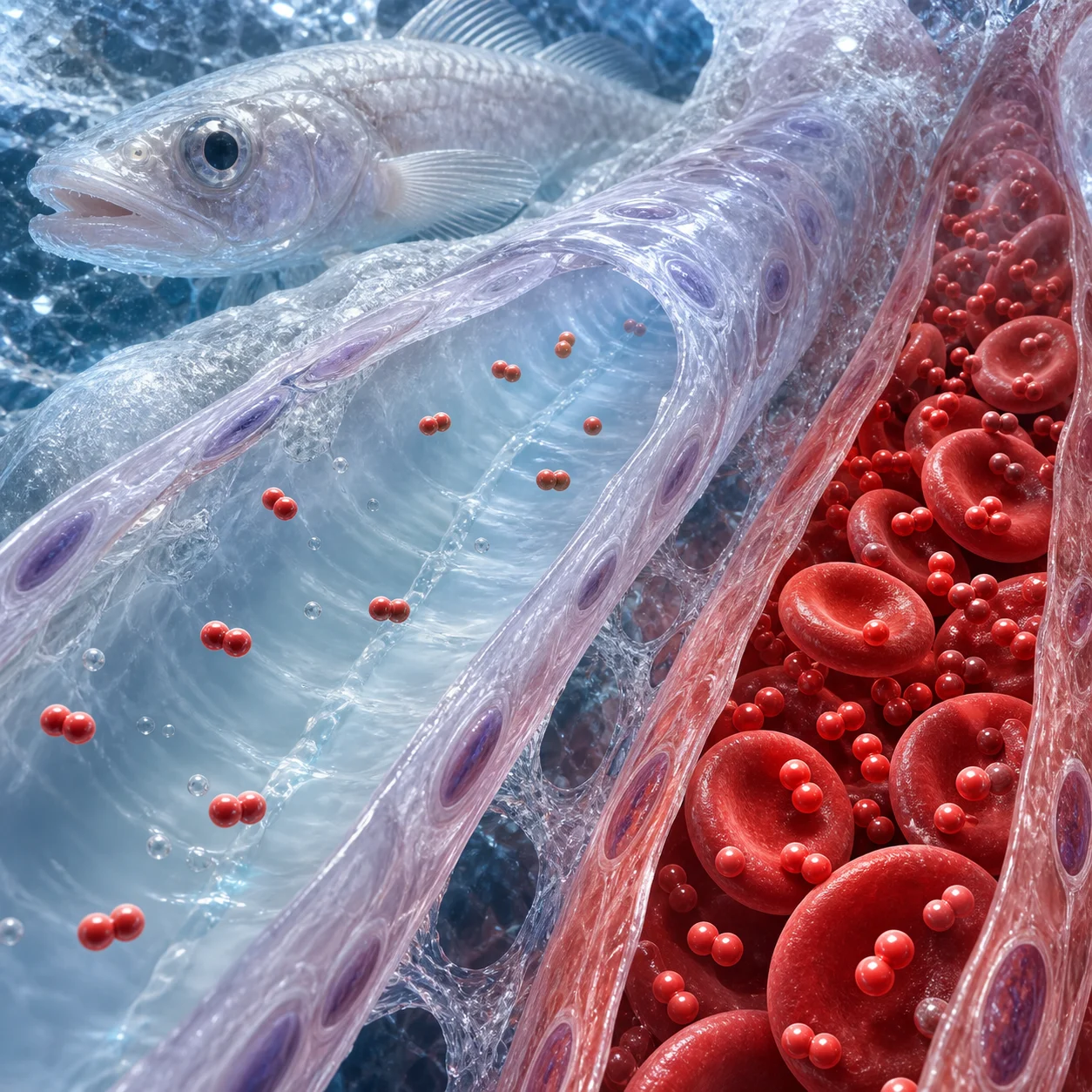
Hemoglobin is efficient because it gives oxygen something to ride. Oxygen can dissolve in the liquid portion of blood on its own, but ordinarily that amount is not enough to support an active vertebrate. In icefish, the plasma is the transport medium. Research reviewed by the National Science Foundation notes that their blood carries only about a tenth of the oxygen carried by similarly sized red-blooded relatives. The missing red is therefore not cosmetic. It marks the loss of most of the system's normal carrying capacity.
The Southern Ocean makes that loss survivable. Very cold water holds abundant dissolved oxygen, and oxygen dissolves better at low temperature. Icefish blood moving through that environment can take up oxygen directly into plasma under conditions that warmer-water vertebrates do not enjoy. Cold does not turn plasma into hemoglobin, and it does not erase the transport deficit. It changes the physical boundary conditions enough for other parts of the animal to compensate.
Those compensations are written into the plumbing. Compared with red-blooded relatives of similar size, icefishes have an enlarged heart that pumps a much greater volume of blood. Their vascular system is more extensive, with wide-bore capillaries. If each unit of blood carries less oxygen, circulating more of it through a broad network helps deliver what tissues need. The body answers a weak carrier with a larger pump, more fluid, and wider routes.
This is where an easy evolutionary story becomes misleading. It is tempting to say that icefishes adapted to Antarctica by getting rid of hemoglobin. The cited research does not establish that sequence. Scientists still do not know whether the ancestral loss was beneficial, neutral under unusual conditions, or a maladaptive accident that later changes made tolerable. The cold, oxygen-rich sea permitted survival after the loss; that is different from proving that natural selection favored the loss itself.
Icefishes belong to a group already shaped by extreme cold. Antarctic notothenioids evolved proteins that keep body fluids from freezing in seawater that can fall below the usual freezing point of fresh water. Genomic studies show extensive changes across this radiation. Yet hemoglobin loss went farther than the general cold-weather toolkit. It removed a function normally treated as basic vertebrate equipment and forced the circulatory system to operate around the absence.
The result is not a simpler or obviously superior fish. Moving large volumes of blood with a large heart is costly. Plasma transport leaves less oxygen in each circulation than hemoglobin would. The lineage survives because several features work together in a narrow environmental context: cold oxygen-rich water, dissolved oxygen in plasma, and anatomical systems able to move enough of that plasma. Pull one element into a warm ocean and the arrangement would face very different limits.
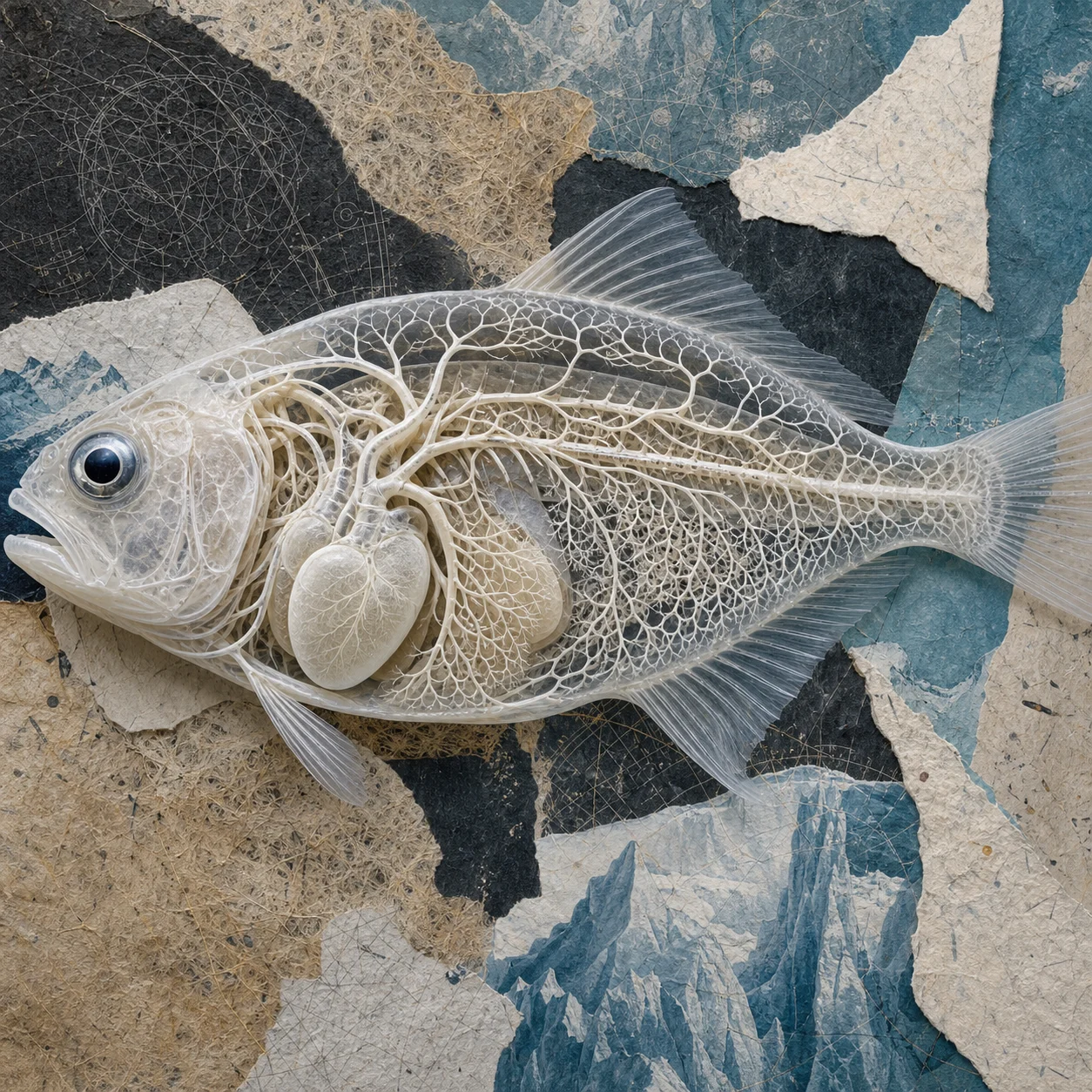
Even the phrase “white blood” can conceal what is happening. The blood is not filled with a white substitute for red hemoglobin. It is pale because the familiar pigment-bearing carrier is missing. Oxygen remains invisible as it dissolves in plasma, while the heart and vessels do the visible mechanical work of pushing that diluted supply around the body. The absence is the mechanism's central fact.
That makes icefish a useful corrective to the way adaptation stories are often told. Evolution does not always produce a clean upgrade. A lineage can lose an important feature, persist because its surroundings soften the consequence, and accumulate compensations that make the new condition workable. Survival proves that the system functions; it does not prove that every step was an improvement.
The weirdness, then, is larger than color. A vertebrate lineage discarded the molecule that defines blood in most familiar anatomy and continued living at the coldest edge of the ocean. Its heart, blood volume, and capillaries carry the burden that hemoglobin no longer can. Icefish did not perfect blood without red. They demonstrate how much biological machinery can rearrange itself around a profound loss—and how carefully we must separate being able to survive a change from having evolved it as an advantage. That distinction is the story's essential scientific pulse.
Sources