Share
Share







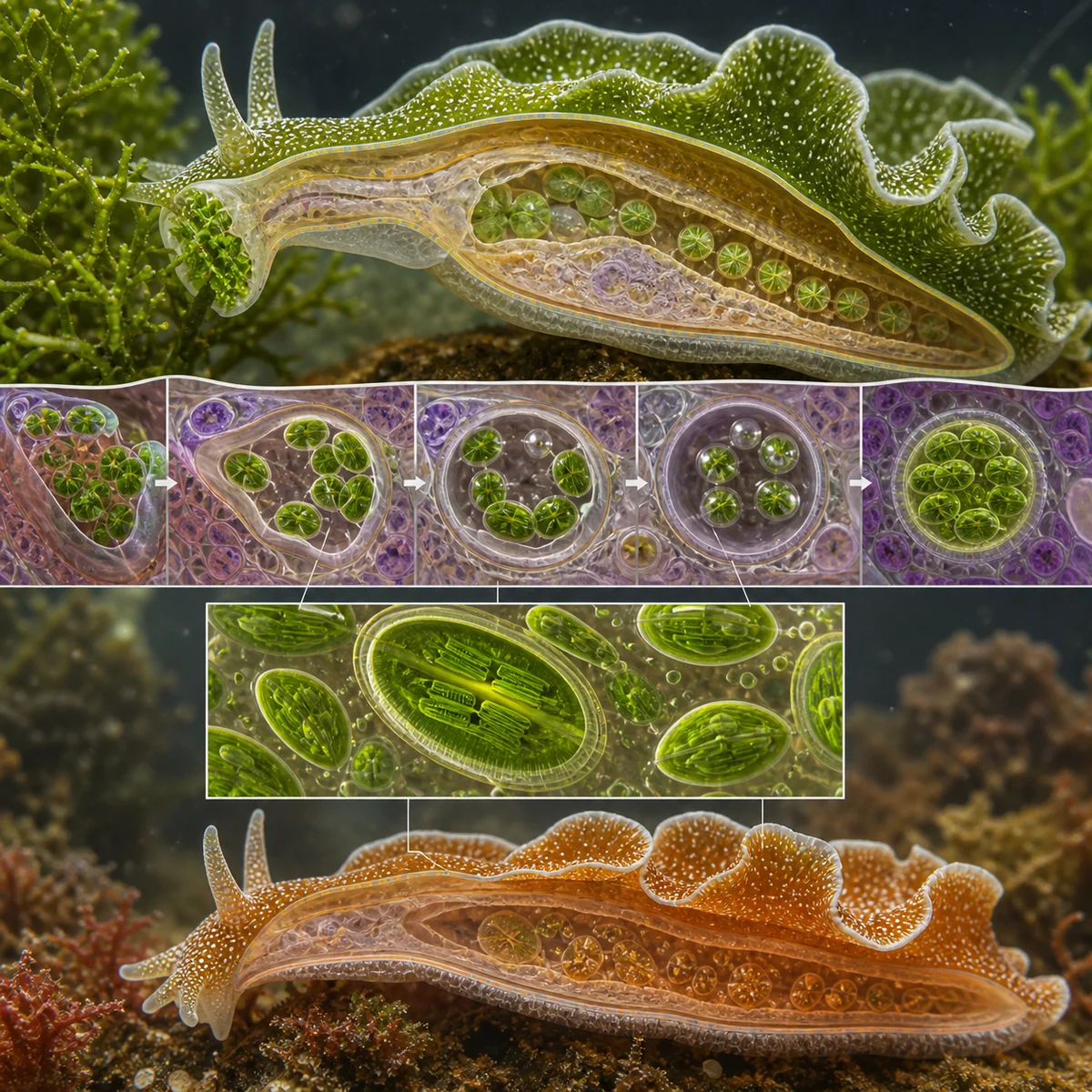
A green sea slug can carry working pieces of the algae it ate. In Elysia crispata, a species from the western Atlantic and Caribbean, digestion spares some chloroplasts—the organelles algae use for photosynthesis. The slug diverts them into intestinal sacs and encloses them inside specialized membranes that researchers call kleptosomes.
Inside this stolen compartment, chloroplasts continue making algal proteins and performing photosynthesis. Chemical analysis also found slug proteins in the chloroplasts, evidence that the host helps maintain them. Well-fed animals can look green; during starvation, they turn orange as chlorophyll breaks down and the stolen organelles are digested as a last-resort energy source.
The result is cleverer than a slug becoming a plant. Researchers caution that photosynthesis alone probably cannot sustain the animal. The chloroplasts may provide emergency nutrition and could have other functions, including camouflage or chemical defense. This kleptoplasty belongs to particular sea slug species, not the whole group. The superpower is real, but it is borrowed, maintained, and eventually eaten.
Sources