Share
Share







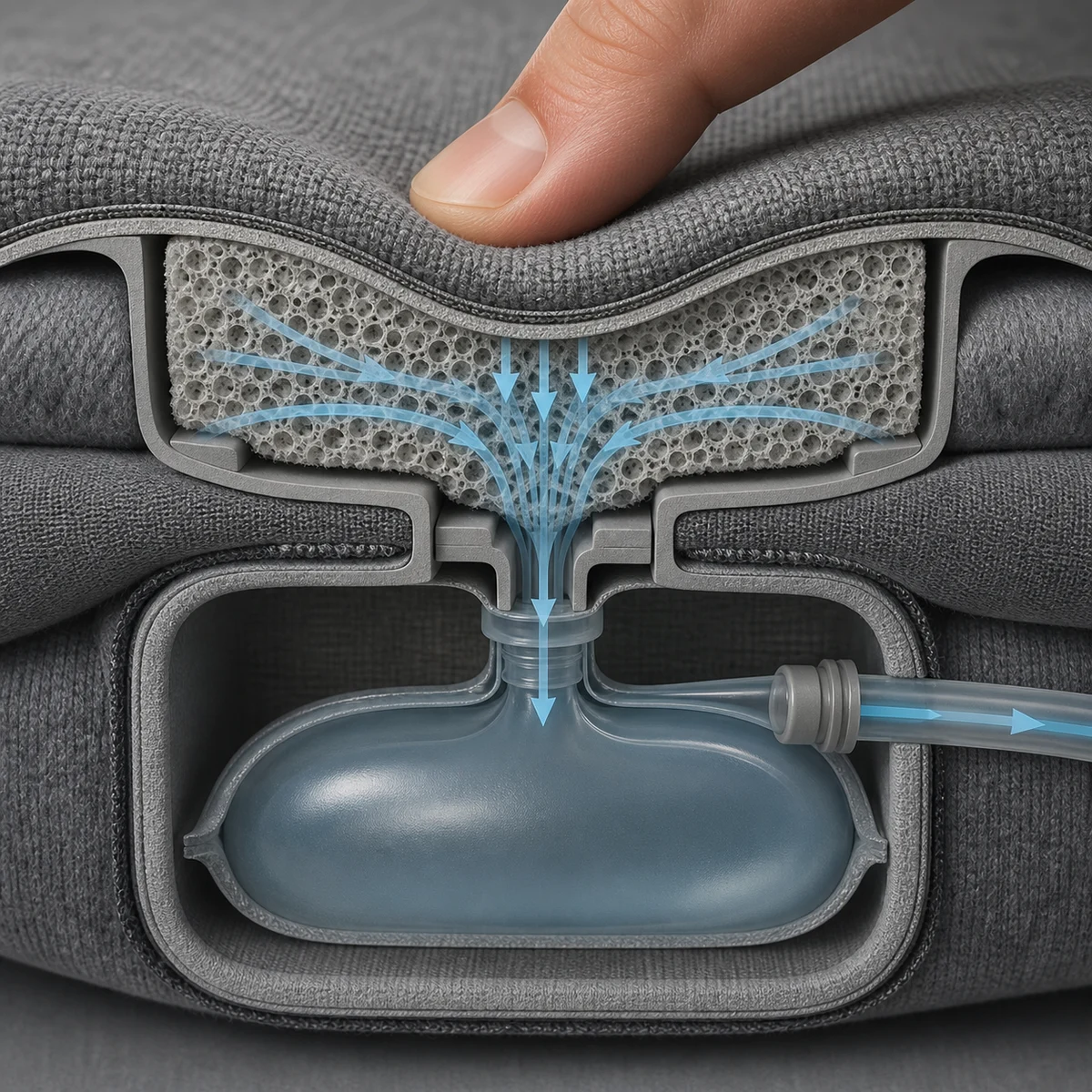
Open-cell foam is a web of pores, and air moving through that web meets resistance. Rice University engineers turned that ordinary material behavior into part of a pneumatic circuit. Pressure differences created as air passes through foam can carry and transform signals, allowing the material to participate in digital computation, analog sensing, and combined control without conventional electronics.
The researchers developed a model for how the foam's fluidic resistance changes when force compresses it. Foam-based resistors could then restrict airflow much as electronic resistors restrict current. Built into a textile or soft device, the same sponginess that makes the material deform can help sense how hard someone presses or convert digital pressure inputs into a graded analog response.
This is not a cushion secretly running general-purpose software. The demonstrations perform defined physical logic and sensing tasks. Their promise is architectural: if the foam itself supplies resistance, sensing, and signal conversion, a soft wearable or robot may need fewer separate pneumatic gates, connections, and rigid components. The circuit becomes less something attached to the material than something the material is doing.
Sources