Share
Share







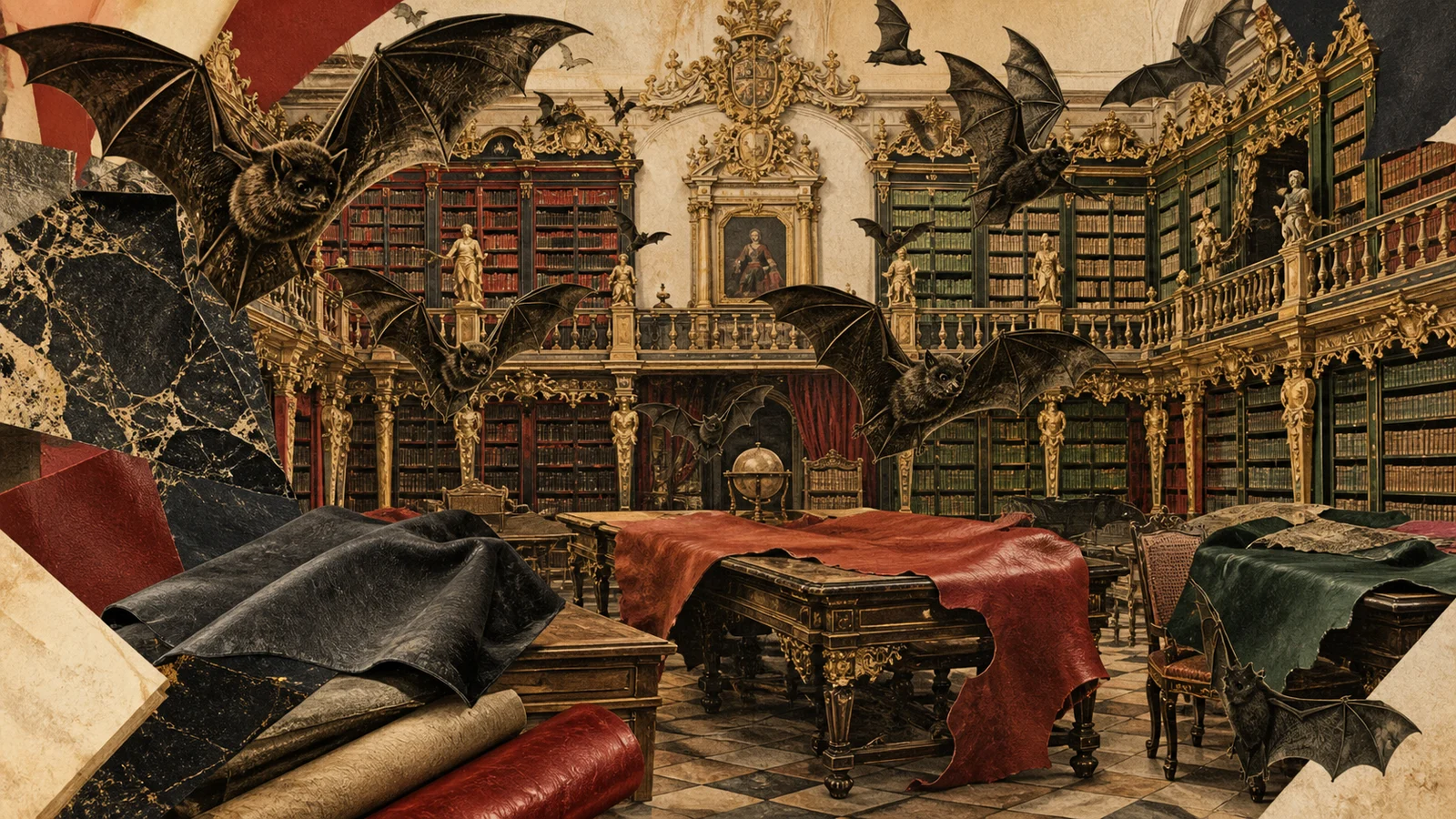
The Joanina Library at the University of Coimbra looks like a room built to keep time still. Gilded oak shelves rise through two tiers. Painted wood imitates marble. Black, red, and green halls connect through decorated arches beneath elaborate ceilings. About sixty thousand books, many printed between the sixteenth and eighteenth centuries, occupy a building completed in 1728. Then the visitors leave, the lights settle, and the library's other residents begin to move.
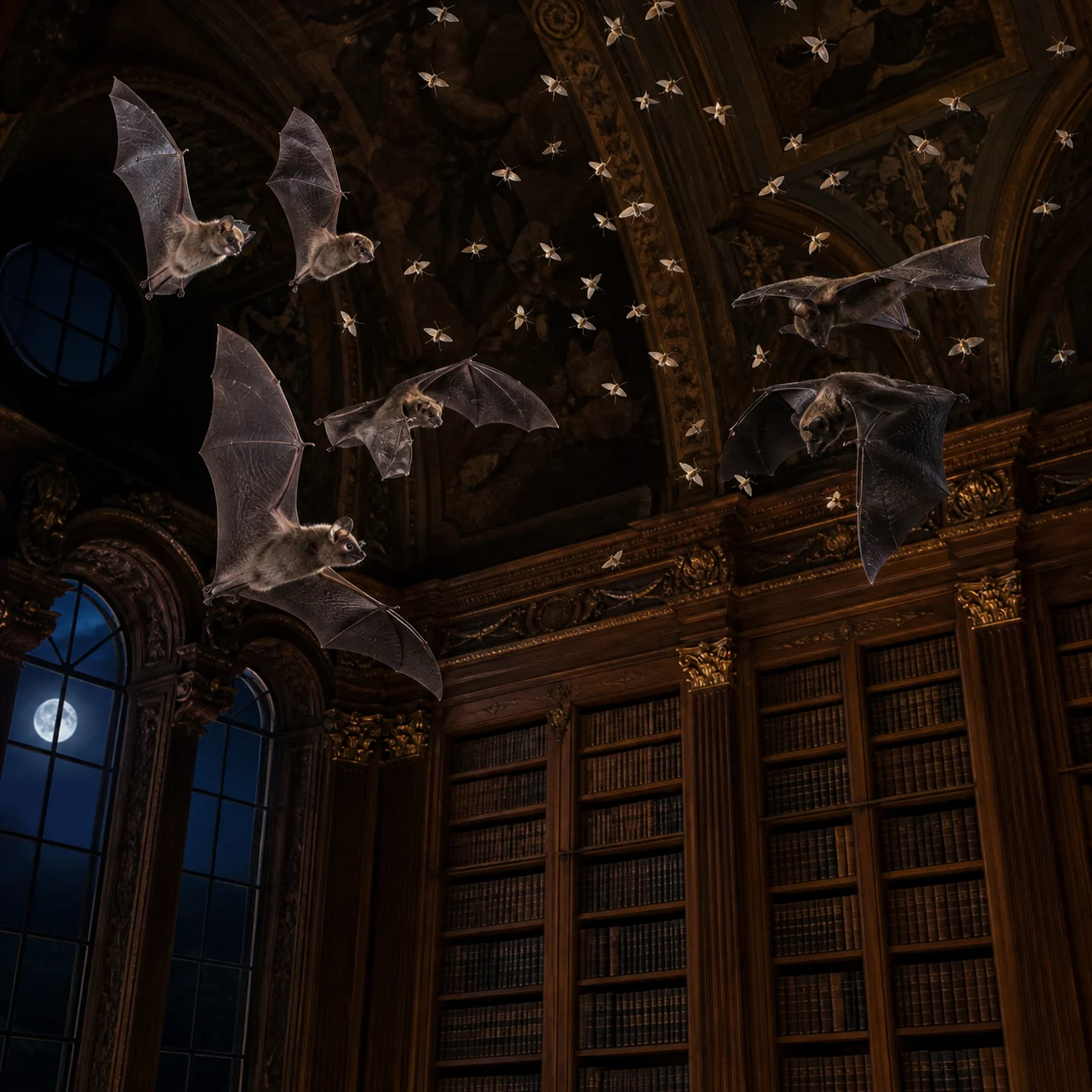
Two colonies of bats have lived there for roughly two and a half centuries. They emerge at night and feed on insects around the historic collection. In a library, that appetite is useful. Paper, bindings, and wood can all attract small animals capable of turning a page into a meal. A bat that catches those insects provides a living layer of pest control without understanding that it is protecting anything.
The arrangement sounds like a fairy tale because it joins two things stories already love: ancient books and secret wings. The actual system is more practical. Bats are not trained, scheduled, or employed. They are wild mammals sharing a building with a collection. Their hunting can reduce insect pressure, but their presence also produces droppings. Conservation therefore depends on accepting both sides of the relationship.
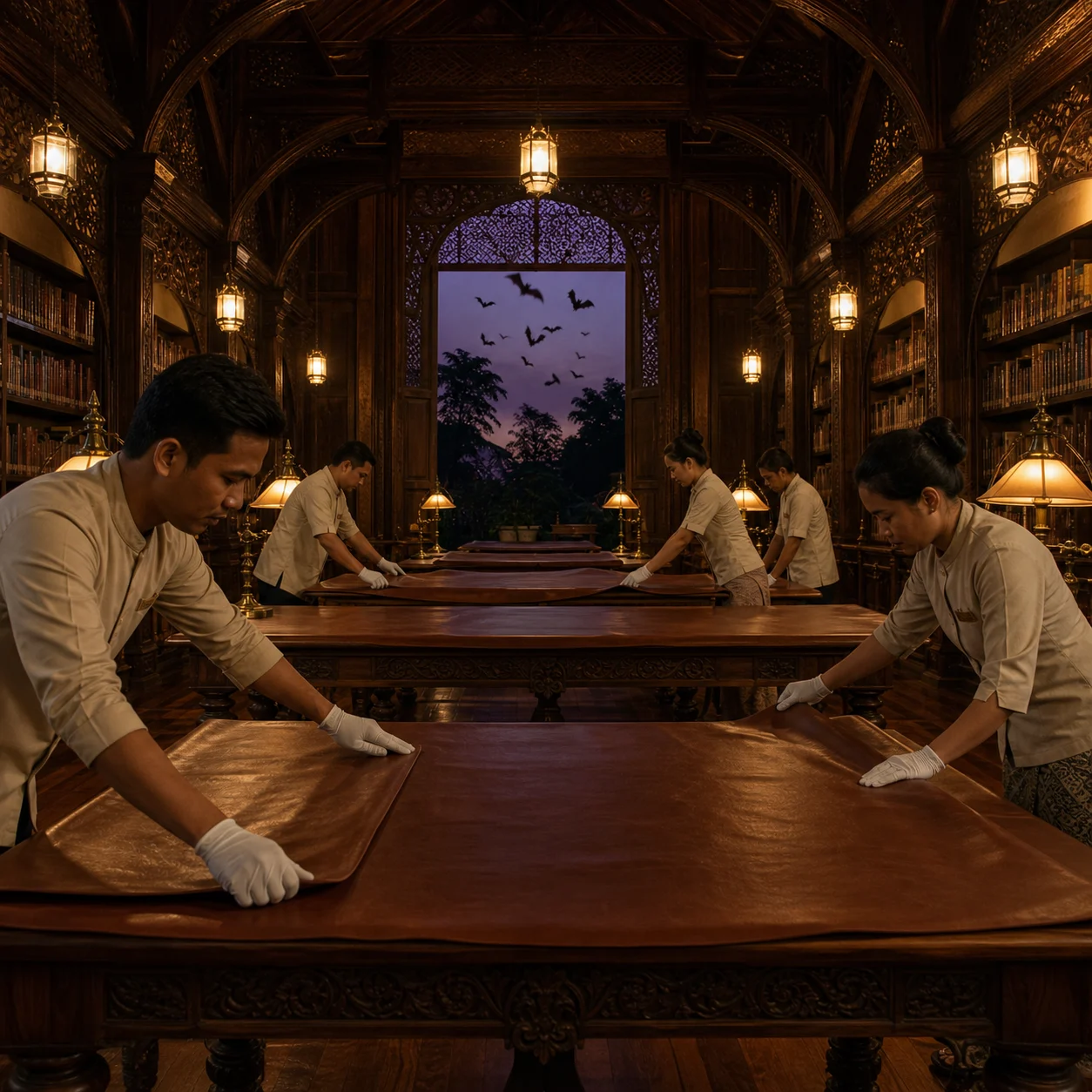
At the end of each day, staff cover the library's six ornate reading tables with leather sheets sometimes described as towels. The practice protects precious tropical woods from waste left by the animals overnight. In the morning, the covers can be cleaned and removed. The ritual is neither a theatrical flourish for tourists nor evidence that bats maintain the room by themselves. It is human work designed around the habits of a long-established colony.
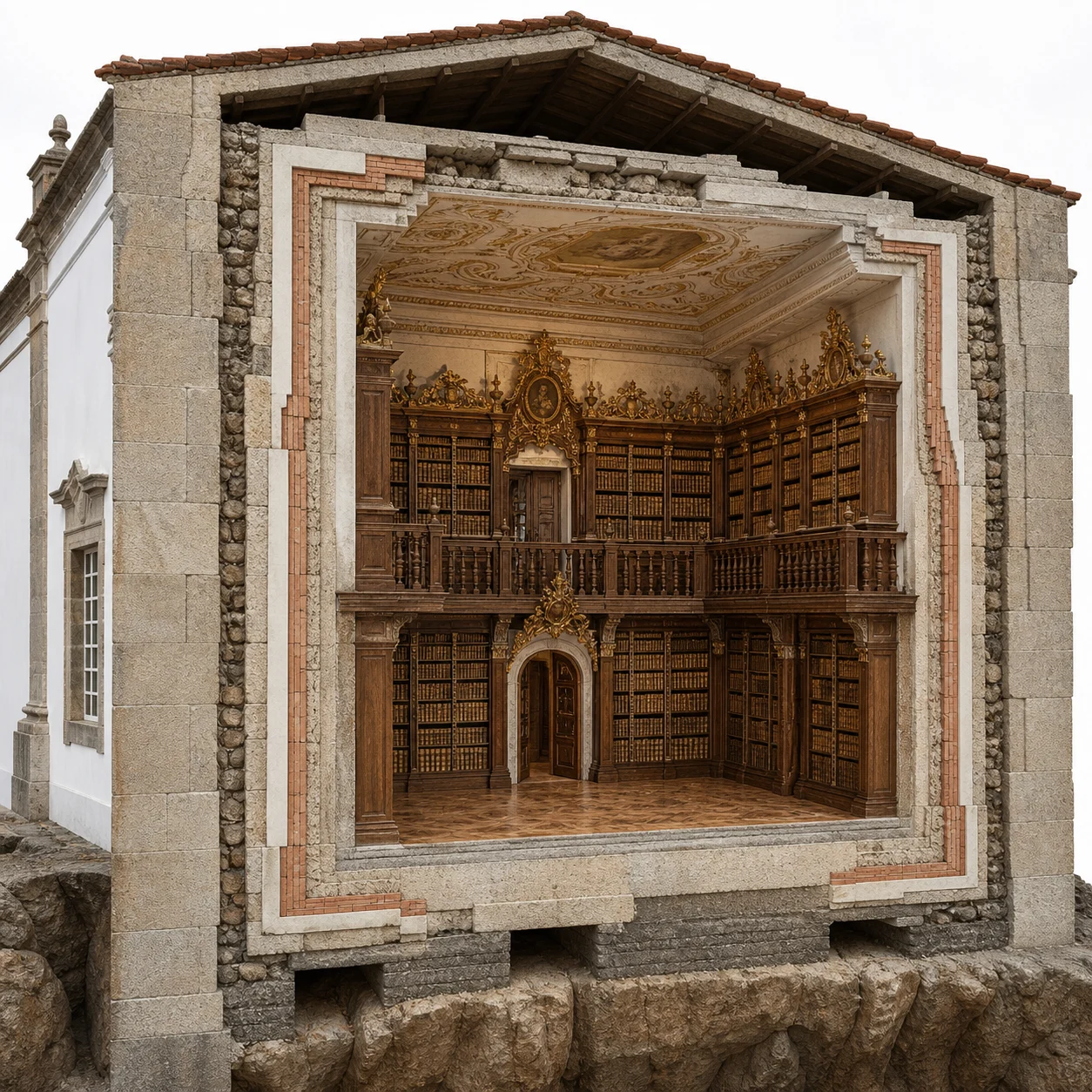
The bats belong inside a much larger preservation machine. The library's exterior walls are 2.11 meters thick, creating the mass of a vault. The building was designed to help buffer books from damaging changes in moisture and temperature. Its shelves are made of oak valued for density and durability; the university also notes that the wood's odor helps deter insects. Architecture, material choice, wildlife, cleaning, restoration, and cataloguing all overlap. No single defense carries the collection.
That layering matters because a book is vulnerable in several directions at once. Too much moisture encourages decay. Too little can make materials brittle. Insects may feed on paper or glue. Light, handling, dust, and time add their own stresses. A romantic story about bats saving books can hide the ordinary labor that keeps a collection usable. At Coimbra, works are still requested for consultation, and the library is undertaking selective digitization. Preservation does not mean sealing everything away from readers. It means managing access without surrendering the object.
The rooms themselves make that active use easy to overlook. Portraits, crests, ceiling figures, and gilded carving present the Noble Floor as a finished work of art. Yet the building's beauty sits on top of practical decisions: two levels of shelving, tables placed for consultation, storage below, and routes by which books reach readers. The leather covers belong to that practical vocabulary. They are temporary surfaces inserted into an extravagant room because wildlife does not care how elaborate the furniture is.
The library's history reinforces that balance between display and use. It served as the university library from 1777 into the first half of the twentieth century. Its three floors held more than shelves: the middle level supported guards for an academic prison below and later became a place for cleaning, restoring, and cataloguing books. Today the Noble Floor is a celebrated Baroque interior, but the volumes remain part of a working scholarly collection rather than painted scenery.
Bats have been folded into that history because the colony has persisted across generations of readers and custodians. Individual animals do not live for two and a half centuries; the continuity belongs to the groups occupying the space. Their nightly movement is another recurring procedure, like covering the tables or opening the catalogue, except no staff manual tells them when to begin.
The bats eat insects, but they do not eliminate every pest. That appetite is one defense among several. Human conservation practices remain essential, and staff clean what the animals leave behind. The relationship is not a perfect natural solution. It is a negotiated coexistence in which a wild resident creates both benefit and work. Even the strangest helper works inside a routine maintained by people.
That is what makes the Joanina Library stranger than the simplified legend. Its books are protected not by one miracle but by a stack of imperfect defenses: walls thick enough to steady the interior, oak shelves insects dislike, conservators who monitor the collection, leather laid down each evening, and bats hunting through the halls. Preservation here is not frozen silence. It is a daily exchange between masonry, paper, people, and wings.
Sources