Share
Share







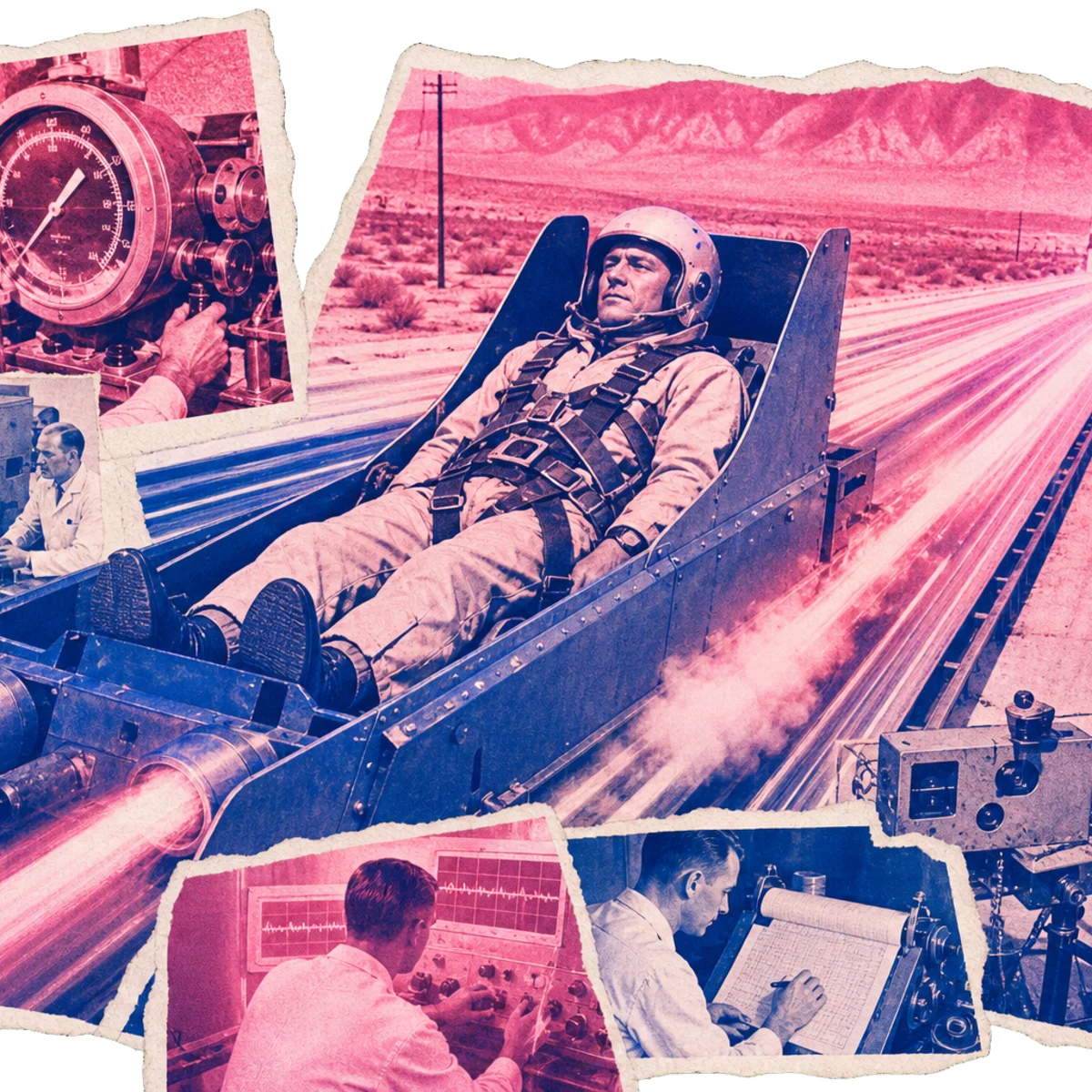
A crash test usually ends with instruments examining what happened to a dummy. On 10 December 1954, the instruments were attached to an Air Force physician named John Paul Stapp. He sat on Sonic Wind I, a rocket-propelled sled at Holloman Air Force Base, and accelerated along a rail track to 632 miles per hour. Then the sled stopped in 1.4 seconds.
The speed supplied the headline. The stop supplied the research. Air Force accounts place the deceleration at roughly forty times the pull of gravity. The run compressed a violent transition—from near aircraft speed to stillness—into less time than it takes to say the sled's name. Stapp had not boarded it to see how fast a doctor could travel. He was studying what happened when a human body had to survive the end of high-speed motion.
Jet aircraft were making that question urgent. A pilot escaping a fast airplane did not merely need a seat that could leave the cockpit. The body also had to withstand acceleration, windblast, restraint forces, and the abrupt changes involved in ejection and landing. Assumptions about human tolerance could not remain vague when designers were building systems around them.
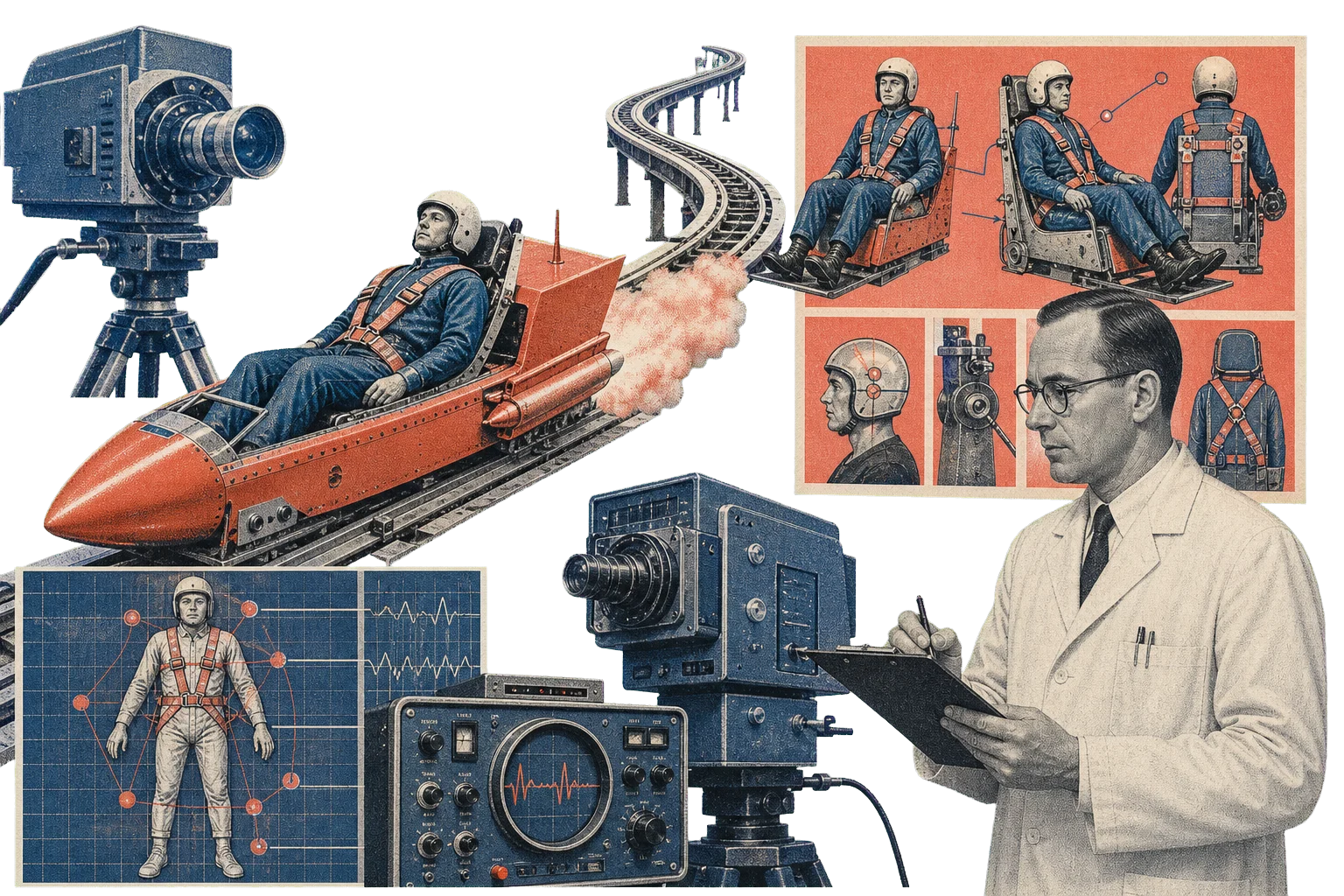
Stapp approached the problem as a physician and Air Force officer. Across 29 rocket-sled experiments, he helped turn acceleration and deceleration into measured biomedical events. A sled could reproduce a carefully defined burst of speed and a planned stop while cameras, sensors, and medical observation recorded the response. The apparatus looked spectacular, but its value came from control: a short, repeatable track offered a laboratory for forces that an aircraft emergency delivered unpredictably.
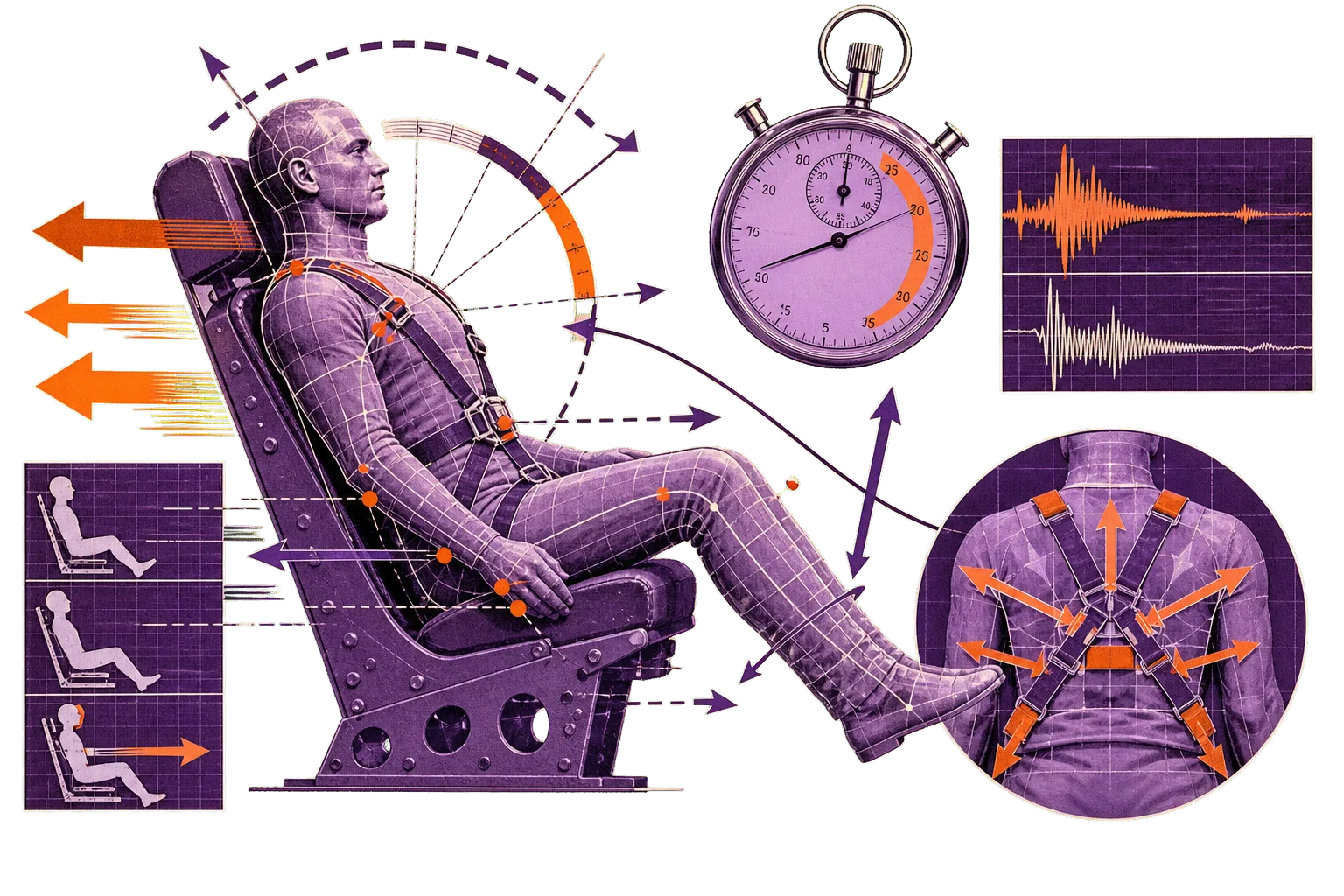
The human body does not experience speed directly. At steady motion, a passenger can sit comfortably inside a fast aircraft. Trouble arrives when motion changes. Acceleration presses the body one way; deceleration presses it another. Restraints decide where those loads enter the torso. Posture, duration, direction, and support all matter. A large force lasting a very short time is not identical to a smaller force sustained longer. Stapp's work helped replace one frightening number with a more detailed question about how force is applied.
That distinction explains the strange shape of Sonic Wind I. It was not a vehicle for traveling anywhere. Its destination was the end of its own track. The rockets existed to create a test condition, and the braking system existed to convert that condition into data. Every run was designed around the transition that ordinary transportation tries to avoid.
The 1954 experiment was Stapp's final human test on the Holloman high-speed track. Air Force reporting says the 632-mile-per-hour run demonstrated that a pilot at 35,000 feet traveling at twice the speed of sound could withstand the windblast associated with ejection. The claim was not that every person could survive every crash. It was that the design limits governing survival could be pushed, observed, and improved rather than accepted as fixed folklore.
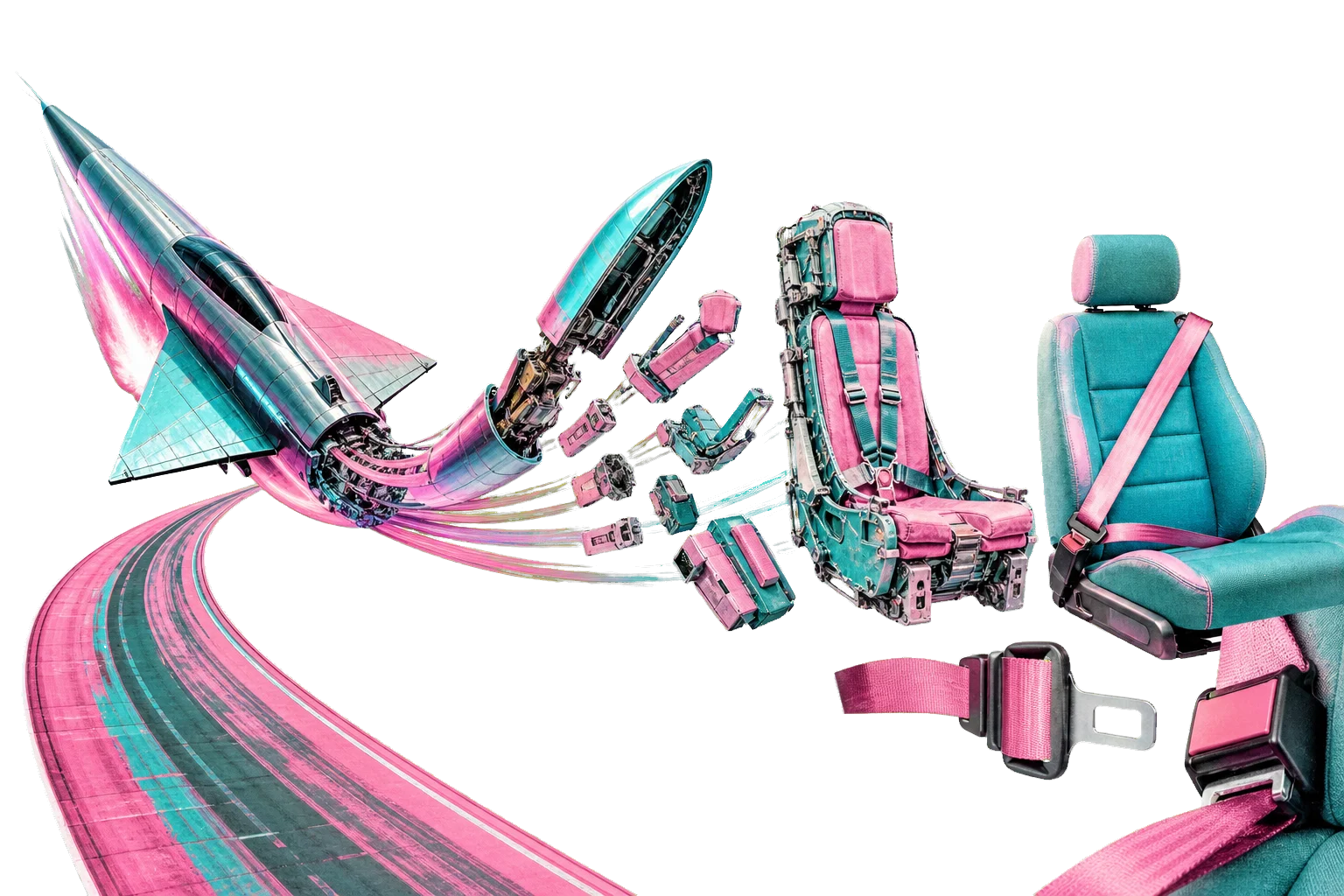
Restraint was central. A body that continues moving after a vehicle stops must be slowed by something. A poorly placed belt concentrates force and permits harmful motion; a better system spreads load and keeps the occupant in a survivable position. The same physics connects a rocket sled, an ejection seat, and an automobile. Their speeds differ, but all must manage how a person stops.
That connection carried Stapp's work beyond military aviation. The Smithsonian National Air and Space Museum credits his research with influencing high-speed safety standards and helping advance automobile restraints. The laboratory spectacle became part of a larger, less dramatic design culture: stronger harnesses, better seats, clearer tolerance data, and the expectation that safety systems should be tested against what bodies actually endure.
It is easy to tell the story as one fearless man accepting punishment. That version misses the institutional point. The useful outcome was not proof that Stapp was unusually tough. Safety engineering cannot depend on every passenger being exceptional. His body served as a source of data that designers could translate into protection for people who would never volunteer for a rocket track.
The experiment also exposes an uncomfortable stage in the history of testing. Modern engineering has sophisticated instrumented dummies, computer models, and ethical review. Stapp's era used a physician-researcher as both investigator and subject. His presence on the sled gave the work immediacy, but the lasting lesson is precisely to build systems that do not require future occupants to discover limits by accident.
A rail sled at 632 miles per hour sounds like transportation stripped down to pure excitement. In practice, Sonic Wind I was transportation stripped down to one grim verb: stop. It had no road network, cargo, or destination beyond a measured deceleration zone. The world's attention followed the speed, while the researchers watched the harness, posture, timing, and physiological response.
That inversion is why the run still feels weird. Stapp became famous for moving faster than a person had moved on land, but his contribution centered on coming safely to rest. The rockets created five seconds of velocity; the 1.4-second stop created evidence that continued into aircraft and cars. His fastest journey covered only a track in New Mexico. Its useful distance was measured in every later seat designed to keep a human attached to a stopping machine.