Share
Share







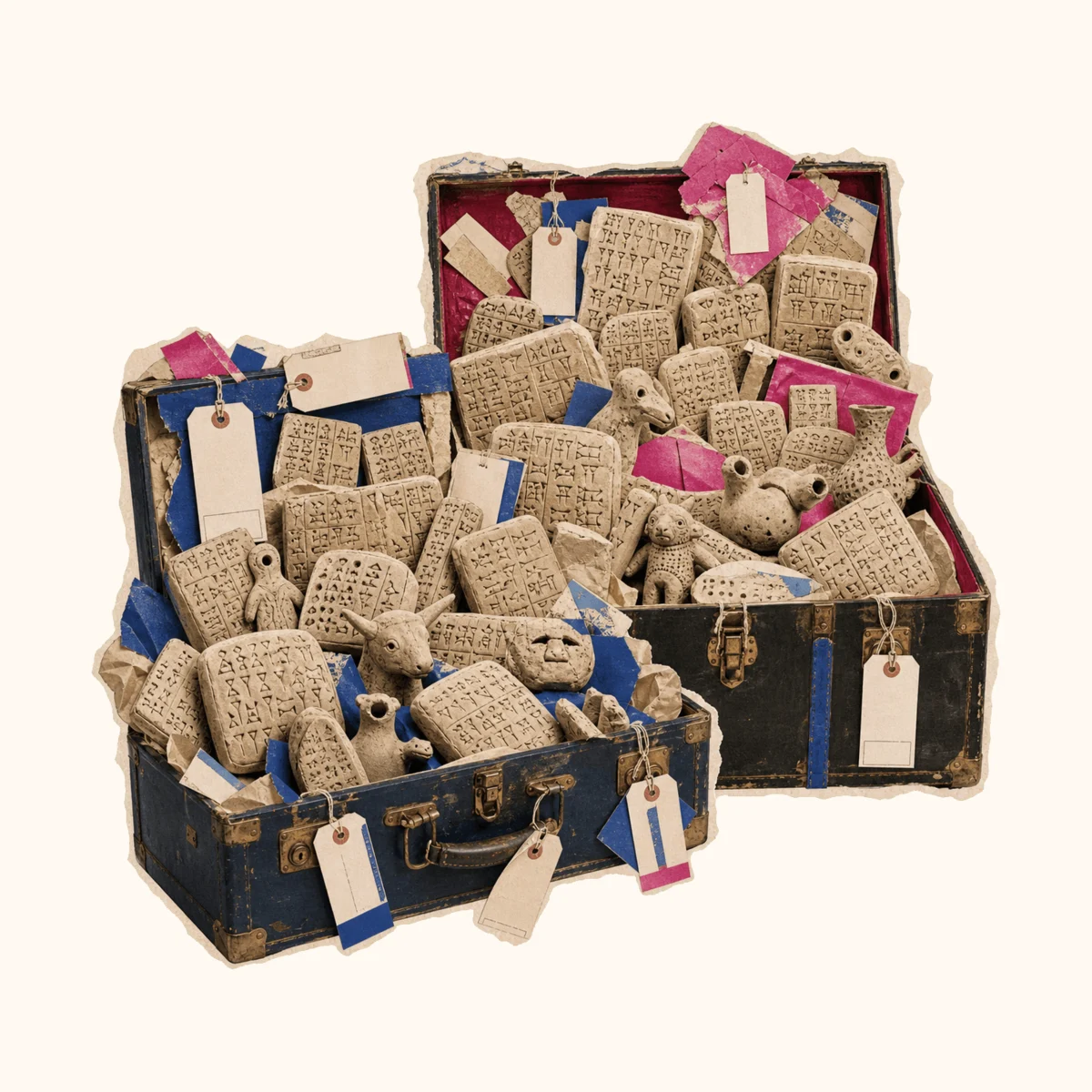
In July 2019, UK Border Force opened two metal trunks at Heathrow and found what looked like a compact museum of ancient Mesopotamia. Inside were as many as 190 cuneiform tablets, plus figurines, cylinder seals, and animal-shaped pots. The tablets appeared to cover everything from school exercises and administration to royal inscriptions and mathematics.
That completeness was one warning. The writing supplied more. Some tablets borrowed genuine cuneiform signs and familiar formulas, but mixed them with invented characters and signs turned upside down. Objects supposedly spanning different centuries and purposes had been made from suspiciously similar clay, then fired evenly at high temperature. Genuine tablets of those types would have used different clays and generally been sun-dried. Their proportions were also wrong, as if the makers had copied photographs without knowing the originals’ thickness.
Two more trunks later arrived with additional figures and vessels, confirming that curators were looking at a modern production line rather than an archaeological cache. The shipment failed because it tried to be everything at once: too complete, too consistent, and occasionally written the wrong way up.
Sources