Share
Share







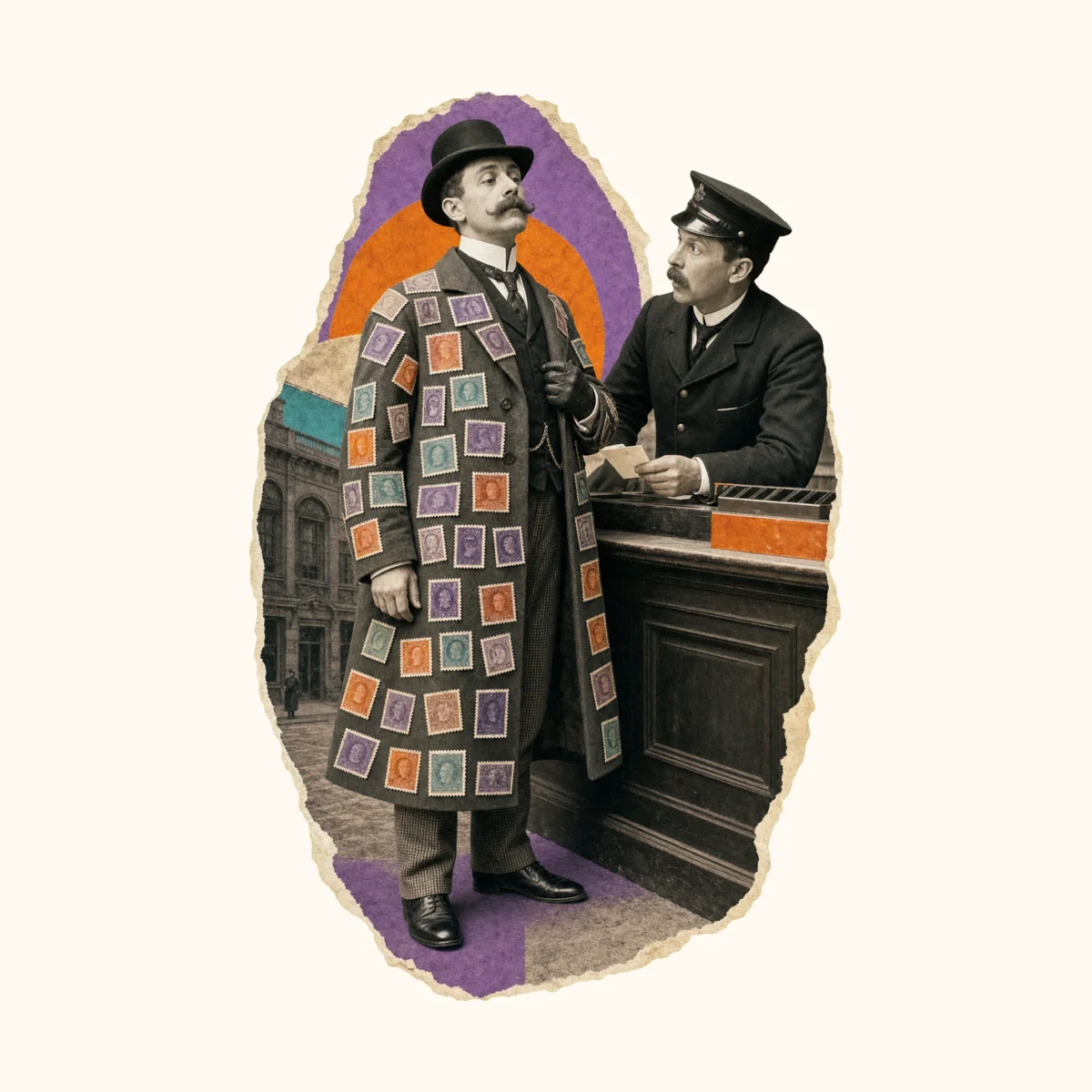
Reginald Bray treated the British postal regulations less like a rulebook than a set of experimental instructions. After becoming fascinated with what the Post Office would accept, he began sending objects that did not resemble ordinary mail: a bowler hat, a slipper, a cigarette, a bicycle pump, a shirt collar, and a turnip carved with his name and address.
Then he made himself the mailpiece. The National Postal Museum records Bray among his own unusual postings—a human letter delivered through the system he had been testing. The surviving story does not need a crate or an elaborate disguise. Its weirdness comes from the simpler act of asking postal workers to process a standing adult as something that had been sent.
Bray’s experiments turned an enormous public network into a conversation. Every strange object posed the same question: if an item carried enough information and satisfied the rules, where did “mail” end? The answer kept stretching until it included the person asking.