Share
Share








Wally Funk’s route to space began with a magazine story and a letter. In 1960, pilot Jerrie Cobb became the first woman invited into a privately funded experiment at the Lovelace Foundation in Albuquerque. The physicians there had helped develop medical screening for NASA’s first astronauts. Funk read about Cobb in Life, recognized the opportunity she had been waiting for, and wrote to the doctors. She was accepted as the youngest candidate, still in her early twenties.
Flying was already the organizing fact of her life. Funk learned at Stephens College in Missouri, soloed at sixteen, and later joined the Flying Aggies at Oklahoma State University. Her mother encouraged the obsession, a sharp reversal from the previous generation: Funk’s grandfather had denied her mother a barnstorming flight because he believed ladies did not fly. By the time the Lovelace opportunity appeared, Funk was not testing a new interest. She was looking for the highest possible extension of work she had already begun in the cockpit.

This was not a NASA astronaut class. The project was private, financed by aviator Jacqueline Cochran, and the women were usually tested alone or in pairs as openings became available. The familiar label “Mercury 13” arrived decades later, coined for television in the 1990s to echo NASA’s Mercury 7. At the time, there was no matching group photograph, no agency patch, and no official promise of a launch. There were simply highly experienced women pilots taking astronaut-style medical tests.
Thirteen women passed the first phase. The examinations were designed to expose any physical vulnerability that might become dangerous in space, and Funk made it through. She was also one of only three women to undergo a second phase of psychological testing at a Veterans Administration hospital in Oklahoma City. Those examinations included isolation in a sensory-deprivation tank, an experience that turned the absence of ordinary sights and sounds into part of the test.
The next phase was supposed to bring the candidates together in Pensacola, Florida, for advanced aeromedical work involving Navy facilities and jet aircraft. Instead, telegrams arrived in 1961 saying the project had been cancelled. NASA had no official women’s astronaut program, and the Navy withdrew permission for the privately organized tests to use its facilities. Congressional hearings followed in 1962, but the project did not resume. The testing had demonstrated capability; it had not created a path into NASA.
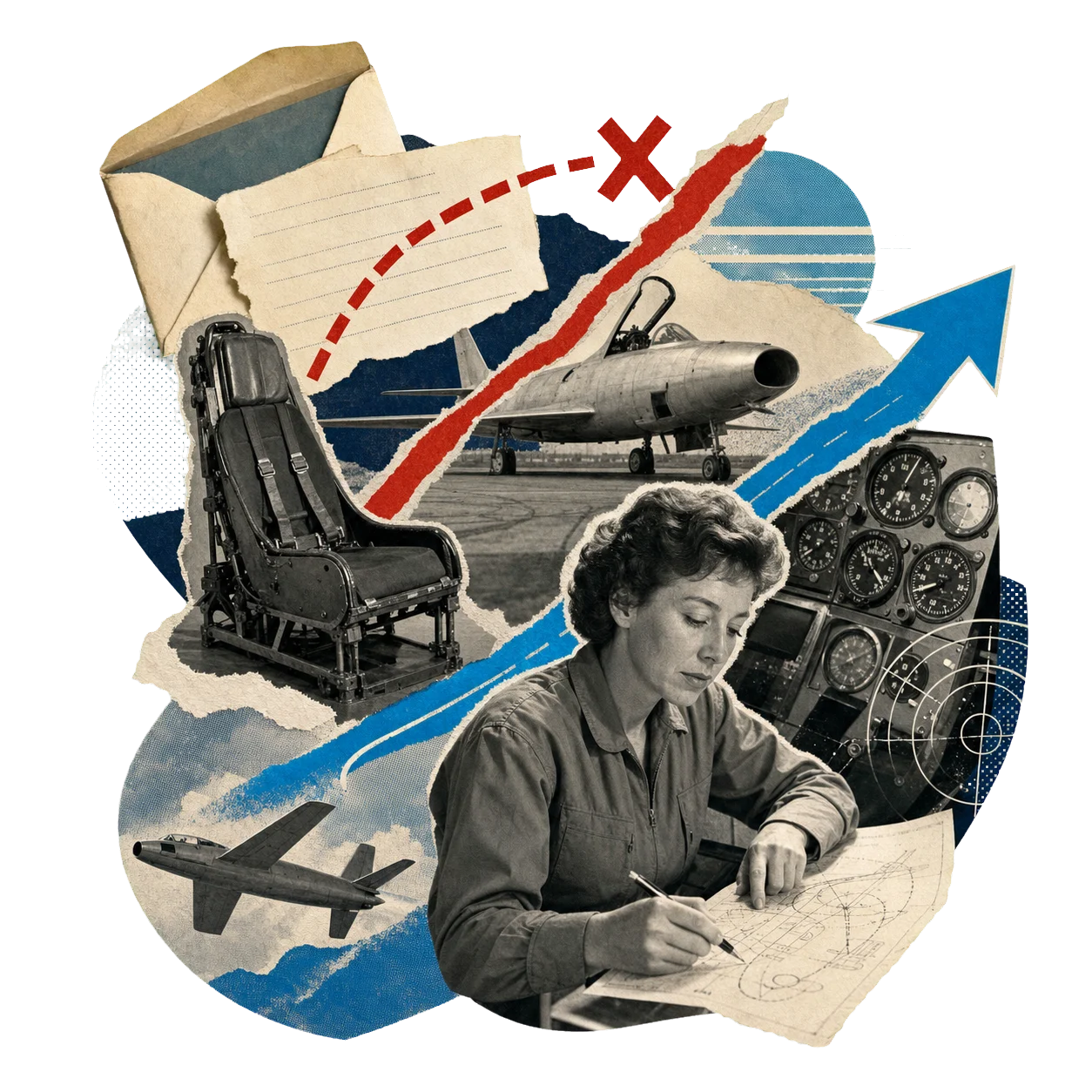
Funk kept looking for a path anyway. She arranged additional aeromedical testing on her own, first at El Toro Marine Corps Air Station and later at the University of Southern California. At USC she completed cycles in a human centrifuge. Because the available equipment had not been designed around women, she improvised a makeshift G-suit from corsets and girdles. It is a wonderfully strange detail, but also a precise picture of the problem: even the clothing assumed that the person being tested would be a man.
She did not spend the following decades waiting beside a telephone. Funk built a substantial aviation career. She became a flight instructor, then worked as a flight inspector for the Federal Aviation Administration and as an air-safety investigator for the National Transportation Safety Board. She turned accident-investigation experience into safety presentations for other pilots, walking rooms of experienced aviators through practical errors and ways to avoid them. The career did not substitute for space; it proved that her original ambition rested on continuing expertise rather than a frozen youthful wish.
In 1995, Funk joined six other surviving participants from the Lovelace testing project to watch Eileen Collins launch aboard STS-63 as the first woman to pilot a space mission. The scene closed one historical gap while emphasizing another. Women were finally flying spacecraft for NASA, yet the pilots whose bodies had helped answer early questions about women in space had never been admitted to the astronaut corps themselves. Funk celebrated the milestone without treating it as the end of her own story.

The dream itself remained stubbornly unchanged. Funk told Smithsonian historian Margaret Weitekamp in 1997 that she still intended to go to space, even if she had to wait until she was one hundred. Commercial spaceflight eventually created the route that the government astronaut system had never offered her. On July 20, 2021, she rode aboard Blue Origin’s New Shepard on the company’s first human spaceflight. She was 82 years old.
At that moment, Funk became the oldest person yet to travel into space, taking a record previously held by John Glenn. The flight was suborbital and brief, but the elapsed time behind it was enormous: roughly six decades separated her Lovelace examinations from launch day. The contrast is what makes the story feel almost fictional. A candidate tested before any woman had flown in space finally left Earth in a vehicle built by an industry that barely existed when her original program was cancelled.
Her story is sometimes compressed into a tidy lesson about never giving up. The messier version is more revealing. Funk possessed the skill, passed demanding tests, and continued building expertise, yet the institution capable of putting astronauts into orbit did not have a place for her. Persistence mattered, but so did a changing system and a new kind of spacecraft. When she finally floated above Earth, the achievement belonged both to an individual who refused to retire the idea and to a future that arrived sixty years late.