Share
Share







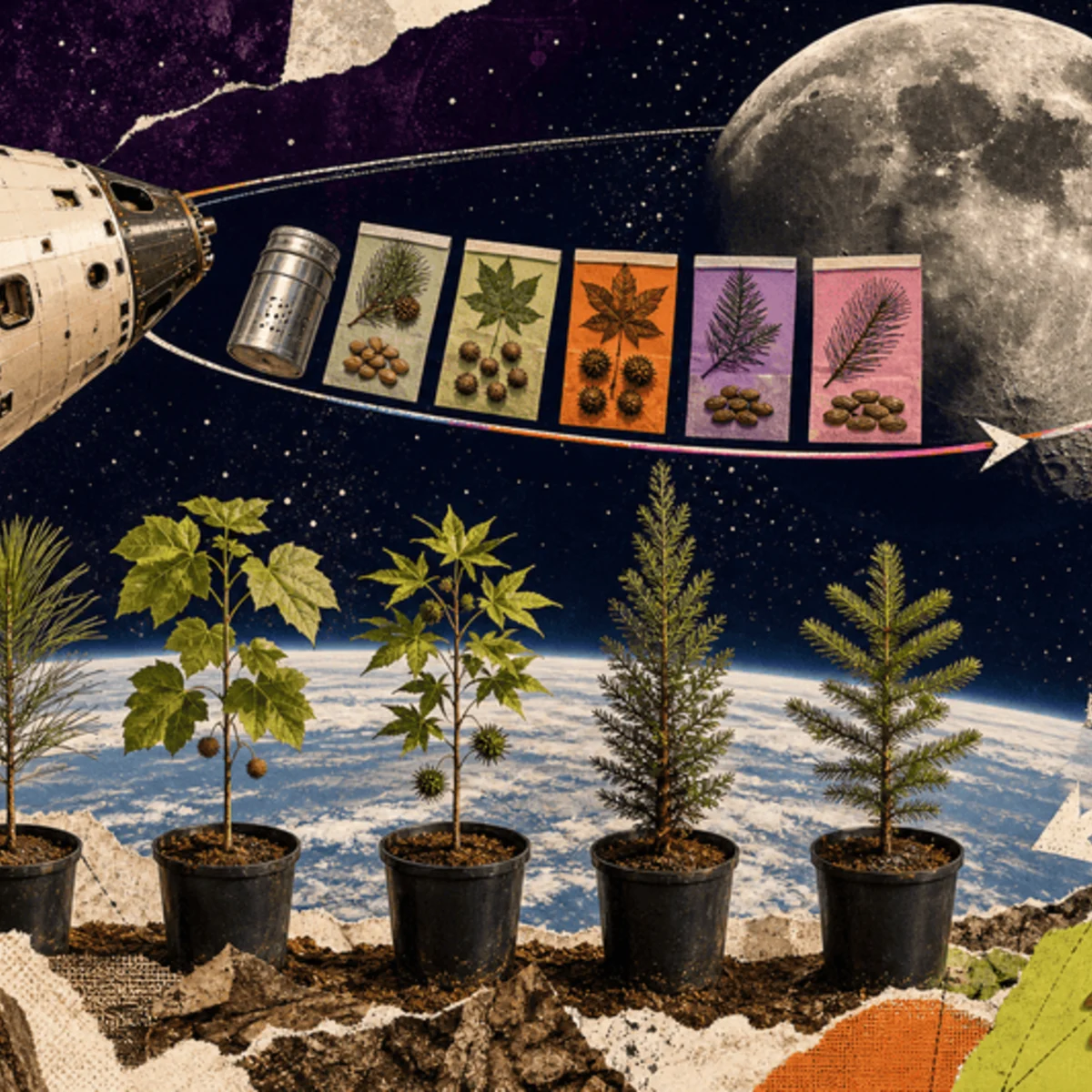
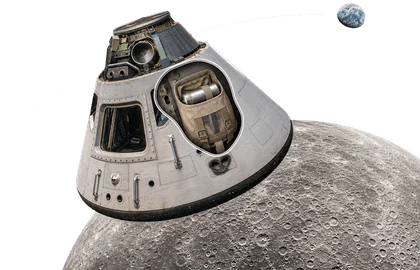
On January 31, 1971, Apollo 14 left Earth carrying three astronauts, a lunar module, scientific instruments, and a small metal cylinder filled with the beginnings of a forest. The passengers inside that cylinder were ordinary tree seeds: loblolly pine, sycamore, sweetgum, redwood, and Douglas fir. Their itinerary was not ordinary. Before returning home, they would travel to the Moon and loop around it inside the command module Kitty Hawk.
The seeds belonged to an informal joint project between NASA and the U.S. Forest Service. Stuart Roosa, Apollo 14's command module pilot, had worked as a Forest Service smokejumper in the early 1950s, parachuting into remote areas to fight wildfires. Forest Service chief Ed Cliff knew that history and suggested sending seeds on Roosa's mission. Geneticist Stan Krugman selected the five species, classified the seeds, sealed them in small plastic bags, and kept matching seeds on Earth for comparison. NASA sources differ on the total count, but a detailed anniversary history places it at roughly 400 to 500.
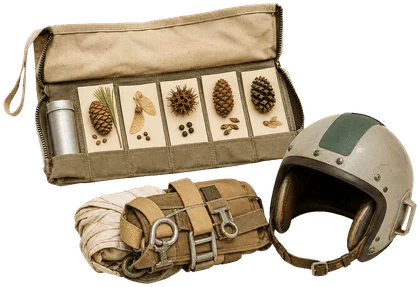
Roosa packed the cylinder into his Personal Preference Kit, a small canvas pouch astronauts could use for lightweight personal items. Apollo 14 reached lunar orbit in early February. Alan Shepard and Edgar Mitchell descended in the lunar module Antares and explored the Fra Mauro highlands. Roosa stayed aboard Kitty Hawk, conducting orbital work and waiting for their return. The seed canister stayed with him.
That distinction matters. The seeds did not land on the Moon, touch lunar soil, sprout in space, or experience years of cosmic exposure. They spent the mission sealed inside a crewed spacecraft. Their claim to the name Moon Trees comes from the route: they traveled from Earth to lunar orbit and back. That is plenty strange without adding anything that did not happen.
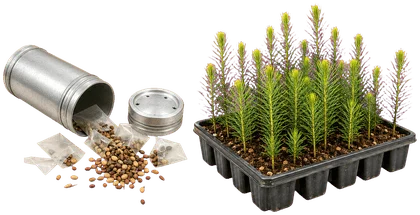
The trip home produced the story's most precarious moment. Apollo hardware and its contents went through quarantine and decontamination procedures after splashdown. During the handling of Roosa's seed container in a vacuum environment, the metal cylinder split open. The bags burst and the seeds scattered and mixed together. Krugman feared the sudden pressure change had killed them and that the species could no longer be kept neatly separated. The miniature forest appeared to have returned from the Moon only to be lost in a laboratory accident.
The seeds proved more stubborn. An initial germination effort in Houston produced sprouts that did not survive the facility's limitations. The remaining seeds were divided between Forest Service research stations: Gulfport, Mississippi, handled sycamore, loblolly pine, and sweetgum; Placerville, California, handled redwood and Douglas fir. The space-flown seeds germinated about as well as the controls. According to NASA's later account, the stations raised more than 400 viable saplings.
The experiment then changed into a living commemoration. During 1975 and 1976, Moon Tree saplings went to schools, universities, parks, state forestry organizations, government grounds, and NASA centers, many as part of the United States Bicentennial. A sycamore was planted in Washington Square in Philadelphia. Other trees went to the White House, Valley Forge, Brazil, Switzerland, and the Emperor of Japan. Climate mattered, so the southern and western species could not simply be planted in every requested location.
Their different species made every planting a slightly different monument. A loblolly pine carried the story into a warm southern landscape; a redwood or Douglas fir suited the West; a sycamore could stand beside a city path. Unlike a spacecraft sealed in a museum, each memorial kept changing with weather and season. It added rings, shed leaves or needles, survived local storms, and dropped seeds of its own. Apollo history had become something people could picnic beneath.
What happened scientifically? Nothing dramatic—and that is useful. Some Moon Trees were planted beside seedlings grown from the Earthbound control seeds. After decades of growth, NASA reports no discernible difference between them. Nine days sealed in a spacecraft, including the passage through lunar orbit, did not transform the survivors into silver-leaved mutants or make them grow in low gravity. They grew like trees. The forest had made a spectacular journey and then returned to the ordinary business of roots, bark, water, and sunlight.
Tracking the trees became its own puzzle. No complete, systematic record was kept of every distribution and planting. In 1996, after a teacher asked NASA for information about a Moon Tree, scientist David Williams began assembling a list from reports, plaques, photographs, and messages from people who knew of surviving examples. Some original trees have died from storms, disease, age, or redevelopment. Others still stand. Seeds and cuttings from them have produced second-generation descendants sometimes called Half-Moon Trees.
The name turns out to be both grander and more modest than it sounds. A Moon Tree is not alien botany. It is a terrestrial tree whose seed rode around another world, survived an accident that was supposed to end the experiment, and was planted as a public memory. The mission left footprints and instruments on the lunar surface. Back on Earth, it also left shade.