




 Share








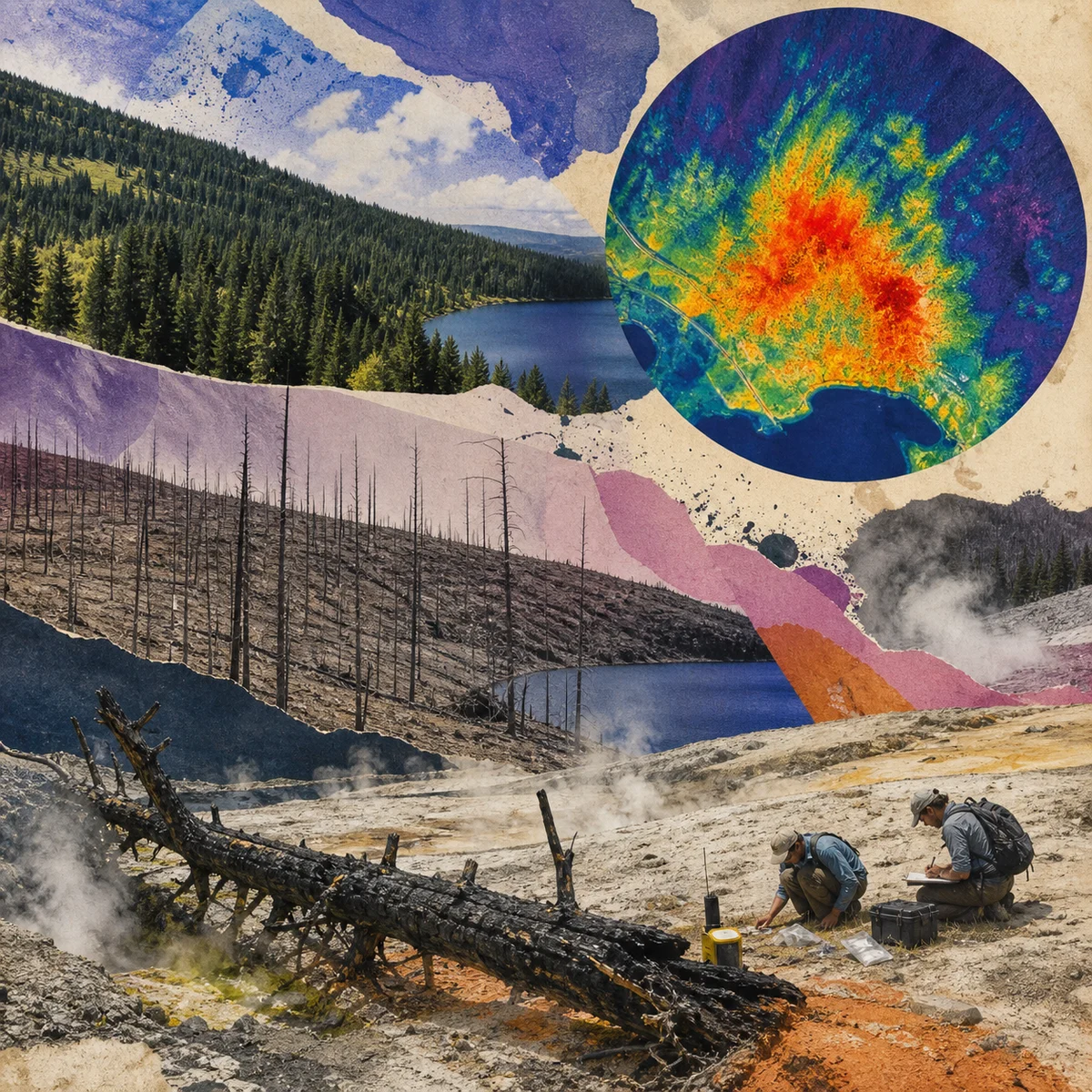
In 2018, scientists inspecting a Landsat 8 nighttime thermal-infrared image noticed warm ground near Tern Lake on Yellowstone’s Sour Creek dome. It was not listed among the park’s mapped thermal areas. A 2017 aerial photograph showed roughly 33,000 square meters—about eight acres—of fallen trees, sparse vegetation, and bright altered soil where a 1994 image had shown healthy forest.
The archive supplied the missing timeline. Vegetation stress appeared around 2000, the patch expanded slowly until about 2005, then grew and emitted more heat before its change began leveling off after 2012. A field team visiting in 2019 confirmed a steam-heated, acid-sulfate system. Surface temperatures in its hottest arc reached 60 to 80 degrees Celsius; several fumaroles steamed, and temperatures just below ground reached the local boiling point of about 93 degrees.
Some fallen trunks touching hot soil had begun to char, yet cooler pockets a few feet away supported new trees. The feature did not arrive as one dramatic blast, and investigators found no clear link to a single earthquake or deformation event. Yellowstone thermal areas routinely expand, contract, heat, and cool. This newly mapped patch is evidence of that living hydrothermal system—not a countdown to an eruption.
Sources