




 Share








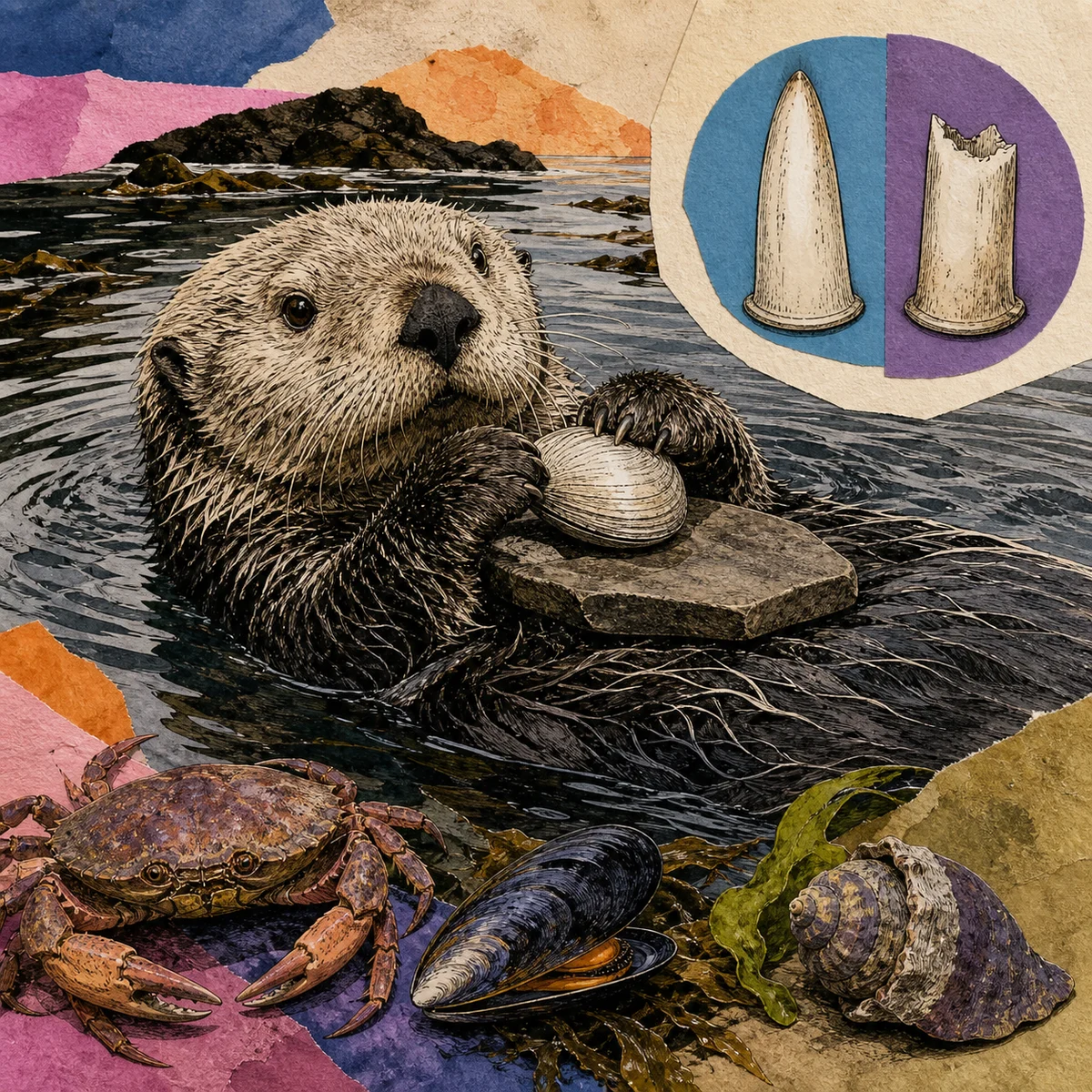
Researchers and volunteer “otter spotters” followed 196 radio-tagged southern sea otters along California’s central coast. They recorded what the animals ate, whether they used a rock, shell, or even discarded hard object to open it, and the condition of their teeth. Tool users gained access to larger or tougher prey while showing fewer tooth injuries.
That matters when easy favorites run short. Large abalone and sea urchins are relatively straightforward for an otter to open, but depleted patches can push the menu toward crabs, clams, mussels, and small marine snails. Prying and biting those shells can crack or wear teeth that an otter cannot replace. A separate striking surface takes part of the force instead.
Females used tools more often in the study and could consume prey up to 35 percent harder than prey eaten by tool-using males. The researchers linked that flexibility to the energetic demands faced by smaller-bodied females, including raising pups. It remains an observed association across individual otters, not a claim that every otter carries a favorite hammer. Some bite; some pound; the careful tool users appear to keep more of their teeth.
Sources