




 Share








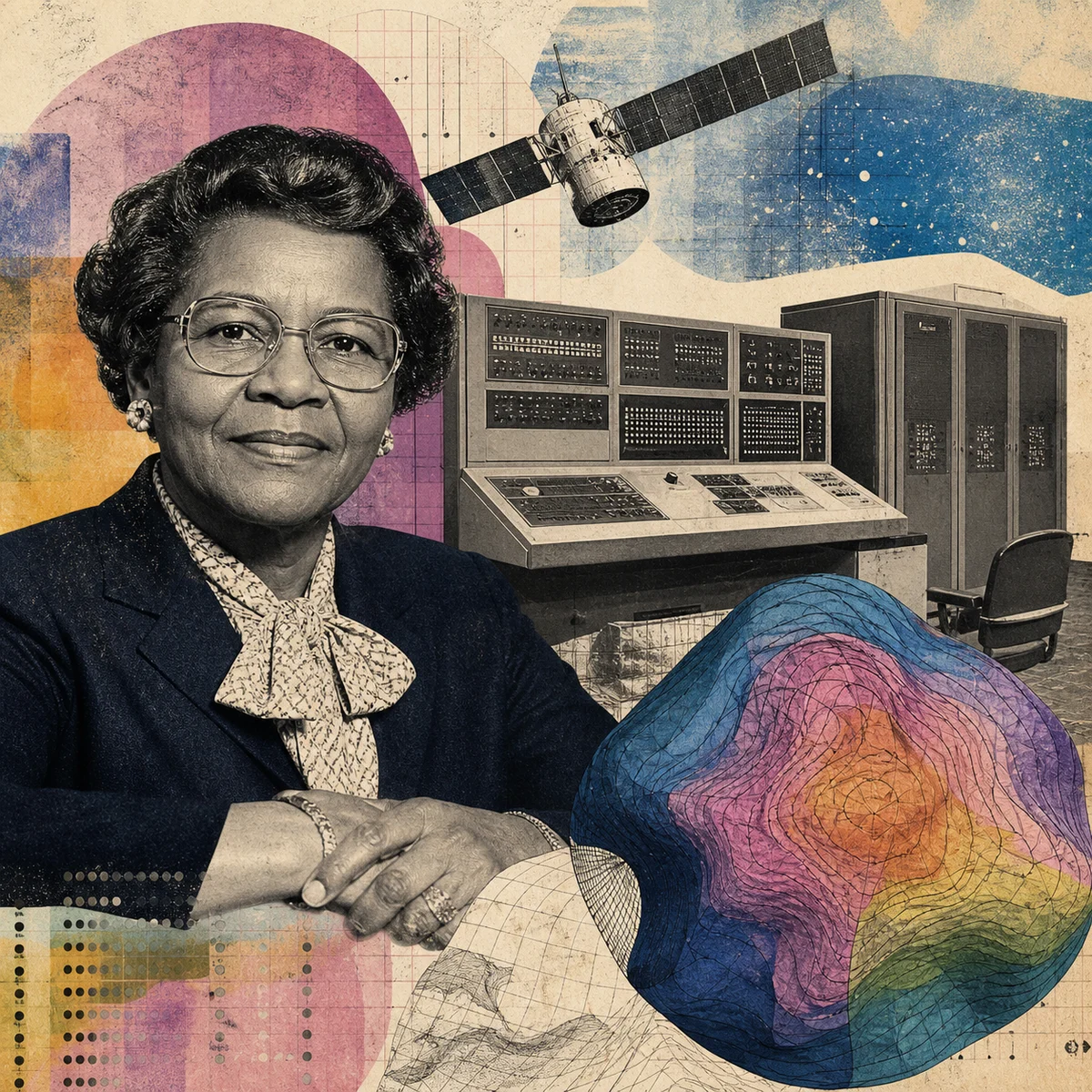
Gladys West joined the U.S. Naval Weapons Laboratory as a mathematician in 1956, when women doing military computation often performed the work long before electronic systems received the credit. An early assignment placed her on an astronomical study of Pluto’s motion relative to Neptune. Her career then moved toward a harder object to model: Earth itself.
From the mid-1970s through the 1980s, West developed algorithms that accounted for the gravitational, tidal, and other forces that make Earth depart from a simple sphere. She programmed an IBM 7030 “Stretch” computer to turn satellite observations into increasingly refined calculations of the geoid—the irregular, gravity-defined shape used as a reference for elevation and position. That painstaking model helped provide the geodetic foundation needed for accurate satellite orbits and, ultimately, GPS.
West did not single-handedly invent GPS; no one person did. Satellites, clocks, radio signals, orbital mechanics, receivers, and many generations of engineers all belong to that system. Her contribution was foundational and specific: she made the planet in the calculations resemble the planet under our feet. Every blue dot on a map depends on knowing that Earth is not the tidy globe printed behind it. The Air Force later inducted West into its Space and Missile Pioneers Hall of Fame for those decades of mathematical work.
Sources