Share
Share







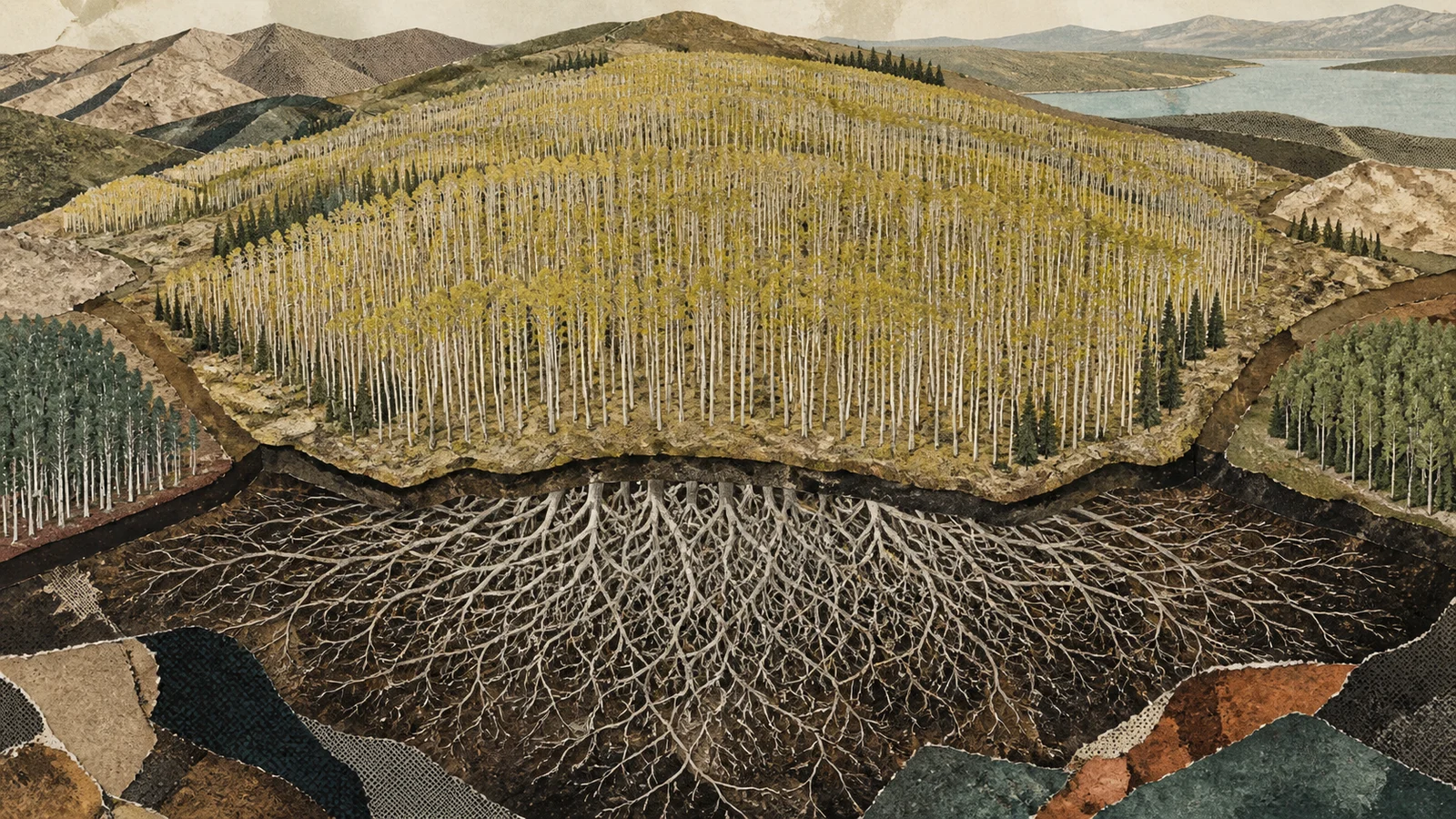
Stand among Pando's trunks and the ordinary unit of a forest seems obvious. One pale aspen rises here, another there, and thousands more repeat across the Utah hillside. Each has its own bark, branches, leaves, scars, and age rings. Above ground, the landscape appears to contain an enormous crowd. Below ground—and in the DNA—the crowd resolves into one dominant genetic individual.
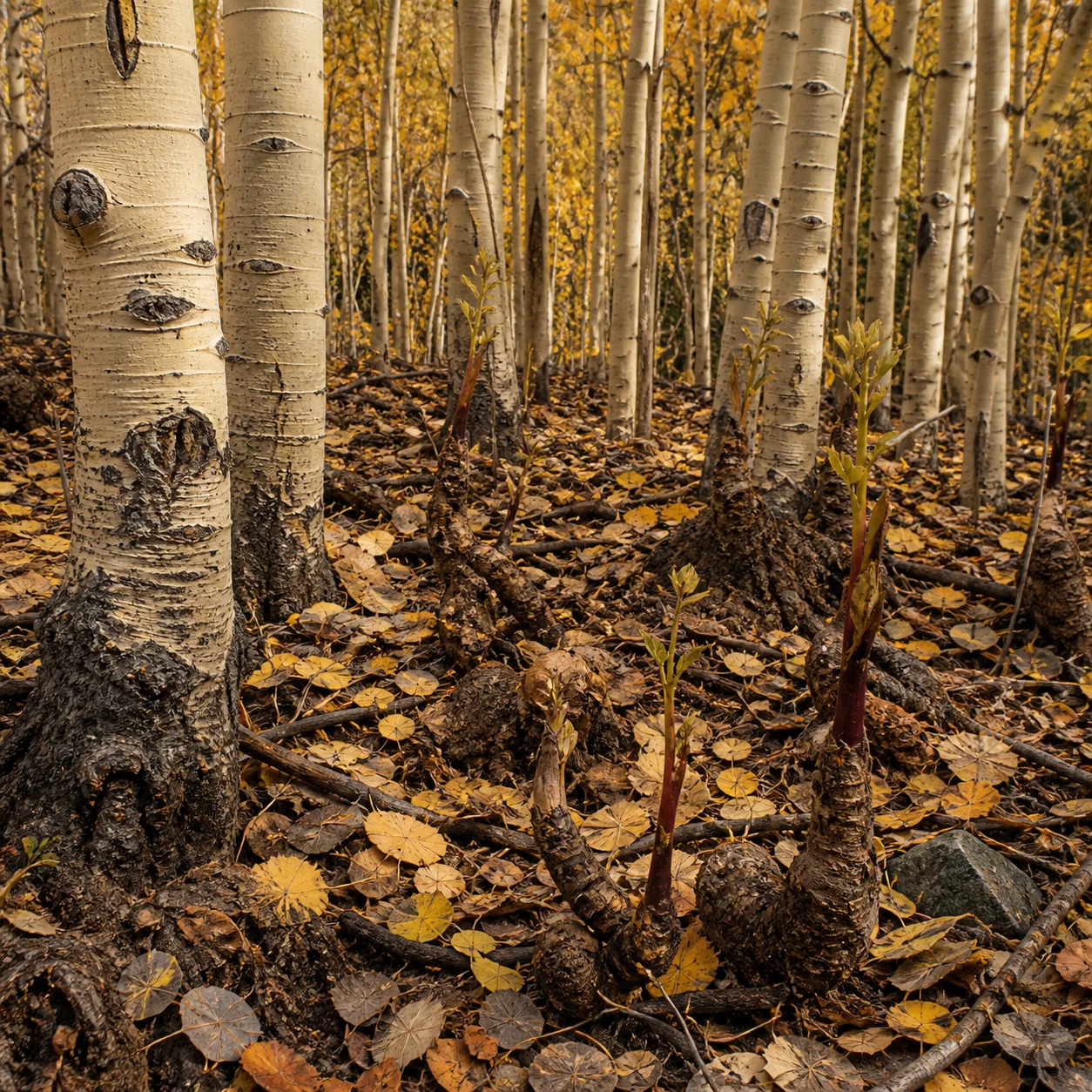
Utah State University's Western Aspen Alliance lists Pando at 106 acres and estimates roughly 47,000 stems before recent mortality. Those figures describe a clonal aspen organism near Fish Lake, not a conventional tree with a single trunk. The stems, sometimes called ramets, emerge from a connected root system. A human sees a grove because the shared body is hidden in soil and repeats itself vertically.
The name fits. “Pando” means “I spread” in Latin. The organism began at some point from one tiny seed, then expanded vegetatively as its roots produced new stems. That mode of growth lets the genetic individual occupy space without depending on every new trunk beginning as a separately fertilized seedling. A stem can die while the clone persists elsewhere and sends up more shoots.
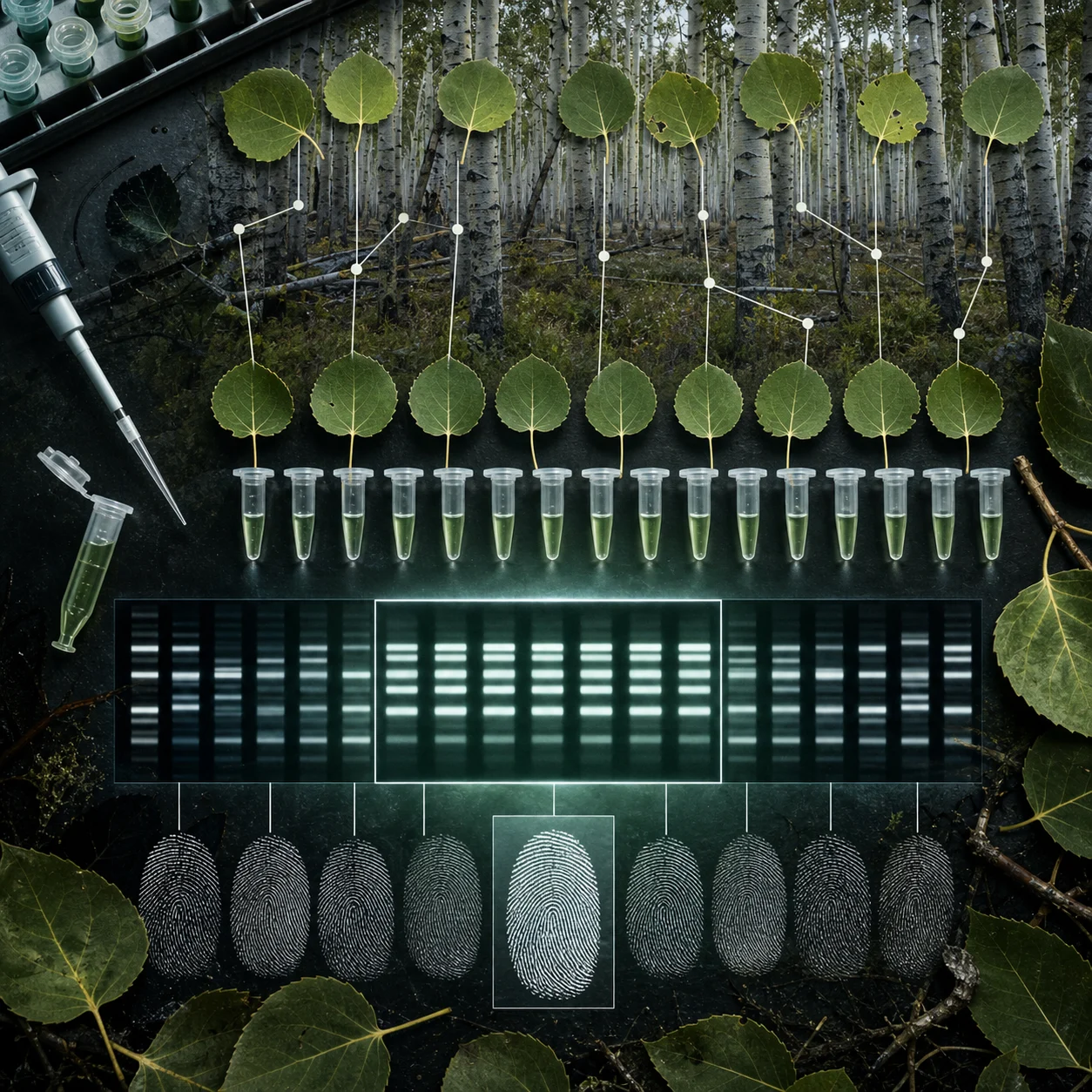
Genetics turned that interpretation into evidence. Researchers from the USDA National Forest Genetics Laboratory and Utah State University used DNA fingerprinting to confirm that the giant clone identified from visible traits was a single genetic entity. The analysis matters because neighboring aspens can look similar without belonging to the same clone. Appearance suggested Pando's boundary; matching genetic identity tested it.
The result does not mean every aspen in the surrounding stand is Pando. Scientists found other clones, most of them small, especially around the dominant clone's edges. “One tree” is therefore a useful description of the mapped organism, not a claim that every trunk in every direction shares its genome. The boundary is biological, established through sampling and analysis rather than the visual continuity of leaves.
A clone also complicates the word “individual.” The stems are physically distinct above ground and do not all share a single lifespan. Utah State reports that older living stems can be aged by coring and are on the order of a century old. Yet the root-connected genetic individual outlasts the turnover of particular trunks. Pando is both many temporary tree-shaped bodies and one persistent lineage occupying the hillside.
That difference produces the story's most common factual trap: age. Popular accounts sometimes give Pando a precise, breathtaking birthday. The Western Aspen Alliance explicitly warns that no good method currently provides an accurate age for the clone. Researchers can propose ranges using size, spread, climate history, or accumulated genetic changes, but those methods require assumptions that have not yielded a firm date.
The uncertainty is structural, not merely a missing archival record. No one can core the whole organism the way one cores a single old trunk. Aspen tissue turns over above and below ground, and the alliance says it is unlikely that tissue from the original seedling remains. The event we would want to date—the germination of the founding seed—left no intact central stump serving as a calendar.
Utah State therefore gives broad estimates running from hundreds to thousands of years while refusing false precision. Even “thousands” is an estimate rather than a directly measured age. The honest version preserves that openness. Pando may be ancient, but its measured weirdness rests on area, approximate stem count, shared genetics, and root-connected growth—not a birthday scientists can read from the organism.
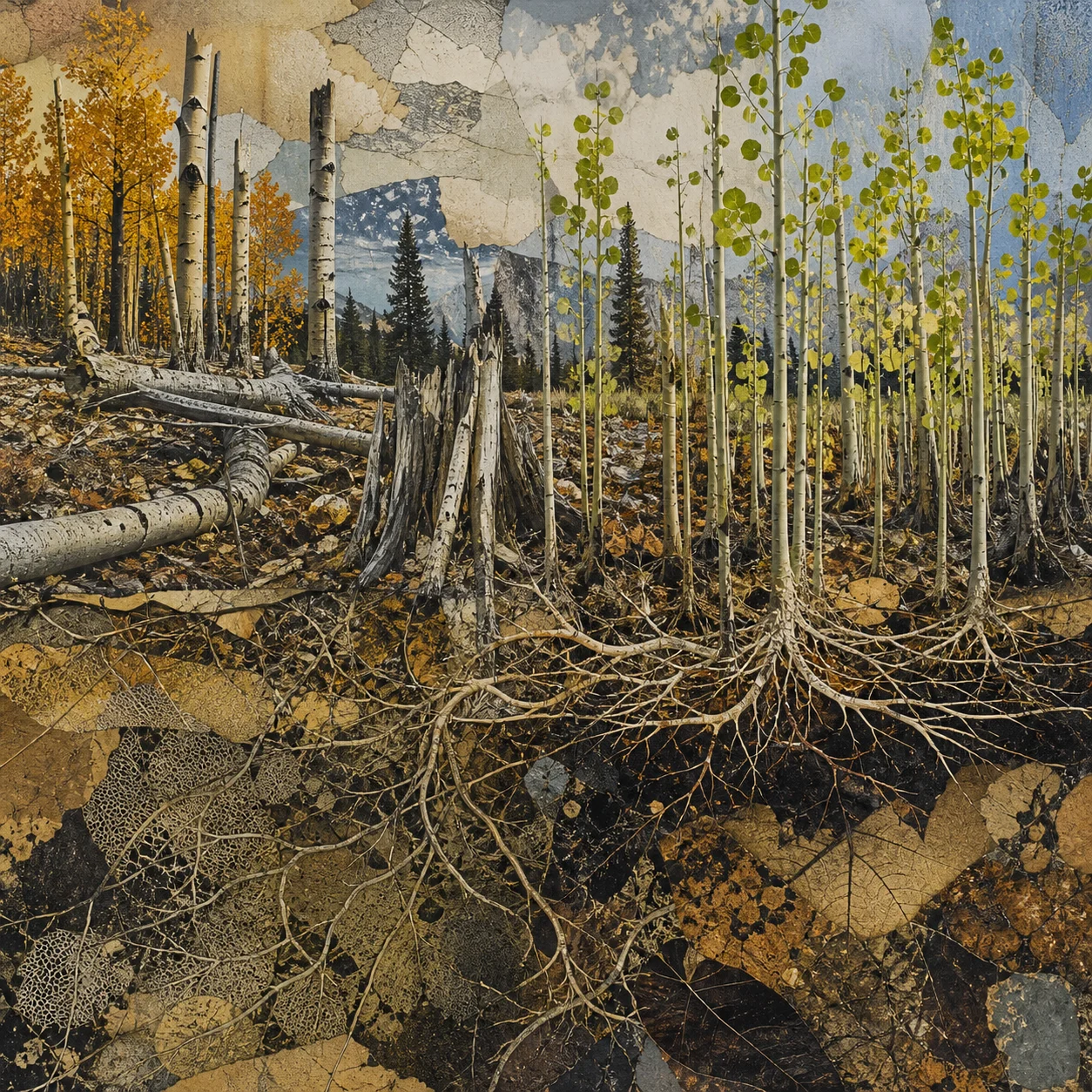
The visible stems also reveal why clonal identity does not guarantee permanence. Parts of Pando have experienced mature-tree mortality while new shoots in unfenced areas have struggled to survive browsing. A huge connected organism still depends on successful regeneration. Its scale does not make each stem invulnerable, and a shared genome does not exempt the clone from ecological pressure.
Thinking of Pando as one tree should therefore sharpen the picture, not turn it into mythology. It is not a single colossal trunk hidden underground, nor a motionless relic whose original cells have endured unchanged. It is a root-linked clone that continually expresses itself as many stems. The organism persists through replacement, with identity residing in the genetic and clonal system rather than any one visible column of wood.
That is the lovely perceptual flip. A forest view normally invites counting: trunk after trunk after trunk. Pando asks a different question—where does one living individual end? Genetic sampling draws an answer across 106 acres, beneath roughly 47,000 separate-looking stems. Its exact age remains unresolved, but its identity does not. The hillside is not impressive because somebody assigned it an impossibly exact number of years. It is impressive because a single seed's lineage became a landscape. Its scale is not a legend pasted onto the grove; it is the tested consequence of how quaking aspen reproduces and persists.
Sources