Share
Share







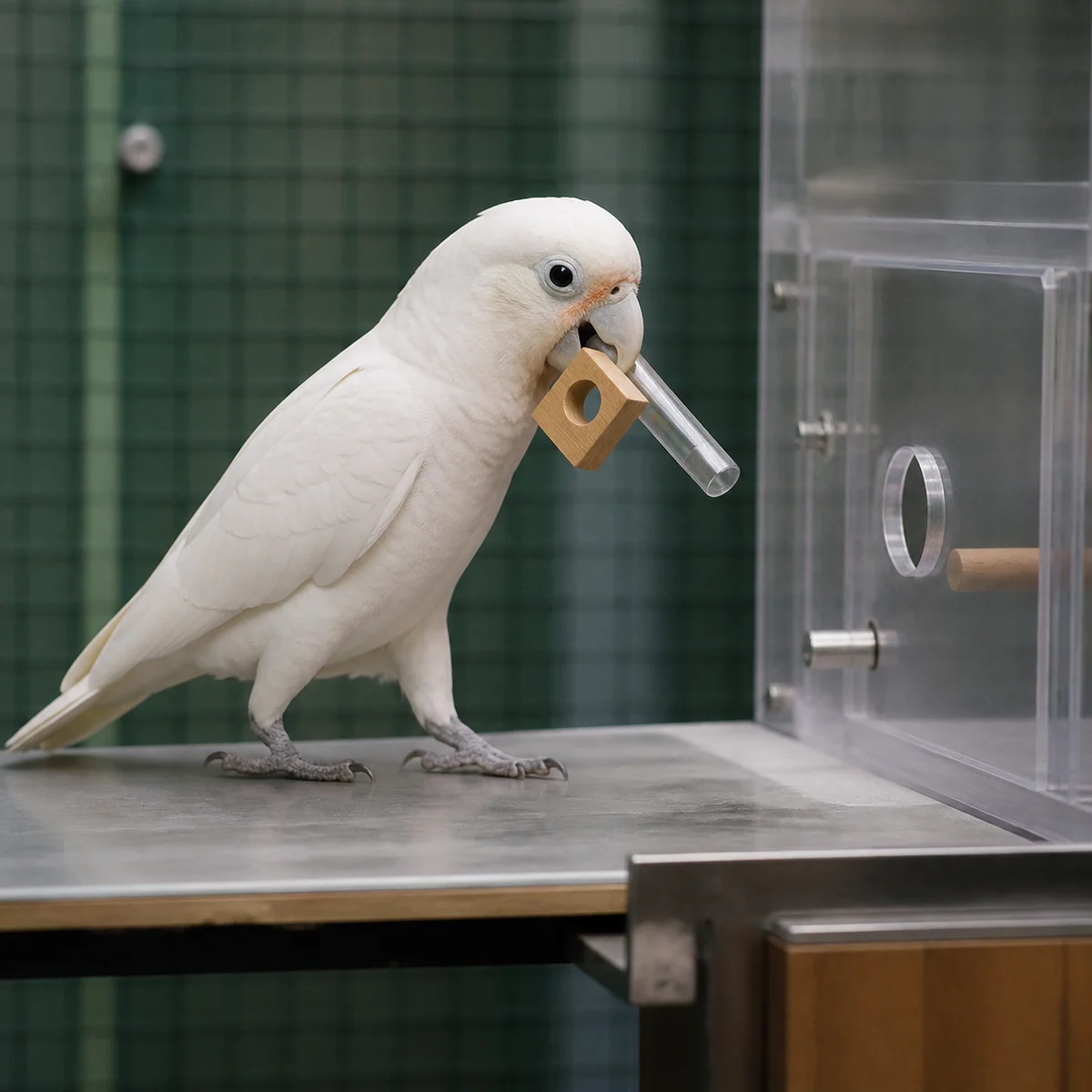
A problem that needs two tools creates a special planning challenge: the animal must recognize the set, keep both pieces, and transport them before receiving the reward. In a controlled experiment, some Goffin's cockatoos did exactly that.
The birds first learned a task in which one tool opened access to another, and the second retrieved the reward. Later, they faced situations where they had to carry the tools to a separate work site. Some birds selected the pair and transported both together when the upcoming problem required them. When only one tool was necessary, behavior could change with the task.
The result does not mean every cockatoo arrived with a tiny toolbox. These were captive birds in an experimental setup, and individuals differed in performance. The interesting evidence is conditional preparation: at least some birds treated two objects as a functional kit for later use. A tool is already a bridge from present action to future result. Carrying the whole set extends that bridge before the work has even begun.
Sources