Share
Share







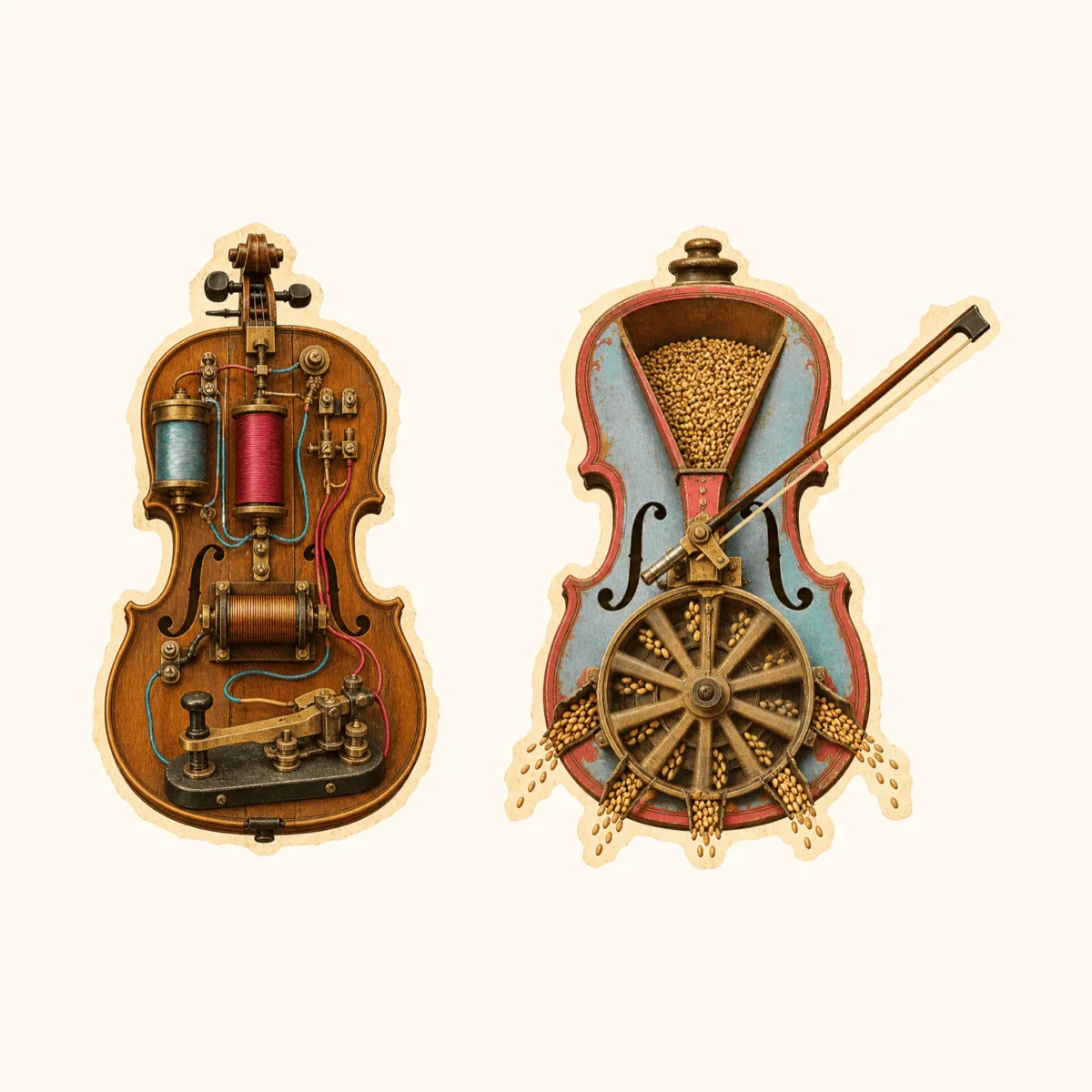
A violin in the Smithsonian’s electricity collection was built to do more than resonate inside a concert hall. In 1875, inventor Elisha Gray received a patent for an electric telegraph that transmitted musical tones. One experimental model used a violin body as a resonator, making the familiar wooden instrument part of a communications device.
Another collection holds a different mechanical disguise: a nineteenth-century seed spreader made with a violin-like body and operated with a fiddle bow. Moving the bow powered a spinning disk that scattered seed. The silhouette suggested music, but its performance took place across soil.
The objects solved unrelated problems with the same recognizable toolkit of hollow body, strings, and bow. One helped electrical tones travel down a wire; the other helped seed travel across a field. Neither stopped looking like a violin while taking the assignment.