Share
Share







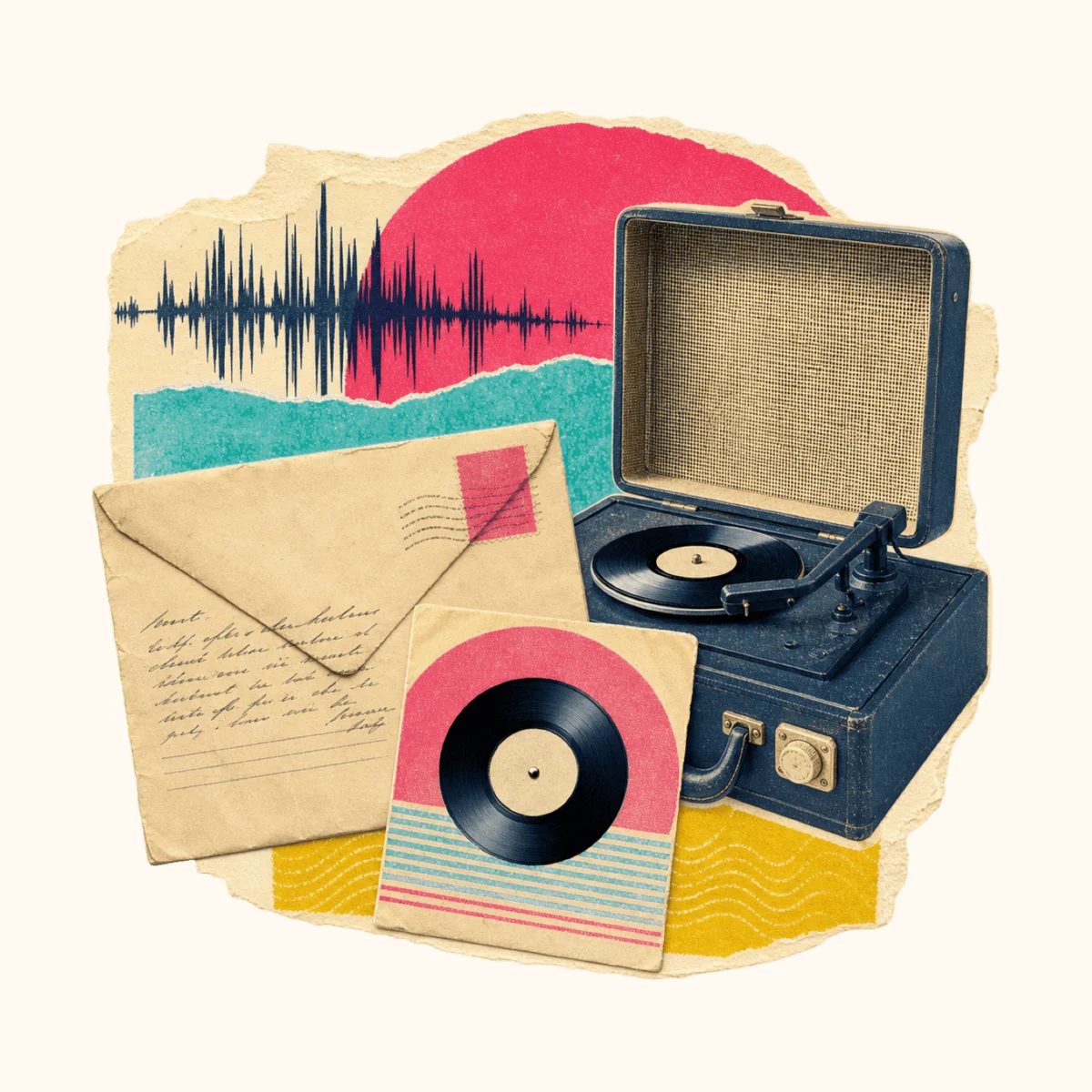
During World War II, a letter home could be played on a phonograph. Service members recorded personal messages onto mailable albums, addressed the physical discs, and sent their voices through the same postal system that carried written correspondence.
One surviving record was made by Private Warren E. Gerstenkorn at Fort Belvoir, Virginia, in 1943. He spoke to his mother about training-camp routine, waiting for letters, and the strange advantage of a recording: the family could play his voice again after the message had ended. Another example in the National Postal Museum was recorded by Navy pharmacist’s mate Ralph Miller at a Los Angeles USO event in 1944.
The phonograph letter made distance audible. Before a voice message could cross a network instantly, it crossed the country as a groove pressed into a disc, handled like mail and replayed like a visit.