Share
Share







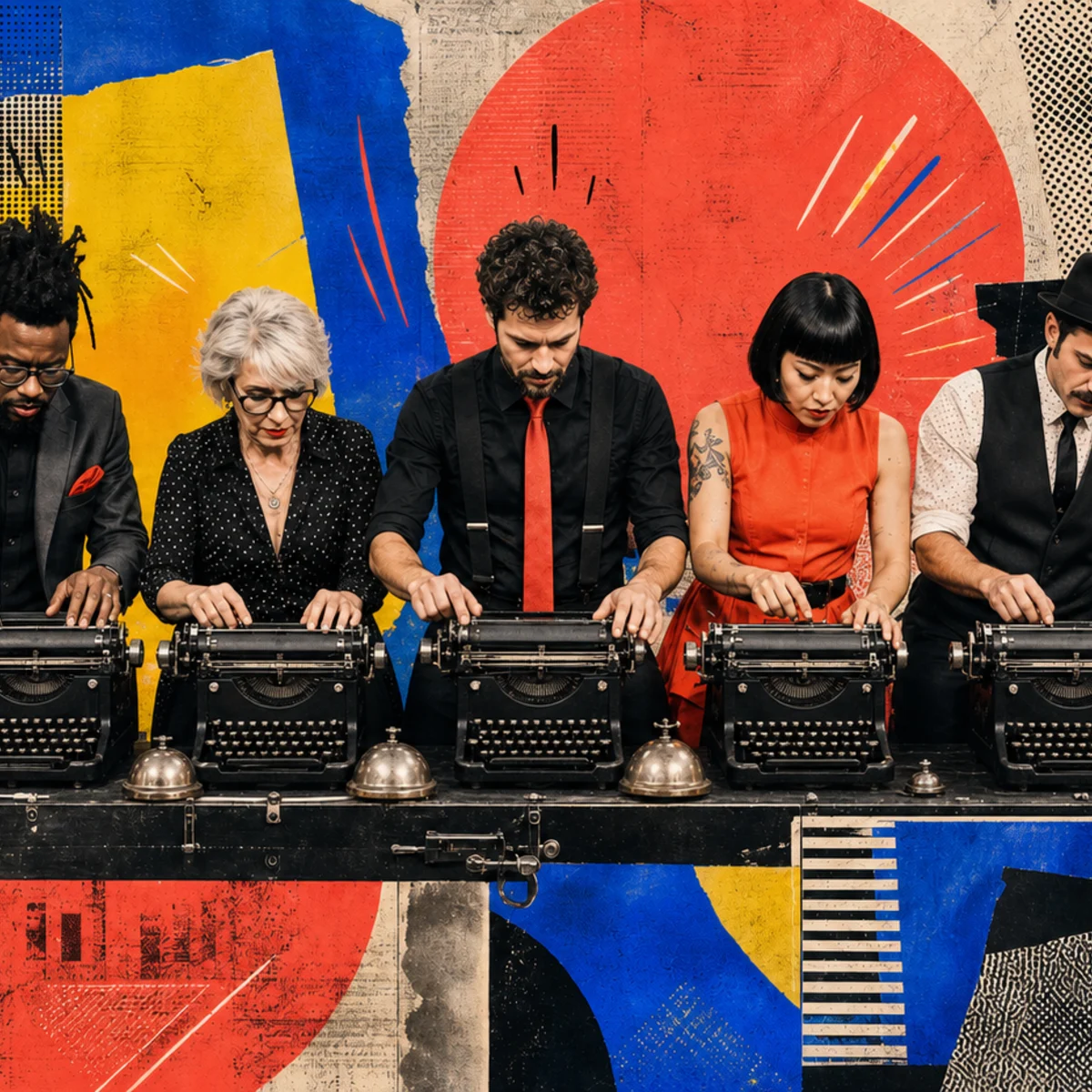
A manual typewriter is designed to make a small set of noises incidental to its real job. A key snaps downward. A typebar strikes the platen. A carriage advances. A bell warns that the line is nearly finished. Then the carriage returns with a metal sweep and a hard stop. In an office, those sounds are evidence that writing is happening. In the Boston Typewriter Orchestra, they are the instruments.
The group began in 2004 with a proposition that sounds like a joke until the first rhythm locks into place: build an ensemble around manual typewriters. Not keyboards playing samples of typewriters, and not a conventional band decorated with office machines. The typewriters themselves produce the percussion. The official roster has included Underwoods, Royals, Olivettis, Hermès machines, and Remingtons, each bringing its own weight, resistance, age, and mechanical voice.
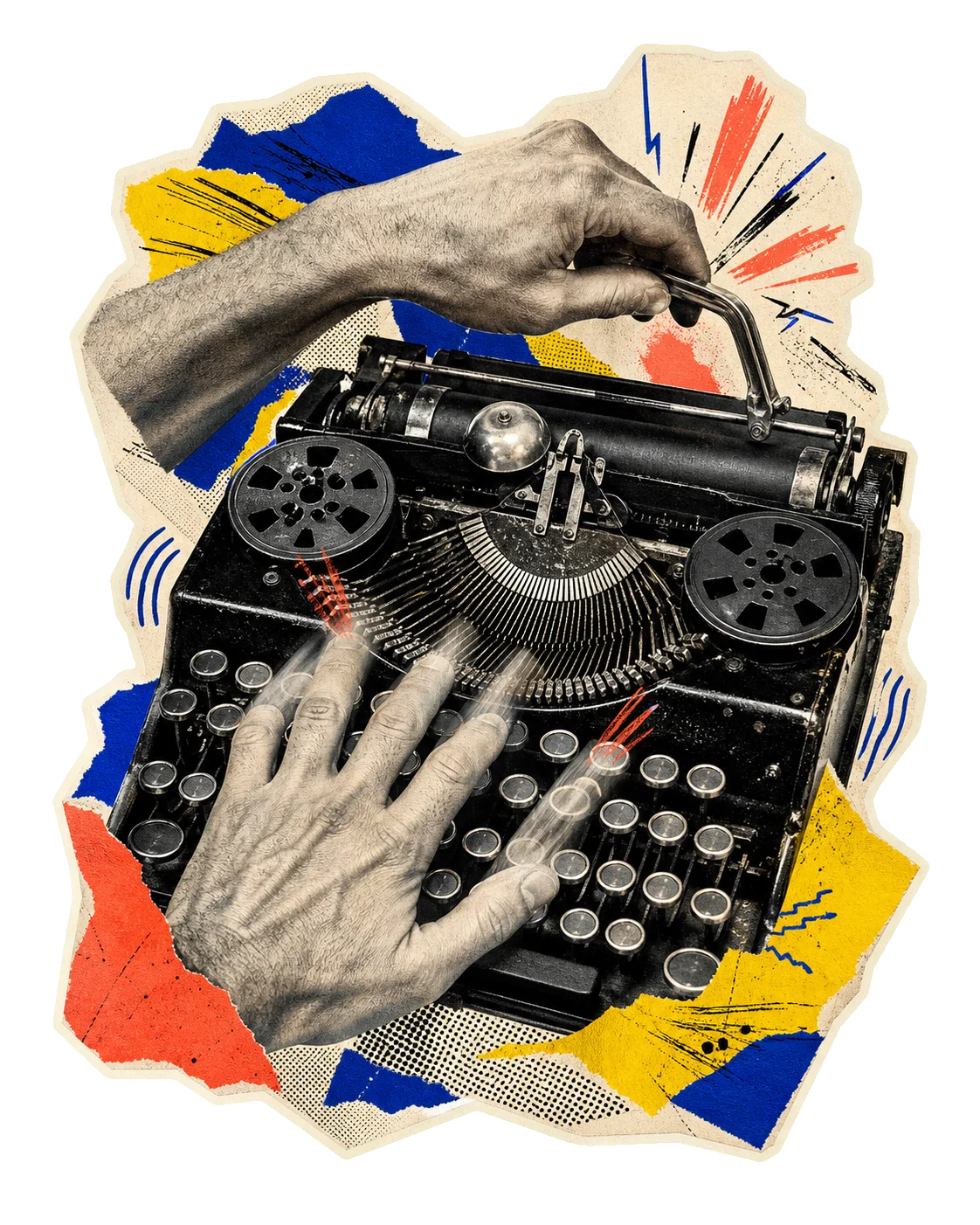
That variety matters because typewriters are not sonically neutral. In an interview, cofounder Brendan Quigley explained that every machine sounds different. Some shift keys land more heavily and can serve as bass. The hammers meet the platen with different attacks. Bells provide bright punctuation. Carriage returns sweep through a phrase. Even a special control such as a power-space key can contribute another timbre. When the normal mechanisms are not enough, the metal frames themselves can be played like percussion.
Before a performance, the ribbons come out. That practical change turns a writing machine into a sound machine: the keys still move and strike, but the musicians are not quietly producing pages of accidental letters while they play. The gesture of typing remains visible, yet its usual product disappears. What is left is impact, timing, repetition, and the physical choreography of hands operating a complicated set of springs and levers.
The pieces are composed, though composition does not mean every movement is fixed. Quigley described the vocal numbers as locked in, while some instrumental works leave room for improvisation inside a structure. That makes sense for machines whose controls were engineered for language rather than music. A score has to organize not only beats, but also the quirks of a particular carriage, bell, keybed, and frame. The musicians work with those limitations instead of pretending the machines are identical drums.
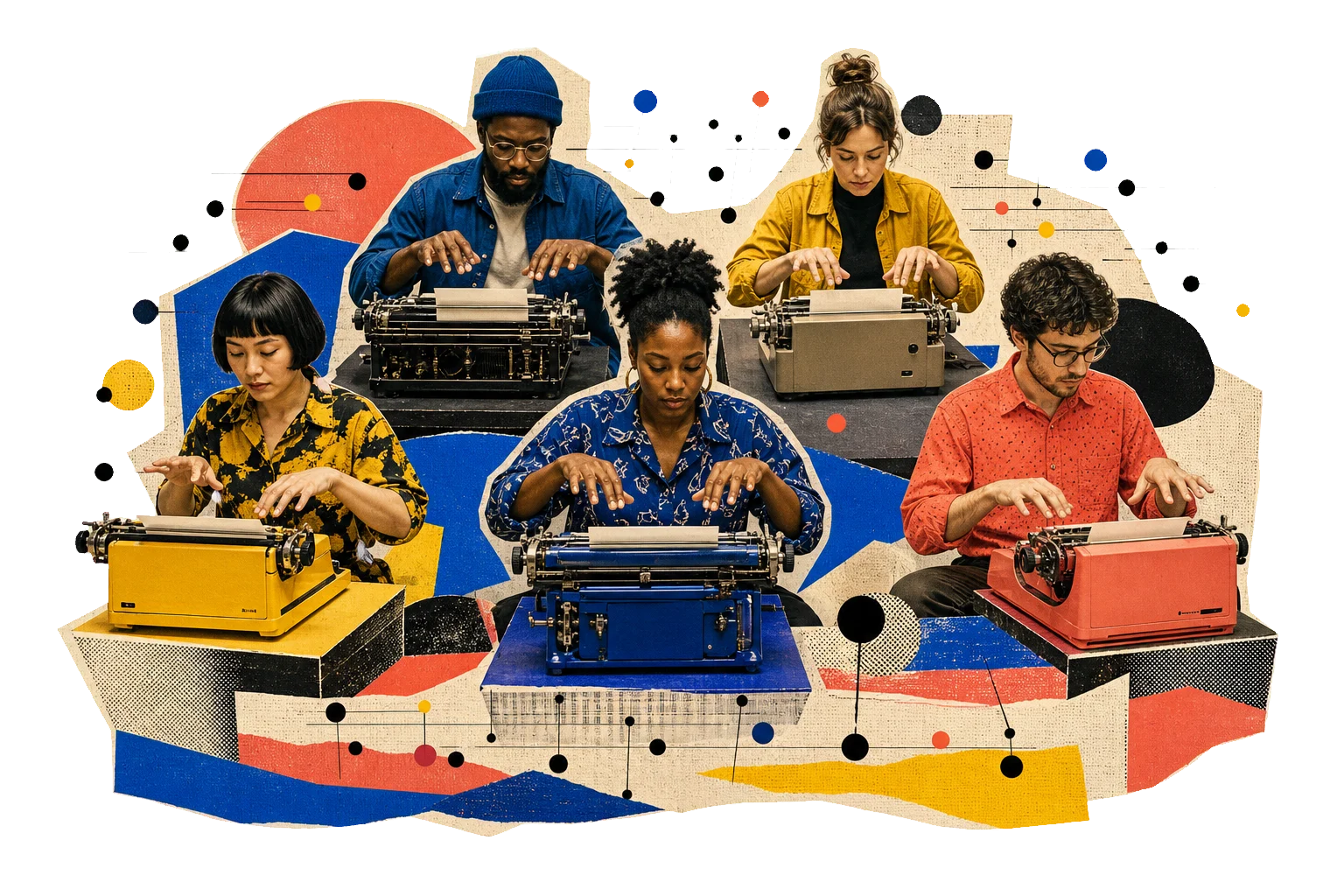
The result is less like someone typing very quickly and more like a percussion section whose hardware happens to have alphabets. Several performers can divide a rhythm across machines, answer one another with different mechanical sounds, or build a pattern from the familiar sequence of key strike, bell, and return. A device built to advance one character at a time becomes capable of groove once multiple hands decide that the spaces between impacts matter more than the marks that would ordinarily appear on paper.
The group frames those rhythms with performance, comedy, and satire. Its official description embraces the spectacle of vintage office equipment behaving improperly in public. That theatrical layer is not decoration added to ordinary music; it grows directly from the machines. A row of people operating typewriters suggests clerical order, deadlines, forms, and controlled productivity. A row of people attacking those machines in synchronized rhythm turns the office into a percussion stage.
The visual joke also contains a precise mechanical lesson. Digital writing hides most of its motion. Press a key on a laptop and a character appears with almost no visible transfer of force. A manual typewriter exposes the path from finger to lever to typebar to platen. The musician can interrupt, exaggerate, or repeat any part of that path. The machine is valuable not despite its obsolete complexity, but because every function announces itself with movement and sound.
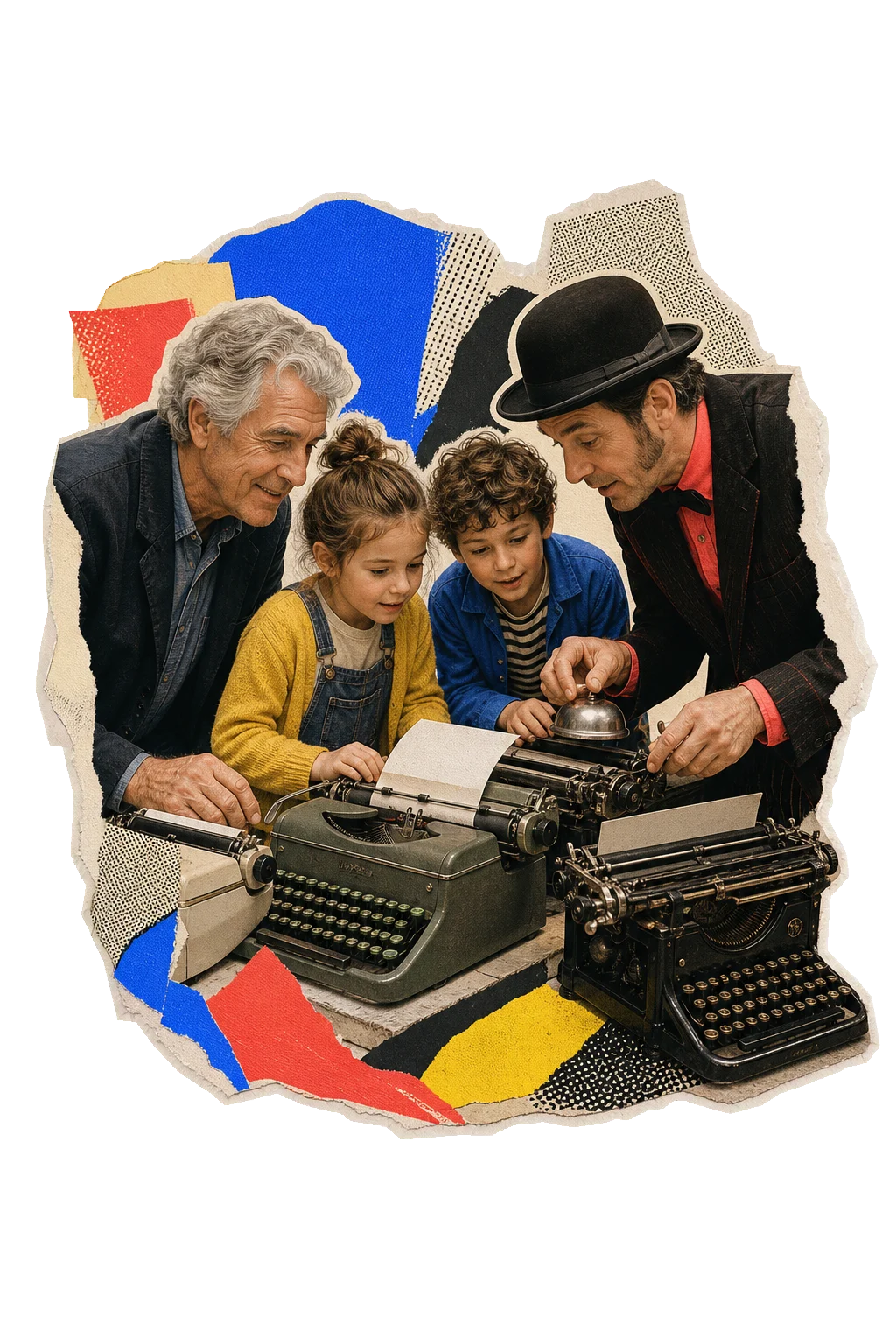
Audiences sometimes recognize the hardware personally. Quigley recalled people approaching after performances to say they had written a thesis on a similar machine. Children may be encountering the devices for the first time. The orchestra lets people look at and play the instruments after shows, closing the distance between the object onstage and the tool that once occupied desks. What one person remembers as work, another meets as an unfamiliar acoustic machine.
Typewriters are also unusually honest instruments. The audience can see where each sound comes from. A heavy key produces a heavy strike. A bell rings because a carriage has traveled far enough to trigger it. A return lever yanks a visible assembly back to its starting position. There is no need to disguise the machinery or make it imitate something grander. Its clicks and dings already contain enough contrast to organize.
The Boston Typewriter Orchestra survives on that reversal of purpose. A machine made to convert thought into text is stripped of ink and asked to convert motion into rhythm instead. Nothing about the typewriter has to be modernized. The keys, hammers, bells, and carriage returns were waiting inside the design all along. The orchestra’s invention was simply to stop treating their noise as a side effect—and start listening to it as the main event.