Share
Share







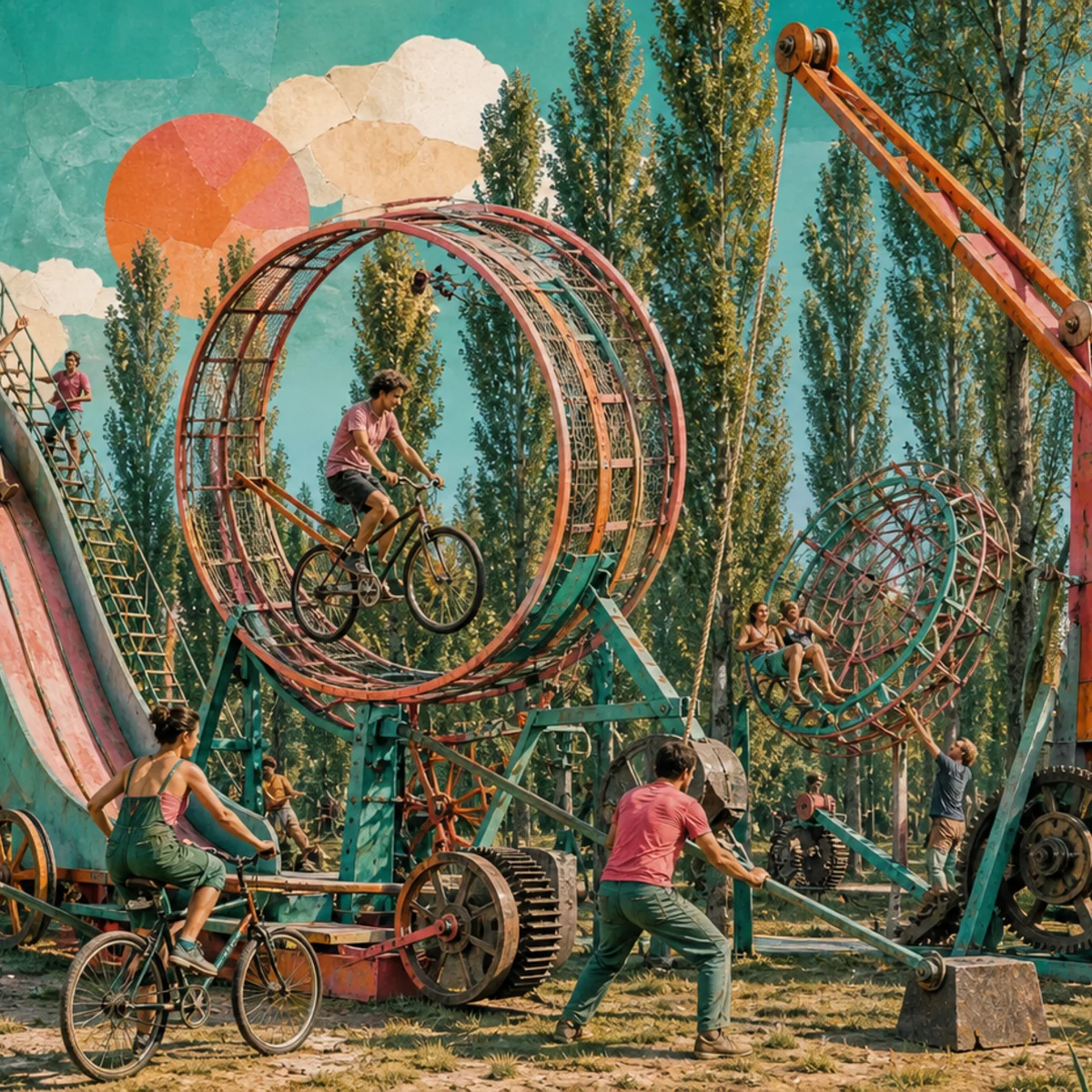
In a poplar grove near Nervesa della Battaglia, northern Italy, an amusement park waits for someone to supply the missing component: power. There are towering slides, spinning cages, seesaws, pendulums and looping contraptions made from painted steel. What there generally is not is an electric motor. The rides at Osteria Ai Pioppi move when visitors push, pedal, climb, pull—or let gravity finish the job.
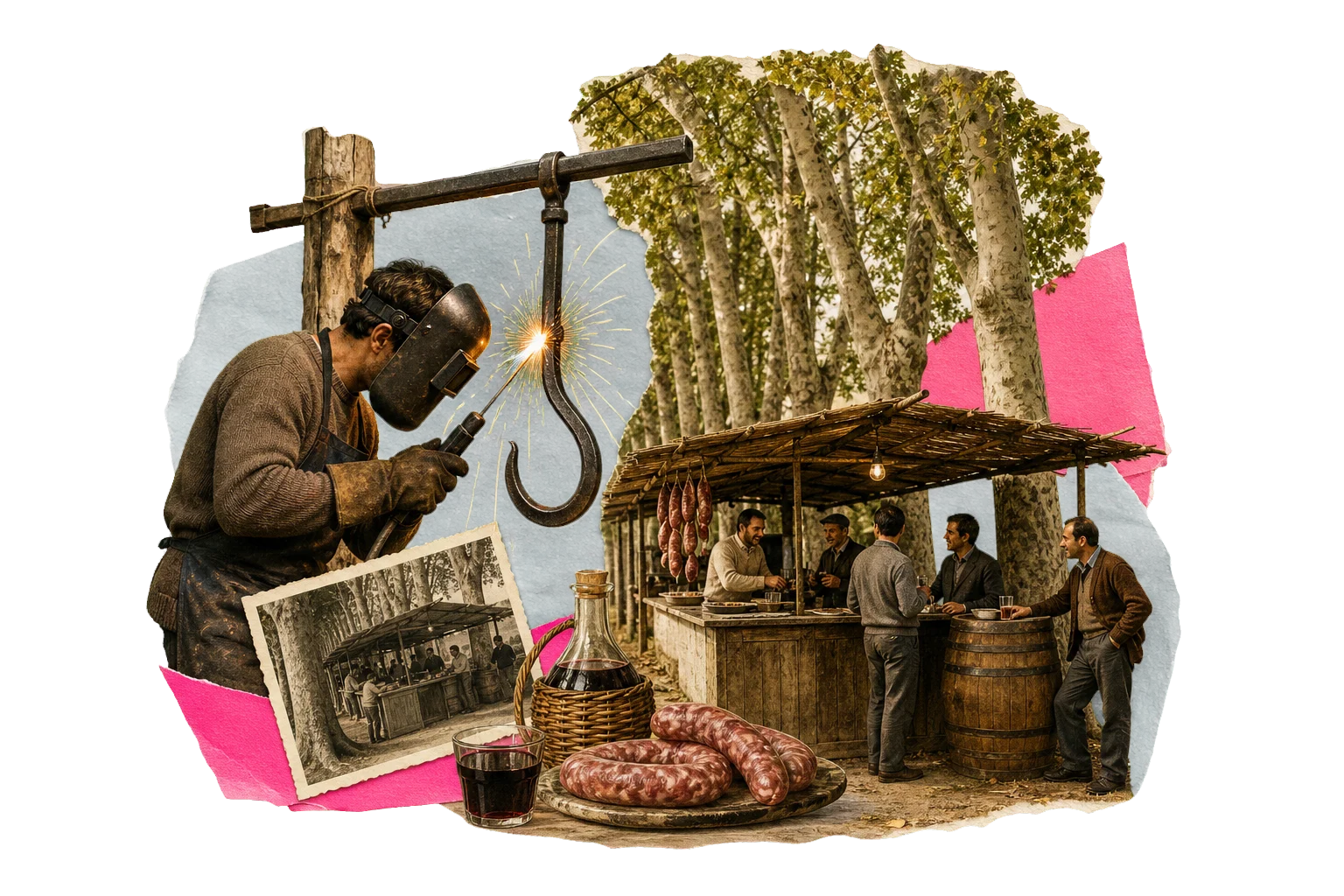
The park began with lunch. On June 15, 1969, Bruno Ferrin and his wife, Marisa, opened a modest outdoor stand under the trees, serving wine, sausages and simple food. Ferrin needed hooks for hanging the sausages. A blacksmith, too busy to make them, let him use the welding equipment instead. Ferrin spent hours producing his first hook and came away with something more important than tidy charcuterie: the realization that he loved joining metal.
He started making play equipment for the children who came with customers. A swing led to a slide; a slide encouraged a bigger slide. The grove gradually filled with inventions. Ferrin was not buying a catalogue of standardized attractions. He was sketching machines in his head, welding them from steel and recycled materials, testing how bodies, counterweights and momentum could make each one go. By the time the collection matured, reports counted roughly forty to fifty attractions.
Their mechanisms are visible in a way modern rides rarely permit. A rider can see the lever that amplifies a push, the bearing that allows a frame to spin and the counterweight waiting to fall. The person is not passive cargo sealed into a computerized experience. Effort becomes motion in front of them. If a bicycle inside a steel ring is meant to loop overhead, the rider has to build enough speed to carry it around. The suspense is partly mechanical literacy arriving very quickly.
Ai Pioppi's famous constructions include the Giro della Morte, or Death Ride, along with the Vitruvian Man, the bob, pendulums and huge multi-lane slides. One slide begins about forty metres above its landing area; another long three-lane structure stretches dramatically through the trees. Names and counts vary across accounts as the family repairs, retires and develops pieces, but the governing vocabulary stays consistent: steel, muscle, balance, gravity.
Calling the place electricity-free needs one careful footnote. Some accounts note an exception among the equipment, and normal restaurant operations plainly use modern utilities. The defensible wonder is not that no electron ever enters the property. It is that the amusement mechanisms Ferrin became known for were deliberately designed to run without conventional ride motors. Their spectacle comes from geometry and participation rather than hidden power.
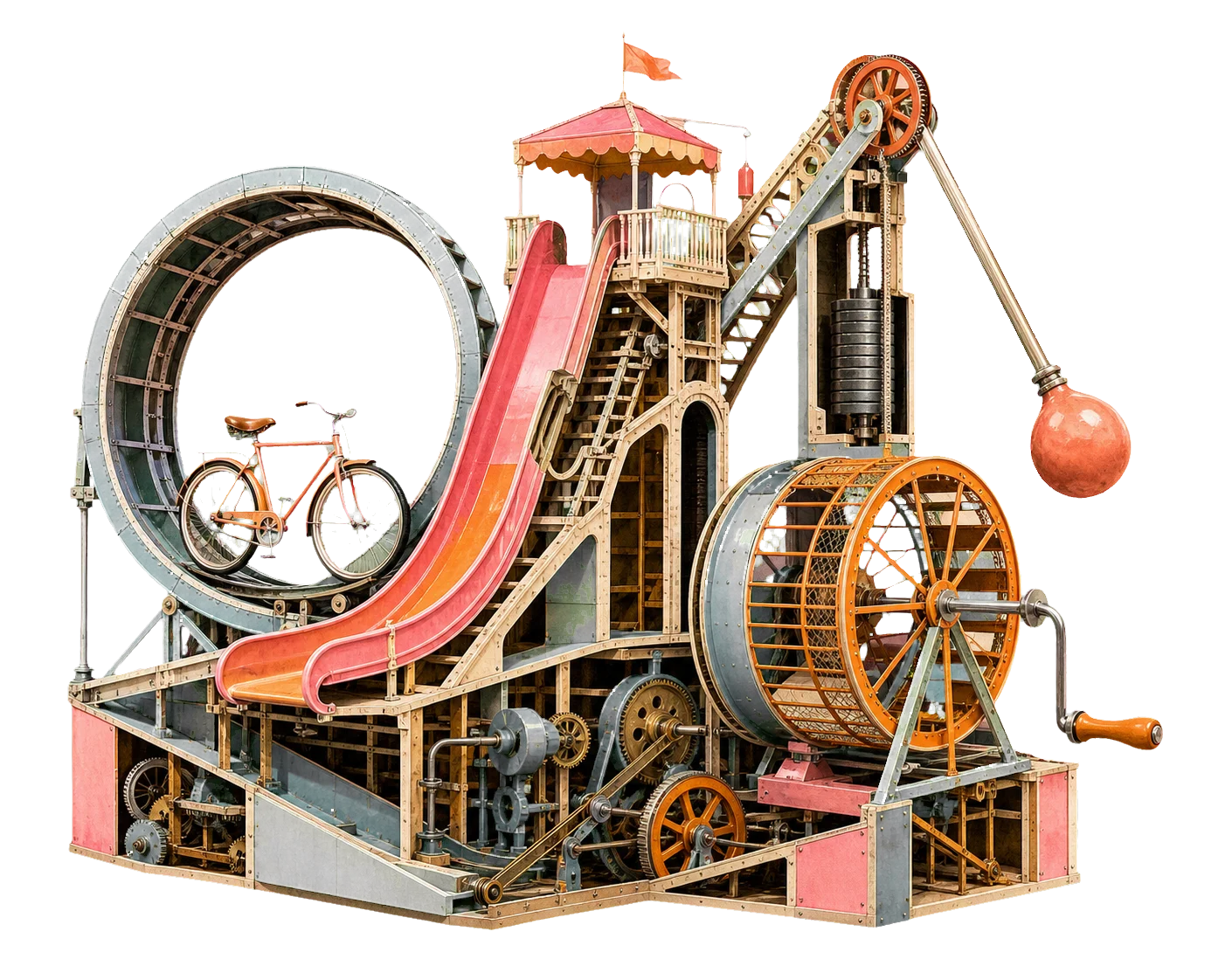
That design choice creates an unusual social rhythm. Many attractions need one person to load, push or release while another rides. Some ask a whole group to cooperate. The queue is not just waiting for a machine to reset itself; people become its crew. Adults cannot remain distant supervisors for long, because a child on a swing or carriage may require somebody else to haul the frame back into position. The park turns spectators into operators.
It also exposes the compromises that polished theme parks usually conceal. Human-powered rides stop when humans tire. Outdoor steel needs inspection, paint and maintenance. Weather affects the grove, and safety requires rules, judgment and continued engineering attention. Ferrin worked with technical professionals as his machines grew more ambitious. Handmade does not mean careless, and whimsy does not cancel physics. In fact, physics is the whole attraction.
The restaurant and park remain intertwined. The official site describes free park admission and a self-service osteria whose tables sit among the trees; opening can change with weather and season. That arrangement preserves the odd logic of the original enterprise. Ferrin did not build a food court inside a theme park. He built increasingly improbable reasons for families to linger around a country restaurant.
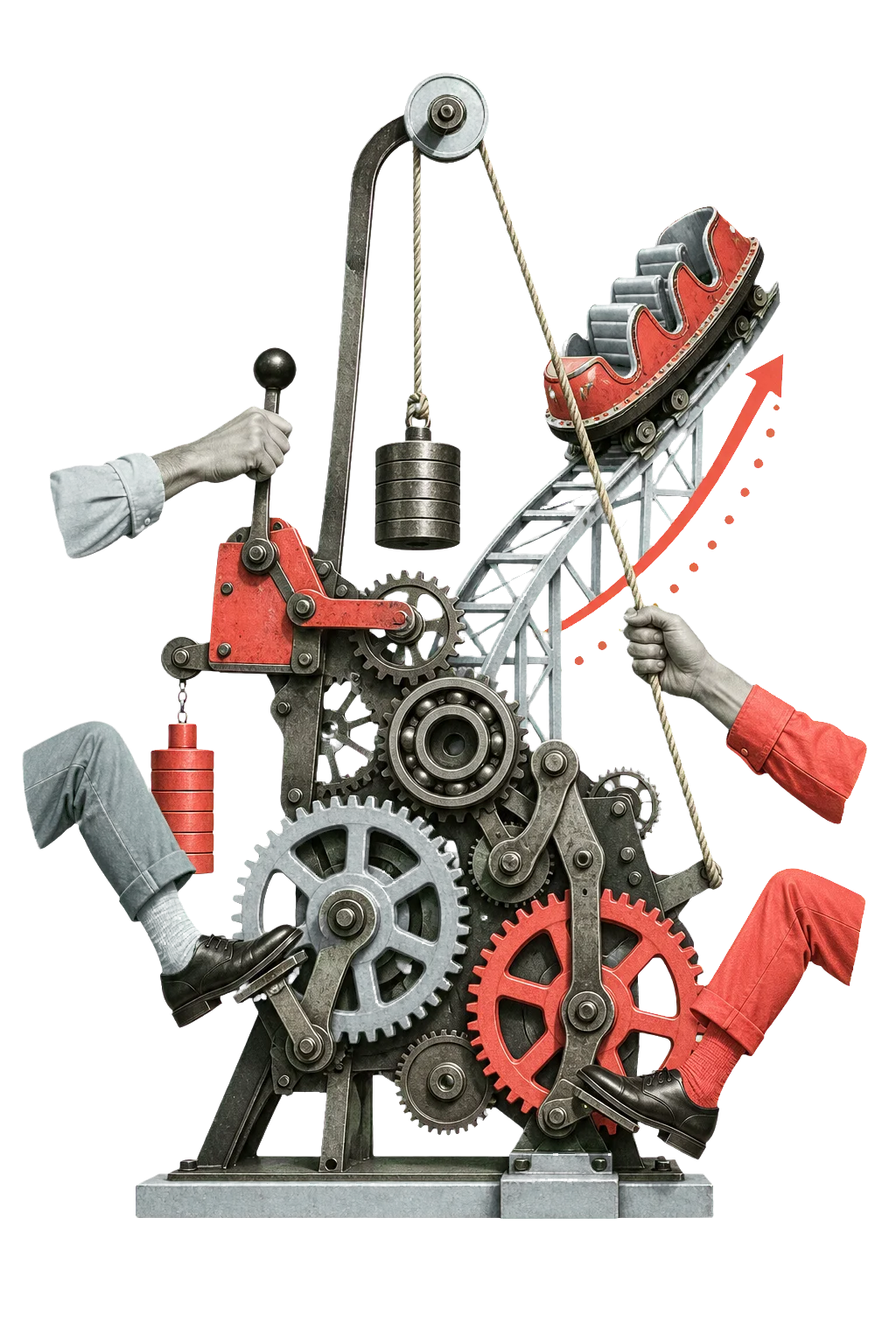
Over decades, the place became a family project. Ferrin continued fabricating and maintaining rides, later working alongside his grandson Francesco. The machines carry the marks of that long development. They are not unified by one corporate design language. Some resemble industrial experiments, some enormous playground equipment, and some sketches of impossible carnival rides made solid. The coherence comes from their inventor's repeated question: what can this piece of steel persuade a person and gravity to do?
That question places Ai Pioppi in a curious category. It is kinetic sculpture, folk engineering, restaurant attraction and functioning playground at once. It has been called ecological because its rides usually avoid powered motors and reuse materials, though its more interesting environmental quality may be behavioral. It asks visitors to feel exactly where the energy comes from. A climb stores potential energy. A pedal stroke adds speed. Friction takes both away.
The park's strangeness is not that Ferrin rejected technology. Welding, bearings and carefully planned structures are technologies. He rejected invisibility. At Ai Pioppi, the machinery does not disappear behind panels while a passenger receives a finished thrill. The effort, mechanism and result occupy the same patch of forest. The ride begins only after someone agrees to become its engine.