




 Share








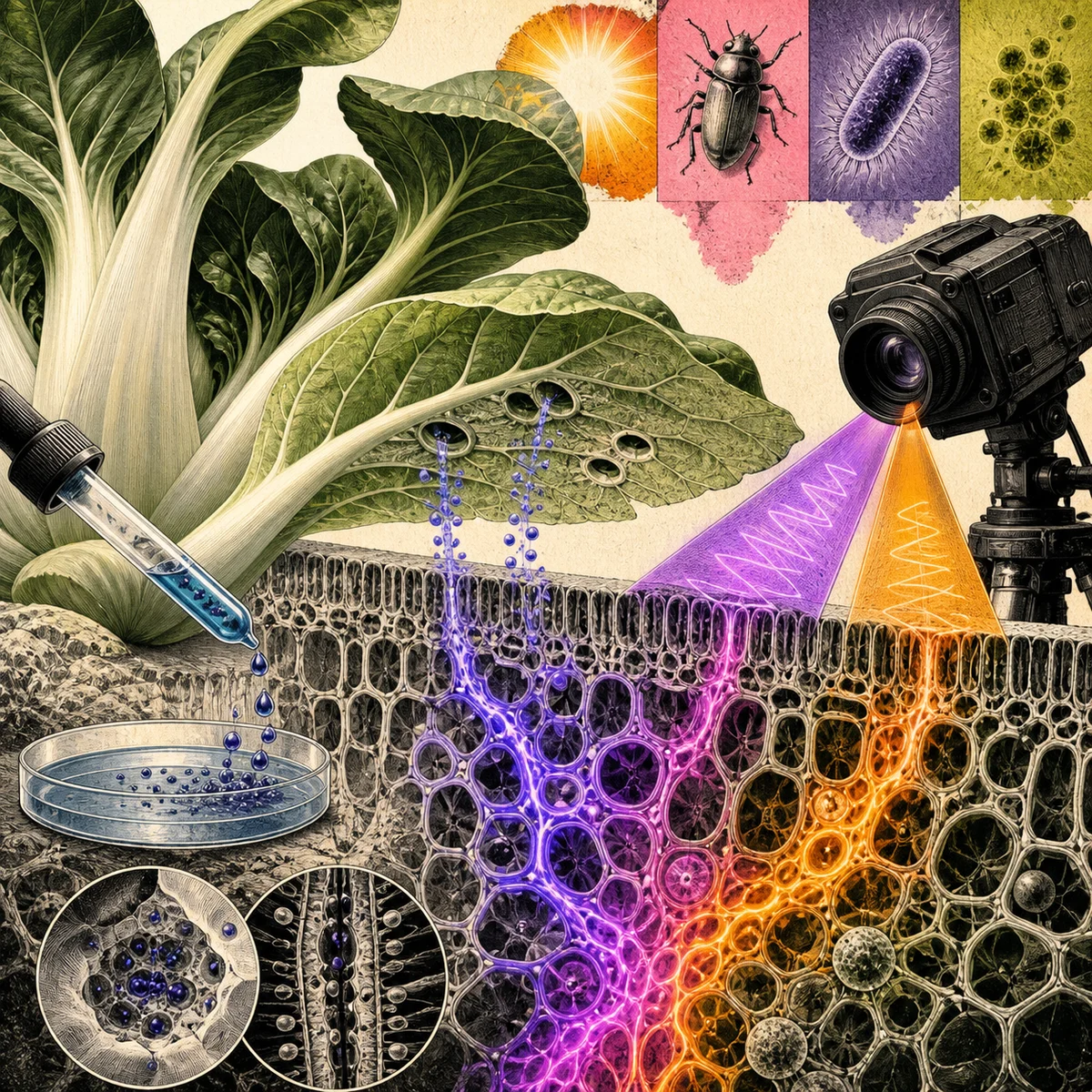
MIT and SMART researchers built nanosensors from carbon nanotubes wrapped in polymers designed to fluoresce near-infrared light when they encounter a target molecule. A solution applied beneath a pak choi leaf entered through stomata and placed the sensors in the photosynthetic mesophyll. An infrared camera could then watch plant signaling unfold without genetically engineering the plant.
The team paired sensors for hydrogen peroxide and salicylic acid. Heat, intense light, insect bites, and bacterial infection all produced hydrogen-peroxide signals within minutes, peaking within about an hour. Their second wave differed: heat, light, and infection triggered salicylic acid within two hours but on distinct schedules, while insect bites produced no salicylic-acid response. Together, the timelines acted like stress fingerprints.
Those fingerprints were observed under controlled treatments, not decoded into a universal field alarm. Other crops, environments, sensor placements, and stresses will require calibration, and the current system still depends on applied nanoparticles and infrared imaging. “Sentinel plants” that warn a grower early remain a proposed use. The immediate result is a window into living coordination: before a leaf turns brown or visibly wilts, chemical messages can already be traveling through it, and paired sensors can distinguish patterns the unaided eye would merge into “sick.”
Sources