




 Share








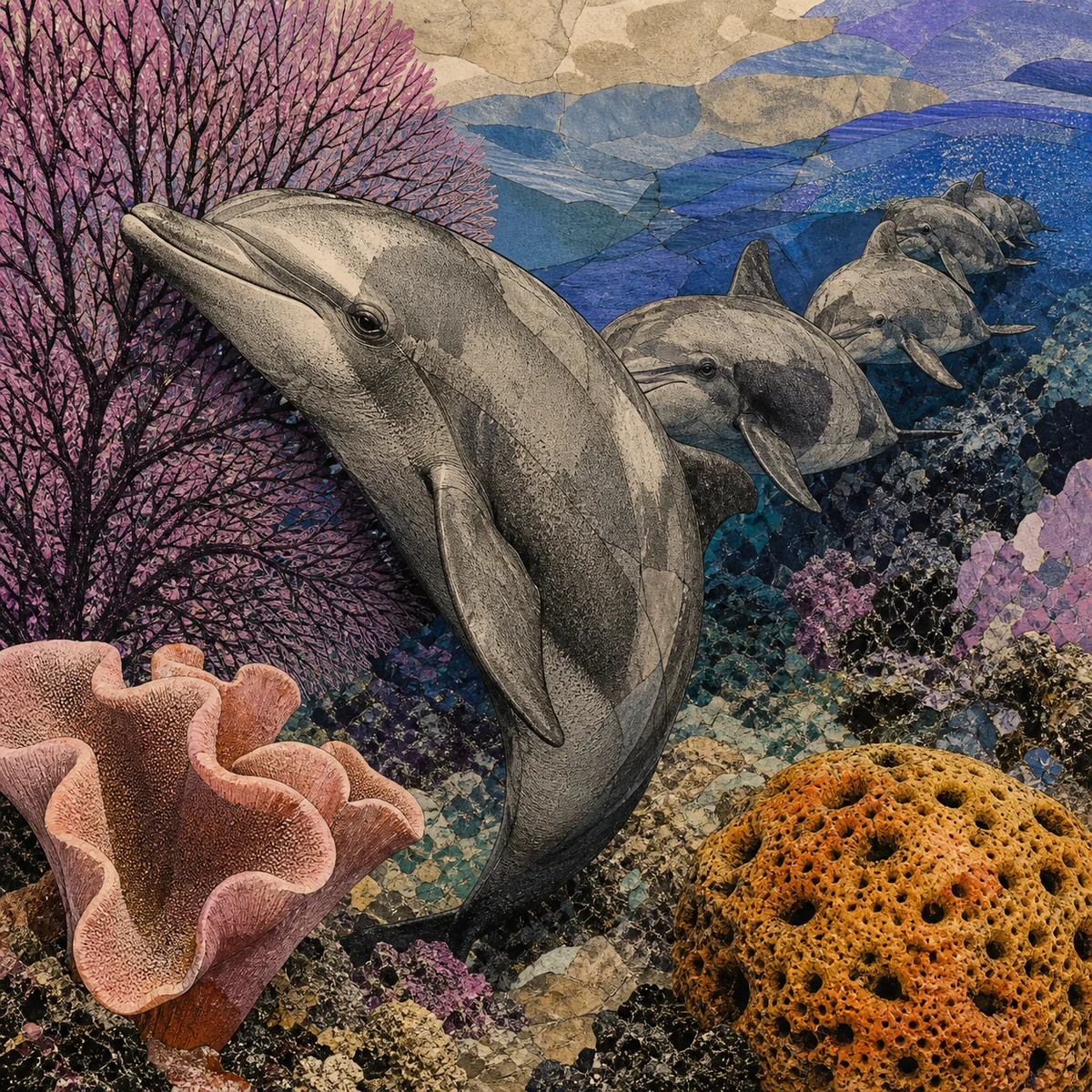
For years, wildlife biologist Angela Ziltener followed Indo-Pacific bottlenose dolphins at reefs in the northern Red Sea. The animals repeatedly pressed different body parts against selected corals and sponges. When several wanted the same organism, they sometimes queued nose-to-tail instead of crowding it. Rubbing disturbed the invertebrates’ polyps and released mucus across dolphin skin.
The team sampled three favored organisms: the gorgonian coral Rumphella aggregata, a Sarcophyton leather coral, and an Ircinia sponge. Chemical separation, biological assays, and mass spectrometry detected 17 active metabolites with antibacterial, antioxidative, hormonal, or toxic activities. That chemistry offers a mechanism by which repeated rubbing might influence the skin microbiome or help with irritation and infection.
It does not amount to a dolphin clinical trial. Researchers observed choice, contact, and bioactive compounds; they did not diagnose each animal before rubbing and prove a cure afterward. “Self-medication” therefore remains a supported hypothesis. The reef is also the pod’s resting and social space, so the same visit can serve more than one purpose. What is directly visible is selective behavior: the dolphins know which living surfaces they want, release their mucus by rubbing, and wait their turn.
Sources